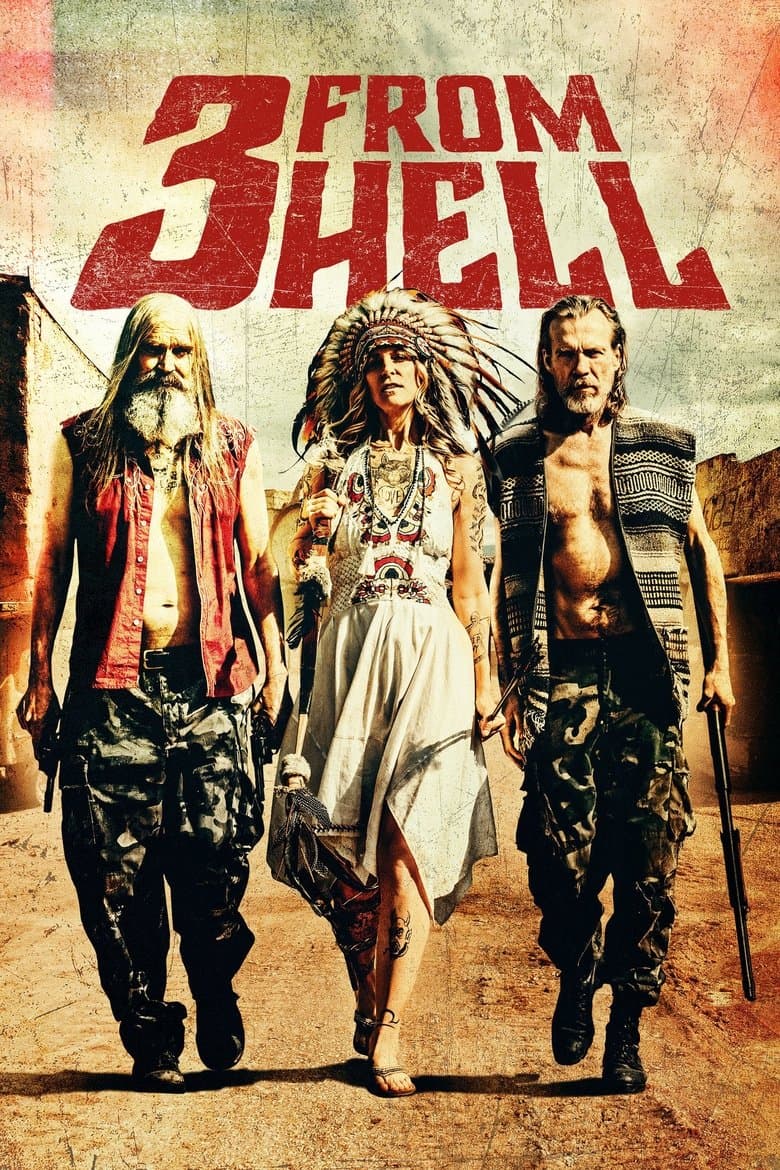
Baby Firefly, Otis Driftwood, and Captain Spaulding are cruel killers from a backwoods family. After they survive a police ambush, the courts lock them away, but Otis escapes with his half-brother, Winslow “Foxy” Coltrane. Baby later joins them, and the group runs from police, bounty hunters, and other criminals. The story moves from prison and rural America to Mexico, with a loud, dirty, violent horror tone.
The film treats the killers as outlaw celebrities, because news reports show fans calling them misunderstood and chanting “Free the Three.” It uses prison cruelty, police force, media fame, family loyalty, and rejection of normal society as parts of its crime story. Baby gets more time and becomes even more unstable as prison life and family violence shape her behavior. The movie presents her power as part of a killer’s madness, while the family treats survival and cruelty as proof of strength.
Community feedback
Was our 2% Woke rating accurate?
Breakdown
These are the editorial factors and ratings behind our score for 3 from Hell.
Woke representation / casting
Not present. Baby, Otis, and Foxy are members of a white backwoods crime family. Supporting actors include Danny Trejo and Emilio Rivera, but the film does not frame their casting as a diversity goal. The story gives no identity-based casting message.
0%
Woke political dialogue
Not present. The film includes the chant “Free the Three” and claims that the killers fought the system. The chant supports their outlaw legend, not modern identity, DEI, or activist politics. No recurring woke political lines shape the plot.
0%
Identity-driven story themes
Not present. The story follows murderous family loyalty, escape, revenge, and survival. Baby’s larger role gives the film a powerful female villain, but the movie does not turn her violence into an identity or gender-rights message. The main conflict stays with criminals, police, prisons, and rival killers.
0%
Western institutional / cultural critique
Not present. Police, courts, and prison staff are shown as violent or cruel, and the opening shows fans treating the killers as anti-system figures. These choices create an anti-authority crime story. The movie does not turn them into a modern critique of Western institutions, family norms, religion, or gender roles.
0%
Woke character or canon changes
Not relevant. The film continues the fictional Firefly characters from the two earlier Rob Zombie movies. Captain Spaulding’s smaller role and Foxy’s addition came from Sid Haig’s real health problems, not an identity rewrite.
0%
Anti-woke backlash and complaints
Not present. The supplied X research found no anti-woke complaints, boycott, or review-bombing. Other online reactions mostly attacked the film’s story, length, violence, and use of Sid Haig.
0%
Creator track record context
Rob Zombie has built his career around horror, raw violence, freaks, and anti-authority ideas. His supplied creator context score is 11/100. He has supported animal rights and spoken against cancel culture, but no clear pattern of identity-driven or social-justice projects appears in the supplied record. Interviews about this film focus on Manson, western films, prison media fame, and the Firefly clan, not diversity or queer themes.
11%
Production
Movie · 2020
Rachel is a divorced single mother whose bad day gets even worse. She's running late to drop her son off at school when she honks her horn impatiently at a fellow driver during…
Movie · 2020
A family vacation takes a terrifying turn when parents Paul and Wendy discover their young daughter has vanished without a trace.
Movie · 2021
When his car breaks down, a quiet loner agrees to clean an abandoned family fun center in exchange for repairs.
Movie · 2019
A typical night for veterans at a VFW turns into an all-out battle for survival when a desperate teen runs into the bar with a bag of stolen drugs.
Movie · 2018
After an unprecedented global pandemic has turned the majority of humankind into violent infected beings, Morgan, a man gifted with the ability to speak the infected's new…
Movie · 2023
Vice detective Bob Hightower finds his ex-wife murdered and daughter kidnapped by a cult. Frustrated by the botched official investigations, he quits the force and infiltrates the…

Movie · 2024
Nothing is what it seems when a twisted one-night stand spirals into a serial killer’s vicious murder spree.
Movie · 2020
As a grisly virus rampages a city, a lone man stays locked inside his apartment, digitally cut off from seeking help and desperate to find a way out.
