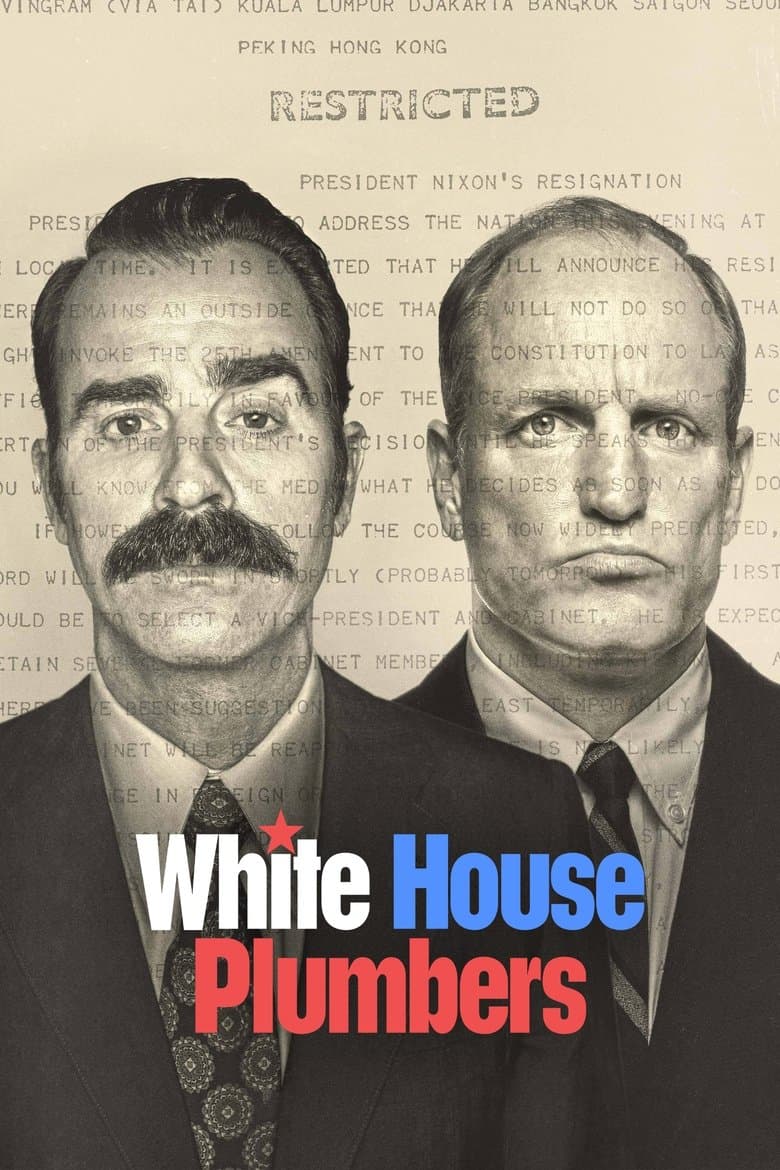
Started May 1, 2023 · Ended · Based on 1 season, 5 episodes through May 29, 2023 · TV-MA
HBO’s five-episode limited series follows Nixon’s Plumbers, mainly E. Howard Hunt and G. Gordon Liddy. It runs from the Ellsberg psychiatrist break-in through Watergate, the cover-up, prison, and the collapse of the Hunt family, including Dorothy Hunt’s 1972 plane crash. The story is a dark political farce about bungling, fanatical loyalty, and the costs of dirty tricks. Viewers meet real 1970s figures and their schemes rather than a modern identity-politics plot.
Audience-facing content is classical liberal anti-corruption satire and black comedy, not DEI or identity storytelling. There is little LGBTQ+, race-swap, or representation-first material on screen. The main political edge is critique of Nixon White House crime, dirty election ops, cover-up culture, and blind loyalty, with some framing that ties that pattern to later presidential misconduct. Themes center on zeal, incompetence, and consequences, not race, gender identity, or queer activism.
Breakdown
These are the editorial factors and ratings behind our score for White House Plumbers.
Woke representation / casting
The cast follows real 1970s people and their looks and backgrounds. White men play Hunt, Liddy, Dean, and similar leads. Latino actors play the Cuban Bay of Pigs operatives. Frank Wills is cast as a black security guard, which matches history. Wives and lobbyist Dita Beard appear in roles that fit the period and plot. There are no race or gender swaps of major historical figures and no ensemble built as one of each identity for its own sake.
3%
Woke political dialogue
The talk is dirty-tricks language, hard-right zeal, and odd character habits from the era. Liddy’s Hitler-speech dinner comes from his own self-image. Hunt complains about leftist material in period style. Extreme Operation Gemstone ideas, including plans about Black turnout, show up as the villains’ schemes. The show does not preach with modern activist words about privilege, equity, systemic racism, or pronouns.
8%
Identity-driven story themes
The main story is about bungling, loyalty to power, crime, cover-up, prison, and family ruin. Dorothy Hunt’s role as CIA spouse, courier, and crash victim is driven by history and plot. The themes are zeal, incompetence, and consequences. They are not about race, gender identity, sexuality, or liberation politics.
6%
Western institutional / cultural critique
The series clearly attacks Nixon White House crime, dirty election work, cover-up culture, and blind loyalty. Coverage and Mandel’s framing also link that pattern to later presidential misconduct. That is classic power-corrupts politics about holding the executive accountable. It is not framed as anti-whiteness, anti-Christianity, toxic masculinity, or patriarchy as a system of identity.
24%
Woke character or canon changes
Not relevant. This is a dramatized true story with normal compression, combined meetings, and a comic tone. It does not rewrite historical figures’ race, gender, or sexuality for DEI reasons.
0%
Anti-woke backlash and complaints
Not present. There was no lasting right-leaning campaign calling the show woke or DEI propaganda. People mostly complained about tone, goofiness, uneven farce versus tragedy, or dense history. Isolated jokes about Republicans and dirty elections are not a backlash against identity politics in the series.
0%
Creator track record context
Gregory and Huyck sit in satire and craft territory. Mandel is progressive and anti-Trump rather than DEI-first. Some producers show more representation-oriented patterns, but they are not the main story voice. The overall creative world is moderate liberal political comedy, not a queer- or DEI-centered core.
28%
Production