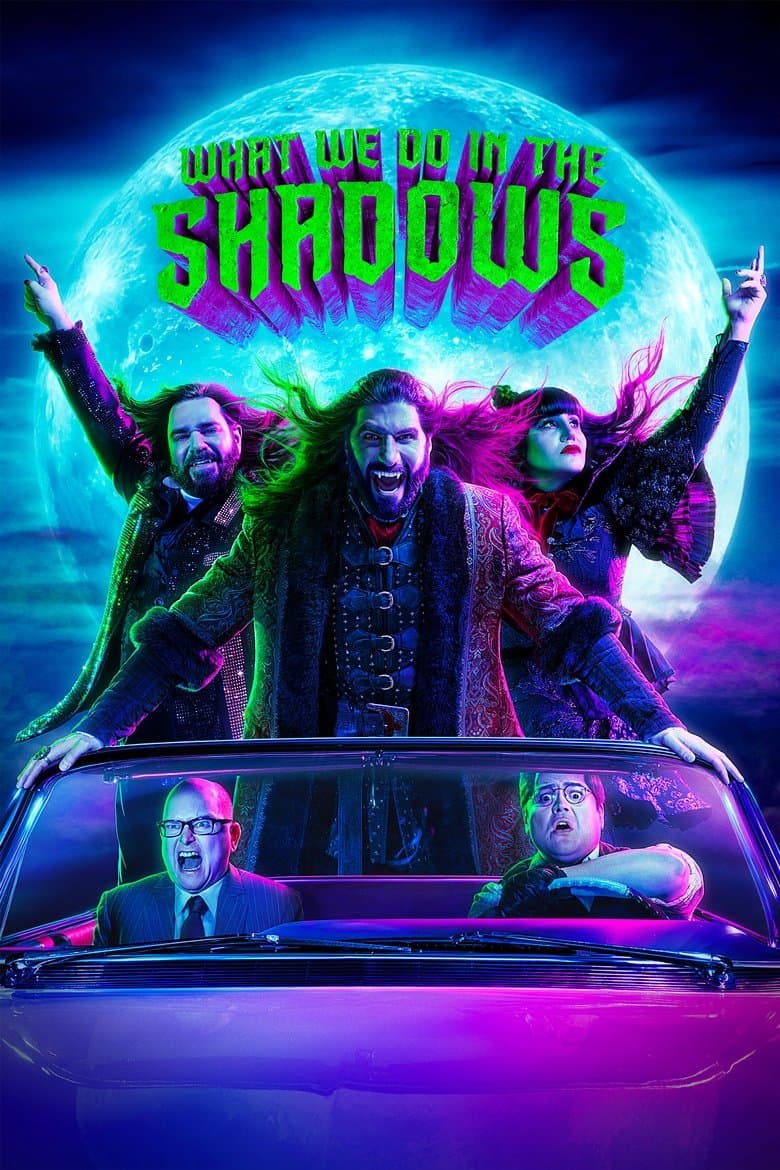
Started March 27, 2019 · Ended · Based on 6 seasons, 61 episodes through December 16, 2024 · TV-MA
Guillermo de la Cruz works as the human helper for four vampires who share a large house on Staten Island. Nandor, Laszlo, Nadja, and Colin Robinson want power, comfort, and blood, but they mostly argue about chores, money, neighbors, and their own bad plans. Guillermo spends six seasons trying to become a vampire while also learning what he wants from his life. The show uses a fake documentary style, fast jokes, gore, and strange side trips through New York and the vampire world.
The show gives queer sexuality a steady place in the main cast and story. The vampires openly pursue men and women, while Guillermo says he is gay and deals with love, secrecy, family, and acceptance. Season five includes a Pride parade plot, and the last seasons keep focusing on chosen family, personal freedom, and Guillermo's wish to live as his own person. These ideas appear inside silly vampire plots instead of turning every episode into a political speech, but queer identity is more than a brief background detail.
Community feedback
Was our 65% Woke rating accurate?
Breakdown
These are the editorial factors and ratings behind our score for What We Do in the Shadows.
Woke representation / casting
Harvey Guillén plays Guillermo, a major gay character, and the main vampires openly show attraction to more than one gender. That gives the show a clear queer presence in its main cast. The ethnic mix also includes Greek-Cypriot, Mexican-American, British, and Middle Eastern backgrounds, but those choices fit the characters' long histories and New York setting. The repeated queer identity choices make the representation signal visible.
30%
Woke political dialogue
The show brings modern politics into a few jokes. Nandor applies for American citizenship after learning that his old country no longer exists. Sean stages a Pride parade because he wants the gay vote. The finale uses a “Make America Great Again for Vampires” joke. These moments are short and silly, but they are clear political references.
24%
Identity-driven story themes
The show makes queer sexuality a steady part of the main story. The central vampires openly pursue men and women, and the writers have described them as pansexual. Guillermo says he is gay in season four while defending his chosen family. Season five gives a full plot to a Pride parade, and season six ends with Guillermo choosing friendship and independence instead of being Nandor's worker. Vampire plots still drive most episodes, but queer identity remains a major repeated theme.
82%
Western institutional / cultural critique
The show makes old male authority look foolish through Nandor's failed rule and Laszlo's selfish behavior. Nadja mocks ordinary marriage and takes control of a vampire nightclub. The show also jokes about local government, corporate work, and a politician's attempt to win the gay vote. These targets support a mild anti-traditional and anti-institution tone, but the series uses broad fantasy comedy instead of a sustained attack on Western institutions.
18%
Woke character or canon changes
Not present in this title.
0%
Anti-woke backlash and complaints
A small Reddit thread calls the show woke and objects to a political joke in the finale. The thread does not show a large campaign or a lasting dispute. Major coverage instead treats the show as a queer comedy or praises its humor, so anti-woke backlash evidence is fringe.
5%
Creator track record context
Taika Waititi has a cached score of 63 and a record of anti-fascist, anti-racist, and Indigenous representation work. Jemaine Clement has a cached score of 30 and mainly brings left-leaning comedy and anti-Trump comments. Rajat Suresh, Ayo Edebiri, and Tig Fong have cached context linked to woke, social-justice, or queer-inclusive work. Most other listed creatives have low cached scores and comedy-focused careers, so the overall creator signal is moderate.
48%
Production
TV Show · 2026
After accidentally creating a new multiverse, comic book store owner Stuart Bloom must locate a quantum-interference device to restore reality.
TV Show · 2018
Two strangers are drawn to a mysterious pharmaceutical trial that will, they're assured, with no complications or side-effects whatsoever, solve all of their problems…
TV Show · 2020
Smiling Friends Inc. is a small company whose main purpose is to bring happiness and make people smile. The series follows the day-to-day lives and misadventures of its…
TV Show · 2022
Gary is an emotional wreck and struggles to provide for his daughter since the death of his wife. Mary has a secret she can't bring herself to share with anyone.
TV Show · 2016
A comedic thriller that follows the bizarre adventures of eccentric “holistic” detective Dirk Gently and his reluctant assistant Todd.
TV Show · 2016
In a world where superheroes have been real for decades, an accountant with zero powers comes to realize his city is owned by a super villain.
TV Show · 2016
An aging police sheriff who has recently lost his position due to an angry outburst begrudgingly joins an alliance with new sheriff, Evie Barret to battle angry demons haunting…

TV Show · 2022
Irene and Franklin York, a retired couple, have a secret: a Chamber buried in their backyard that miraculously leads to a strange, deserted planet.
