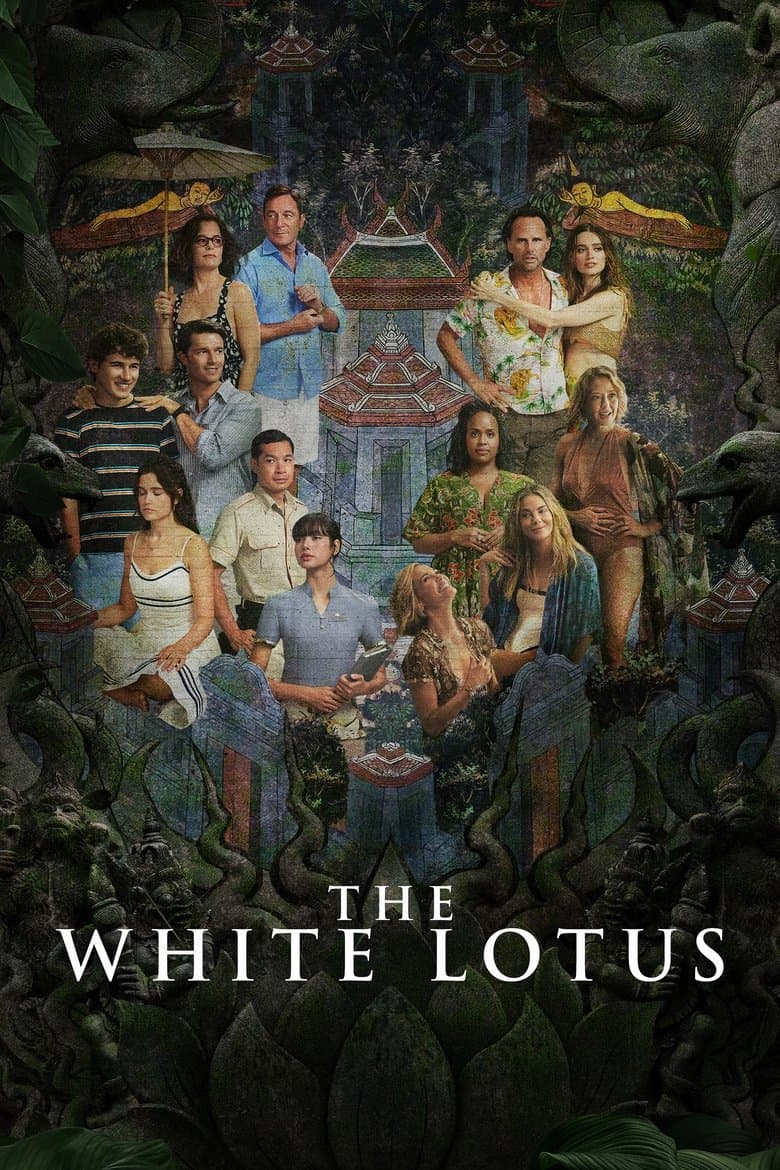
Started July 11, 2021 · Returning Series · Based on 3 seasons, 21 episodes through April 6, 2025 · TV-MA
Rich guests and hotel workers spend one week at a fancy White Lotus resort. Each season is a new place and mostly new people: Hawaii, then Sicily, then Thailand. On the surface the trip looks perfect. Underneath, people lie, cheat, fight, and hide dark secrets. The tone mixes dark jokes with drama and a murder mystery feel.
The show hits viewers with clear social themes, not quiet background noise. Season 1 leans on rich tourists, local land history, and college-style talk about privilege and colonialism. Later seasons push sex, gender power, messy gay characters, and broken rich-family pride. Queer characters and plots show up every season and are hard to miss. A lot of the “woke” talk is mocked as empty or selfish, and the main target is still spoiled rich people. Still, race, class, gender, and queer identity keep showing up in the story in ways a normal viewer would notice.
Community feedback
Was our 55% Woke rating accurate?
Breakdown
These are the editorial factors and ratings behind our score for The White Lotus.
Woke representation / casting
The cast looks like real guests and workers at fancy hotels in Hawaii, Sicily, and Thailand. Black characters like Belinda and Paula get big story time, and local staff match each place. It is not a forced “one of each” hero team or race-swap of known characters.
18%
Woke political dialogue
Season 1 college guests talk about privilege, colonialism, and heavy theory books by the pool. Later seasons add lines about dating labels and progressive talk. Much of it is played as empty or funny, but viewers clearly hear those words.
40%
Identity-driven story themes
Season 1 pushes rich tourists, land history, and guilt. Season 2 puts messy gay plots and gender power fights up front. Season 3 digs into who people think they are, money, and male pride. Queer stories appear every season. Race, gender, class, and sexuality themes are easy for average viewers to spot.
56%
Western institutional / cultural critique
Rich Western men often look entitled, shallow, or weak. Marriages look broken. Fancy tourism looks unfair and empty. Male pride and traditional gender roles get poked hard, especially in seasons 2 and 3, on top of class satire.
52%
Woke character or canon changes
Not present in this title.
0%
Anti-woke backlash and complaints
A small number of online viewers call the show leftist or “woke” for race and class themes. Most big talk goes the other way: people say it mocks college wokeness and identity politics. There is no large, lasting anti-woke campaign against the series.
10%
Creator track record context
Lead creator Mike White has a low stored woke score. He is openly gay and writes many queer characters, but he has said identity politics hurts art and that he will not let identity rules block the stories he wants to tell. Other named crew scores are also low.
19%
Production

TV Show · 2026
The mayor of a New England town resolves to turn it into the next tourist hot spot, despite local warnings that it's cursed.

TV Show · 2026
The dynamic between the two contrasting personalities, a seasoned cop who prefers old-school methods and a tech-savvy cop who relies on modern technology for investigations, as…

TV Show · 2023
A disgraced cop in debt is forced to return to his home state of Florida for a shady mission only to get swept up in a wild — and deadly — treasure hunt.

TV Show · 2024
The life of an American woman living in Kyoto, Japan, is upended when her husband and son disappear in a mysterious plane crash.
TV Show · 2022
An anniversary trip puts a marriage to the test when a couple finds themselves embroiled in one of Yucatan's most bizarre unsolved mysteries.
TV Show · 2024
John Sugar is a dashing private eye navigating the dark corners of sunny LA. Though he sees only the good in humanity, Sugar is haunted by a secret too dangerous to expose.
TV Show · 2019
A Philadelphia couple are in mourning after an unspeakable tragedy creates a rift in their marriage and opens the door for a mysterious force to enter their home.
TV Show · 2018
In 1994, a toddler disappeared from a small Welsh village, never to be seen again. 23 years later, in London, the mother of rising cello star Matilda Gray commits suicide, without…
