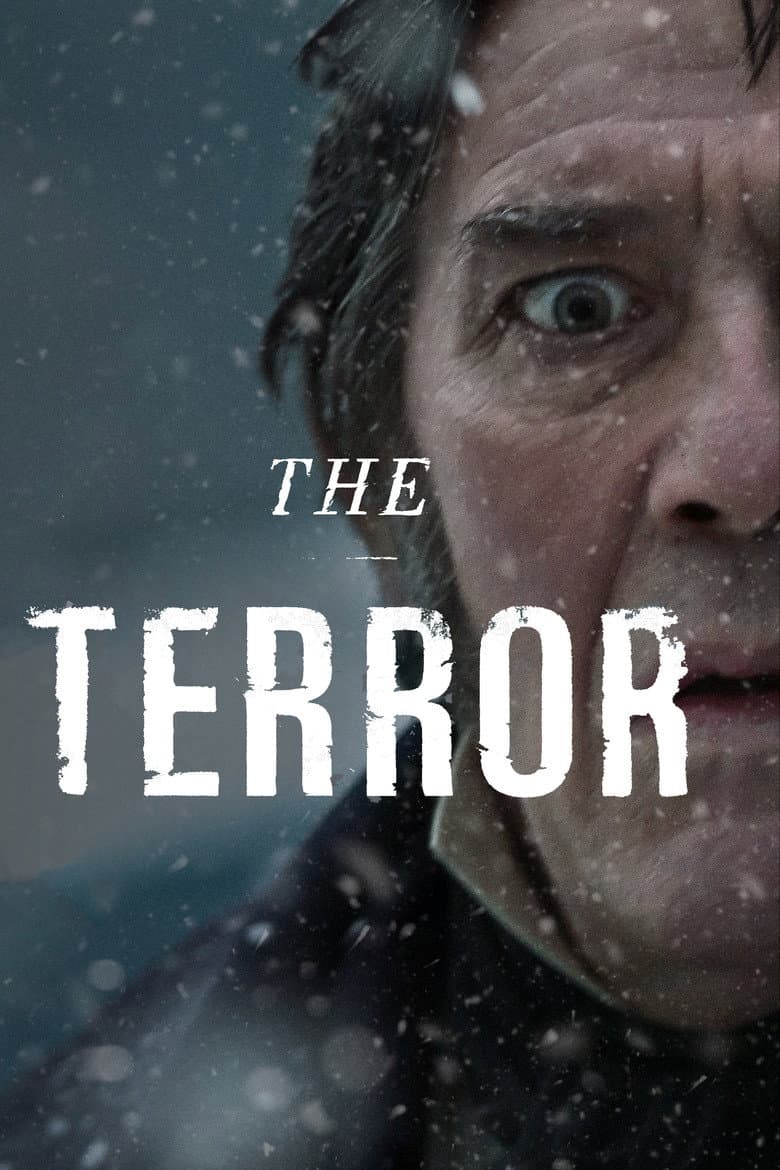
Started March 26, 2018 · Canceled · Based on 2 seasons, 20 episodes through October 14, 2019 · TV-14 · 44 min
Season 1 follows Captain Francis Crozier and the crews of two British ships trapped in Arctic ice during a failed search for the Northwest Passage. The men face hunger, disease, freezing weather, broken leadership, and a huge spirit bear that hunts them. Season 2 follows Chester Nakayama, a young Japanese American photographer, and his family after Pearl Harbor. They are forced into camps while a ghost attacks their community, so the show feels bleak, tense, and often tragic.
The clearest woke elements appear in season 2, which makes Japanese American identity, family history, and government persecution central to its story. The show uses actors of Japanese ancestry for nearly every Japanese and Japanese American speaking role, while season 1 uses Inuit actors for its Inuit characters. Season 1 also shows a same-sex relationship between two sailors, and it gives Lady Silence a larger and more independent role than she has in the novel. These elements matter, but the show presents them through period horror, survival, and family drama instead of long modern political speeches.
Community feedback
Was our 51% Woke rating accurate?
Breakdown
These are the editorial factors and ratings behind our score for The Terror.
Woke representation / casting
Season 1 gives Lady Silence to Inuit actor Nive Nielsen and uses other Inuk actors for Inuit roles. Season 2 deliberately uses actors of Japanese ancestry for nearly every Japanese and Japanese American speaking role, but that is all authentic representation. The show also shows Hickey and Gibson as a same-sex couple.
15%
Woke political dialogue
Not present. The series uses almost no explicit modern activist or political dialogue. Stories advance through period-appropriate talk, survival pressures, personal betrayals, folklore, and action rather than lectures or contemporary framing on screen.
0%
Identity-driven story themes
Season 2 follows a Japanese American family through forced removal, camp life, and the struggle to keep its family and cultural ties. The story repeats the conflict between older Japanese beliefs and younger American habits. Season 1 gives Lady Silence her own goals and makes Inuit knowledge and spiritual beliefs important to survival. Hickey and Gibson's same-sex relationship adds a smaller LGBTQ element.
31%
Western institutional / cultural critique
Season 1 repeatedly shows naval rank, class rules, male pride, and British imperial goals making the disaster worse. The season treats the officers' refusal to admit weakness or learn from Inuit knowledge as a major cause of failure. Season 2 makes the U.S. government's forced imprisonment of Japanese Americans a continuing source of fear and harm. The story's public framing also connects that past abuse to modern detention debates.
48%
Woke character or canon changes
Season 1 changes Lady Silence from a mostly silent figure in the novel into a speaking character with her own goals and story. The creators said they wanted her story to stand on its own instead of serving the male characters. The show also changes her ending and removes the book's marriage and children with Crozier. Season 2 is an original story, so it has no older canon to change.
34%
Anti-woke backlash and complaints
Some viewers called season 2 a political drama and said it felt preachy. Other commenters called it liberal propaganda against ICE and immigration detention and said it was meant to hurt Trump. Other viewers answered that the season was mainly showing real history and did not push a current political message. The evidence shows a real but limited online backlash rather than a large public campaign.
28%
Creator track record context
David Kajganich's stored context shows a moderate pattern of women's issues and social themes. Soo Hugh and Alexander Woo have low stored scores and are mainly linked to cultural history, family stories, and immigrant experiences. Dan Simmons has a low stored score and a conservative public record. Most of the other listed creators have low scores or little evidence of activism, so the combined context is mild.
25%
Production
TV Show · 2020
The story of the town and people who live above “The Loop,” a machine built to unlock and explore the mysteries of the universe – making things possible that were previously…
TV Show · 2021
On a perilous adventure across a post-apocalyptic world, a lovable boy who's half-human and half-deer searches for a new beginning with a gruff protector.
TV Show · 2019
A police chief takes in a young child she finds near the site of a mysterious accident who has no memory of what has happened.
TV Show · 2017
An MIT grad student and a tech superstar bring a low-level Pentagon official a staggering discovery that an asteroid is just six months away from colliding with Earth.
TV Show · 2017
Holden wakes up from a coma after 12 years and discovers new abilities that propel him into the middle of a dangerous conspiracy.
TV Show · 2024
Jason Dessen is abducted into an alternate version of his life. To get back to his true family, he embarks on a harrowing journey to save them from the most terrifying foe…
TV Show · 2016
Kyle Barnes has been plagued by possession since he was a child. Now an adult, he embarks on a spiritual journey to find answers, but what he uncovers could mean the end of life…
TV Show · 2021
A single mother enters a world of twisted mind games when she begins an affair with her psychiatrist boss while secretly befriending his mysterious wife.
