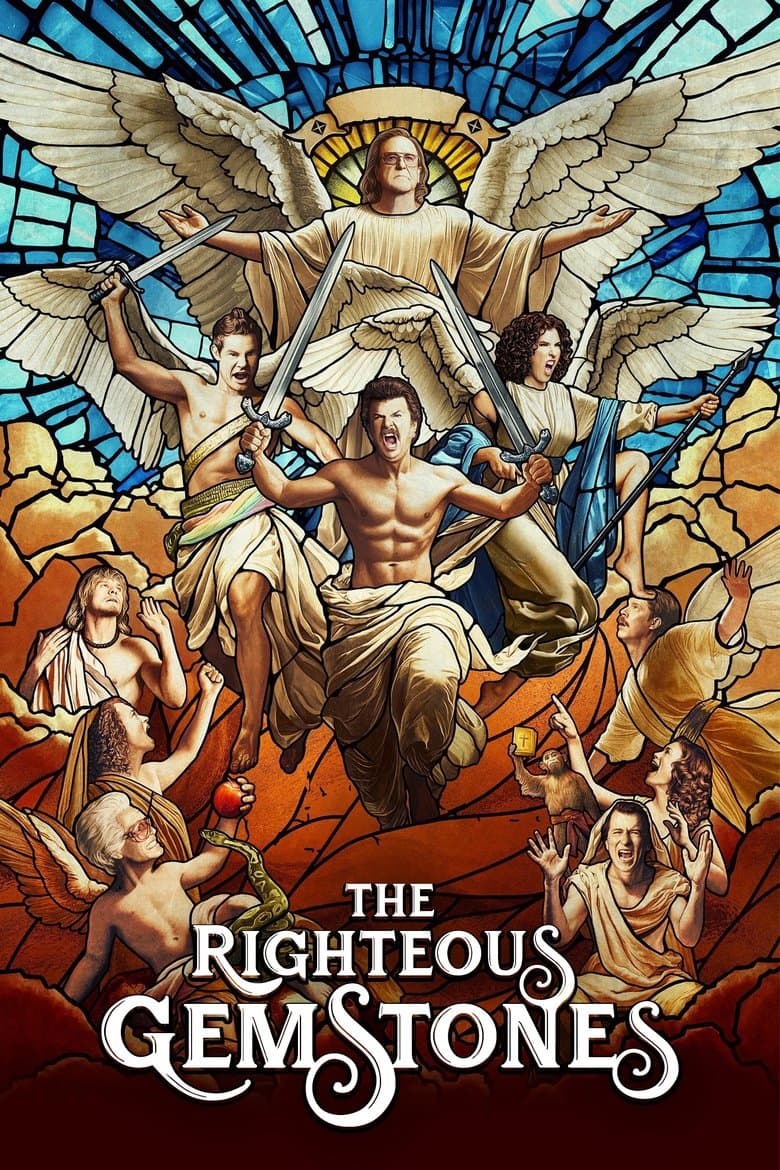
Started August 18, 2019 · Ended · Based on 4 seasons, 36 episodes through May 4, 2025 · TV-MA
The Righteous Gemstones follows Eli Gemstone and his three adult children, Jesse, Judy, and Kelvin. The family runs a huge South Carolina church while enjoying private planes, big homes, and money from followers. Each season brings blackmail, church rivals, family fights, crime, and trouble caused by their own pride. The show uses crude jokes, loud action, and real moments about grief, love, and forgiveness.
The clearest woke element is Kelvin’s growing relationship with Keefe, a former Satanist who becomes his boyfriend. Kelvin leads Prism, a church group for LGBTQ people, and the story treats the group as successful and worth supporting. Kelvin later comes out in public, speaks about gay Christians, and marries Keefe with his family celebrating them. These ideas become more important in seasons three and four, while the show’s main focus remains church greed, family drama, and religious double standards.
Community feedback
Was our 58% Woke rating accurate?
Breakdown
These are the editorial factors and ratings behind our score for The Righteous Gemstones.
Woke representation / casting
The main family and most supporting roles are white Southerners, which fits the show's setting. Kelvin and Keefe are two prominent male characters whose gay relationship becomes open and central in the later seasons. Kelvin also leads Prism, a rainbow-branded church group for LGBTQ people. The queer casting is highly visible, but the wider cast is not built as a repeated diversity showcase.
38%
Woke political dialogue
Kelvin's public award speech says that God made him gay and that being different is good. Prism uses public messages about welcoming LGBTQ people into the church. Rival pastor Vance Simkins attacks Kelvin's sexuality, and one earlier scene mocks the Proud Boys. Most dialogue still covers money, sex, family fights, and crime, so the political message is recurring but not the show's main voice.
36%
Identity-driven story themes
Kelvin and Keefe grow from close friends into a gay couple after several seasons of hints and denial. Kelvin hides his sexuality because he fears harming the church brand. Prism turns his identity into a successful church program with rainbow branding and an LGBTQ focus. The arc becomes one of the show's major story lines in seasons 3 and 4, but greed, grief, and family drama still drive most episodes.
58%
Western institutional / cultural critique
The show repeatedly presents the Gemstone megachurch as a business that sells religion for money and status. The family preaches Christian values while lying, cheating, fighting, and using church money for luxury. Season 4 also links a preacher's states-rights sermon to Confederate service and personal profit. The main target is corrupt televangelists and religious hypocrisy, not a broad modern attack on all Christians or Western life.
49%
Woke character or canon changes
Not relevant. Original series with no established source material, legacy characters, or historical figures reinterpreted through identity or DEI lenses (ordinary adaptation or satirical invention does not count).
0%
Anti-woke backlash and complaints
A few conservative and faith-based reviews objected to the show's crude mockery of Christian leaders. Some user reviews and fan posts called Kelvin and Keefe's gay storyline forced or complained that later seasons focused too much on gay jokes and acceptance. The available reaction is scattered, and no major campaign called the show DEI propaganda or made its identity message the main issue.
15%
Creator track record context
The listed core creators have low cached scores and are mainly linked to crude, character-based comedy. Their known work does not show a strong activist or identity-first pattern. Grant DeKernion is the main exception because he created Chozen, a comedy centered on a gay rapper. Edi Patterson has used feminist language about letting women be as messy as men, but the core team still has a low overall signal.
22%
Production

TV Show · 2019
A paragliding mishap drops a South Korean heiress in North Korea -- and into the life of an army officer, who decides he will help her hide.

TV Show · 2016
In his funky California beach enclave, Chip's the go-to guy for personal insights. But he isn't quite as enlightened when it comes to his own baggage.

TV Show · 2016
Rebellious Mickey and good-natured Gus navigate the thrills and agonies of modern relationships.

TV Show · 2019
A group of working-class friends finding unconventional ways to win at life in suburban northern England. These lads have dealt, scammed, bribed and conned their way through…

TV Show · 2020
After being bullied and discriminated because of her ugly looks, a high school girl transforms herself into a gorgeous "goddess" and quickly rises to fame after mastering the art…
TV Show · 2018
A hit man from the Midwest moves to Los Angeles and gets caught up in the city's theatre arts scene.

TV Show · 2016
Set nearly a decade after the finale of the original series, this revival follows Lorelai, Rory and Emily Gilmore through four seasons of change.

TV Show · 2023
A disgraced cop in debt is forced to return to his home state of Florida for a shady mission only to get swept up in a wild — and deadly — treasure hunt.
