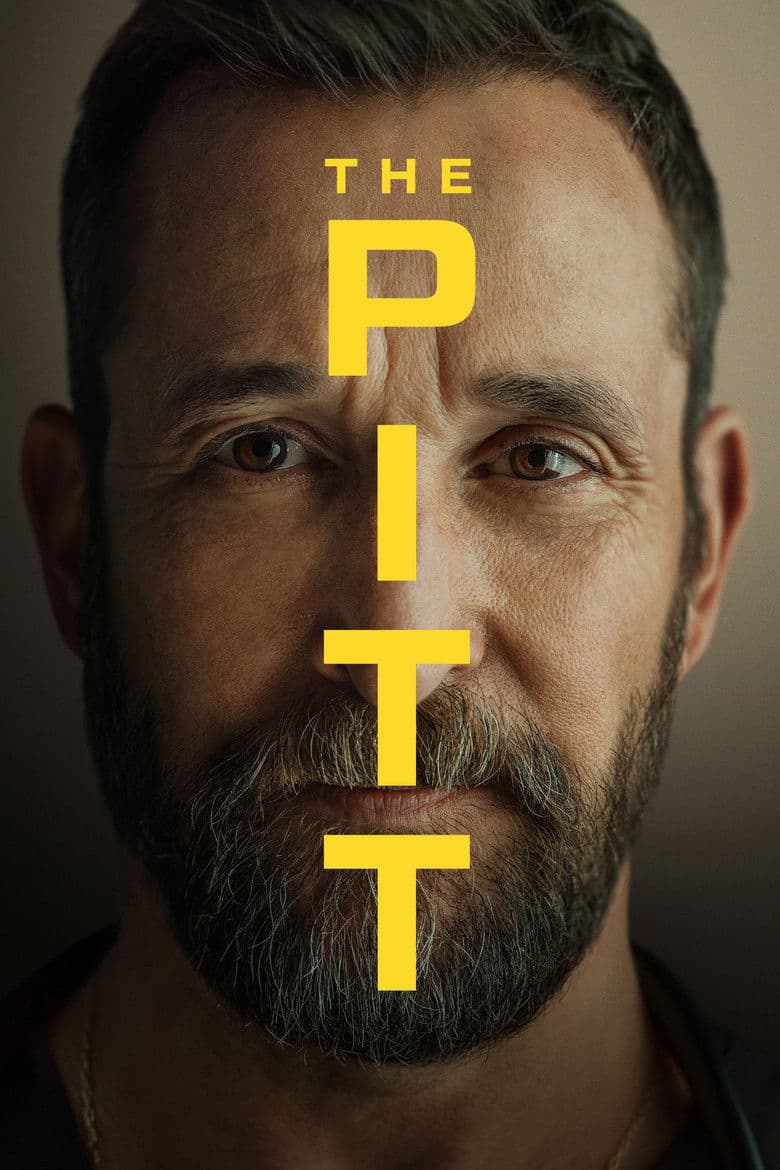
Started January 9, 2025 · Returning Series · Based on 2 seasons, 30 episodes through April 16, 2026 · TV-MA
Staff at a busy, short-staffed ER in Pittsburgh work through one long continuous shift each season. Each episode covers about one hour of real time on the floor. Attending doctor Michael Robby Robinavitch leads residents, nurses, and students through trauma, addiction, and burnout. The hospital stays overcrowded and underfunded while the team tries to keep patients alive. The show folds current U.S. healthcare problems into the cases they handle hour by hour.
Viewers also see progressive politics play out in patient cases and staff stories. Queer staff romance, a gay resident, a trans patient story, and racial-disparity research get clear screen time. Dialogue covers care for undocumented patients, ICE in the ER, abortion access, and racial bias in treatment. The series critiques underfunding, insurance pressure, gun violence, and enforcement that harms public health. Identity and social-justice cases are a major part of the structure, not just background detail.
Community feedback
Was our 78% Woke rating accurate?
Breakdown
These are the editorial factors and ratings behind our score for The Pitt.
Woke representation / casting
The urban Pittsburgh ER staff diversity mostly fits the setting, with women, multiracial workers, and immigrant-coded nurses and patients. The show still pushes identity into view through a queer staff romance, a gay resident, a trans patient story with affirmation on screen, a trans actor as a social worker, and Dr. Mohan’s racial-disparity research in major competent roles. It is not pure fantasy casting of one of each type. Representation is clearly planned and more visible over time.
42%
Woke political dialogue
Characters state progressive policy views in plain words that are hard to miss. Lines cover EMTALA rights for undocumented patients, Robby’s ICE monologue, abortion limits and medication abortion, racial bias and sickle-cell care, and post-COVID institutional trauma. These talks sit inside the hour-by-hour case structure. Season 2 makes them especially easy to notice.
62%
Identity-driven story themes
Identity and social-justice cases are built into the show, not side notes. Confirmed LGBTQ+ content includes a queer staff relationship, a gay resident, a trans patient PSA, and a growing queer cast. The series also uses racial disparities research, teen abortion access, immigration enforcement in the ER, mass-shooting fallout, anti-vax and measles tension, and underdiagnosis tropes for minority women. Season 2 pushes queer and immigration threads harder than Season 1.
68%
Western institutional / cultural critique
The main drama attacks U.S. healthcare failures such as underfunding, nursing shortages, insurance and Medicaid-Medicare pressure, and corporate satisfaction scores over real care. It also treats ICE in the ER as harmful to public health and folds in gun violence and a line about failing young men. Faith is not the central target. The show often frames enforcement, markets, and the status quo as deadly to patients.
58%
Woke character or canon changes
Not relevant. This is an original series with no established literary or historical characters race- or gender-swapped for identity reasons.
0%
Anti-woke backlash and complaints
Anti-woke pushback is steady and real. Metacritic users call it way too woke, Reddit users call wokeness the main flaw, and the Season 2 ICE episode drew labels like woke bullshit and attacks on so-called commie cities. There are also Patreon-style takedowns and MAGA parent posts telling the show to keep politics out. The heat is recurring but still second to critical praise and medical-community support, not a full franchise culture-war meltdown.
48%
Creator track record context
Most writers and producers score in a low-to-moderate progressive range. Noah Wyle scores higher for liberal healthcare advocacy and social-issue storytelling. Simran Baidwan and Quyen Tran also sit in a moderate progressive band, with Tran linked to AANHPI representation boards. John Wells fits liberal ensemble medical realism without a hard DEI brand. The pattern matches progressive healthcare framing more than radical identity activism.
32%
Production

TV Show · 2023
The story of Bass Reeves, the legendary lawman of the wild West, is brought to life. Reeves worked in the post-Reconstruction era as a federal peace officer in the Indian…

TV Show · 2016
17-year-old Joshua "J" Cody moves in with his freewheeling relatives in their Southern California beach town after his mother dies of a heroin overdose.
TV Show · 2024
The powerful real-life story of Lali Sokolov, a Jewish prisoner who was tasked with tattooing ID numbers on prisoners' arms in the Auschwitz-Birkenau concentration camp during…

TV Show · 2026
The Clyburns uproot their comfortable New York City lives to the wild, untamed beauty of Montana's Madison River Valley on a search for connection.
TV Show · 2026
Rip Wheeler and Beth Dutton gamble everything on a new life in South Texas, but the promise of building a future far from the ghosts of Yellowstone quickly collides with brutal…

TV Show · 2020
A wary CIA officer investigates a charismatic man who sparks a spiritual movement and stirs political unrest. Who exactly is he? And what does he want?

TV Show · 2024
In Japan in the year 1600, at the dawn of a century-defining civil war, Lord Yoshii Toranaga is fighting for his life as his enemies on the Council of Regents unite against him…
TV Show · 2019
In the 1960s, Israeli clerk-turned-secret agent Eli Cohen goes deep undercover inside Syria on a perilous, years-long mission to spy for Mossad.
