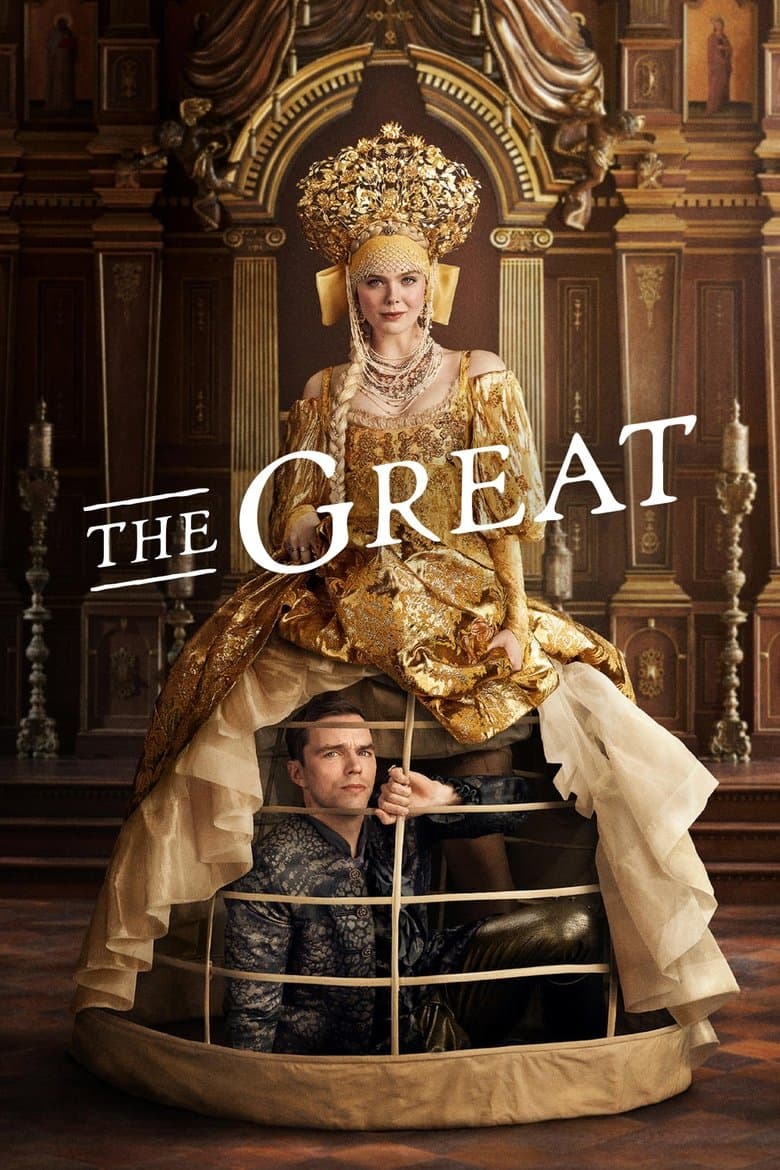
Started May 15, 2020 · Canceled · Based on 3 seasons through May 12, 2023 · TV-MA
The Great is a satirical dark comedy series very loosely based on the rise of Catherine the Great. It follows a young German noblewoman who marries the childish, cruel Emperor Peter III of Russia, then plots to overthrow him while trying to bring Enlightenment-style reforms to a backward, depraved court. The show uses heavy anachronisms and bawdy humor for a fun, irreverent take on power, gender clashes, and change. Audience-visible elements include deliberate colorblind casting in the Russian court with actors of color in named roles, a prominent advisor character who explores sex with both men and women and finds it disappointing, and a bisexual supporting character in Aunt Elizabeth who openly pursues partners of multiple genders. Catherine's arc as a smart, driven woman reformer repeatedly clashes with male entitlement, traditional customs, the church, and serfdom in a comedic framework.
Breakdown
These are the editorial factors and ratings behind our score for The Great.
Woke representation / casting
Colorblind casting places actors of color in prominent court roles including Orlo (Sacha Dhawan as key intellectual advisor to Catherine with on-screen queer sexual exploration) and others like Arkady; Elle Fanning noted intentional choice for modern relatability and representation; casting director Dixie Chassay has a track record of prioritizing diversity and inclusive selections in period projects. Visible to audiences and discussed in coverage.
42%
Woke political dialogue
Recurring clashes feature Catherine pushing Enlightenment ideas of science, education, culture, and reform against the church, serfs' traditional views, and Peter's hedonistic traditional rule; dialogue includes anachronistic attitudes and critiques of backward customs for satirical effect; presented comedically rather than as direct modern activist lectures.
28%
Identity-driven story themes
Premise centers on a determined young woman outsider reforming a male-dominated, tradition-bound Russian court through progressive changes and a coup; gender dynamics (smart woman vs. man-child emperor and his circle) and class tensions with serfs are central; confirmed queer elements for supporting characters Orlo and Aunt Elizabeth (bisexual) receive elevated weight per scoring guidelines; overall more broad empowerment satire than focused modern identity politics.
38%
Western institutional / cultural critique
The narrative satirizes absolute power, church manipulation, serfdom abuses, and entitled male court behavior (Peter and allies as crude, incompetent, and abusive); Catherine's arc imports Western Enlightenment values as superior to local folklore, divine right, and old customs; comedic framing highlights flaws in traditional structures without heavy present-day ideological overlays like anti-capitalism or colonial guilt.
27%
Woke character or canon changes
The series is explicitly "an occasionally true story" with heavy fictionalization, anachronisms, and character alterations (e.g., Aunt Elizabeth's role and relationships significantly changed from history) for comedic and dramatic purposes; colorblind casting applies to 18th-century Russian setting; these serve the satirical empowerment story rather than targeted identity-driven or DEI reinterpretations of specific historical canon or figures.
12%
Anti-woke backlash and complaints
Evidence of organized or widespread anti-woke criticism is minimal; some social media and forum discussion debates colorblind casting appropriateness in historical Russian context and general historical liberties (acknowledged by creators); no prominent news coverage or campaigns framing the show as DEI propaganda or activist messaging; reception focused on its humor, performances, and irreverence.
8%
Creator track record context
Main creator Tony McNamara specializes in satirical historical stories exploring power, complex characters, and women navigating status quos, with prior work like The Favourite featuring prominent lesbian relationships; several directors bring higher patterns (Zetna Fuentes at 46 for industry diversity advocacy roles; Bert & Bertie around 30 linked to inclusive queer projects such as Our Flag Means Death); casting director Dixie Chassay (45) openly prioritizes diversity; overall supports a moderate progressive-leaning creative environment centered on artistic satire.
32%
Production