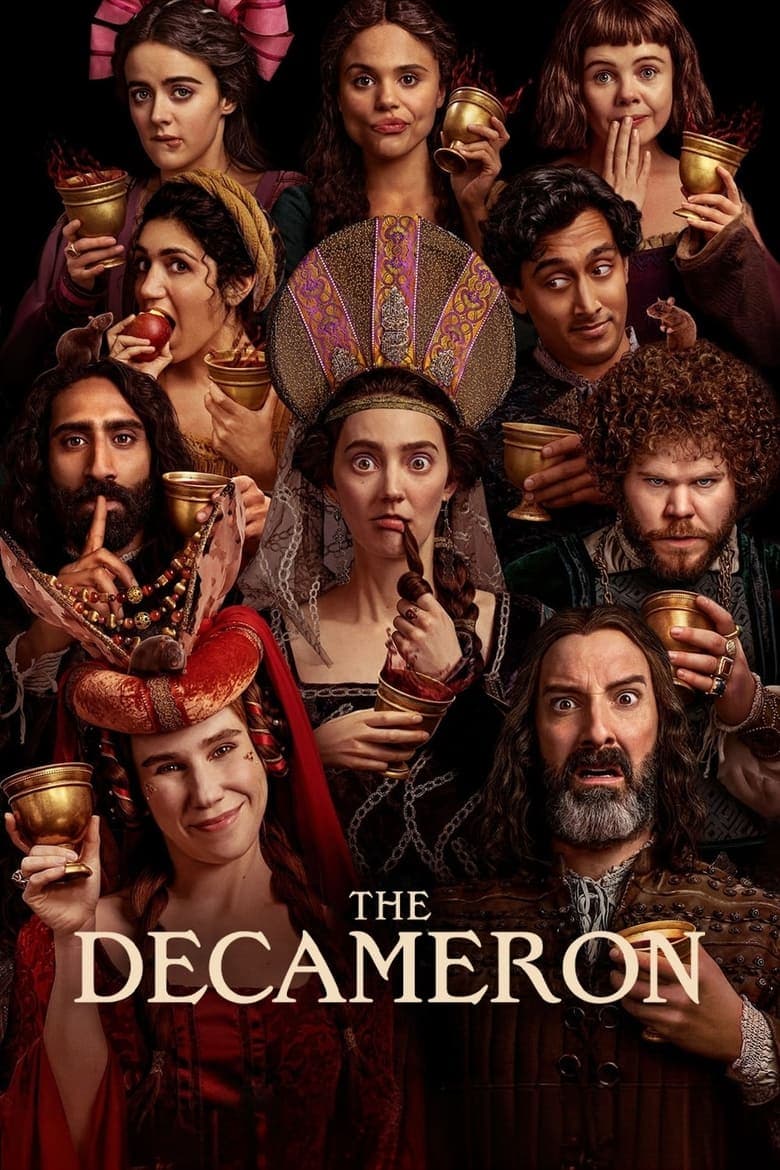
Started July 25, 2024 · Ended · Based on 1 season, 8 episodes through July 25, 2024 · TV-MA
The Decameron is a dark comedy television series set in Italy in the year 1348. It follows a group of wealthy nobles and their servants who flee to a country villa to escape the deadly bubonic plague. The show features a highly diverse cast of characters from many different backgrounds. It highlights strong queer themes, including an explicit lesbian romance and a closeted gay nobleman. The story heavily focuses on modern class struggle, showing the wealthy as foolish and incompetent while the working servants show real competence.
Community feedback
Was our 94% Woke rating accurate?
Breakdown
These are the editorial factors and ratings behind our score for The Decameron.
Woke representation / casting
The series features extensive colorblind casting for historical Italian nobles, putting black, South Asian, and Middle Eastern actors in prominent roles. In addition, the show has high-priority queer representation. This includes a central, explicit lesbian romance between the characters Misia and Filomena, alongside other prominent queer characters like the bisexual nobleman Panfilo.
75%
Woke political dialogue
The characters speak using highly modernized, colloquial English that mocks traditional gender roles and elite privilege. Dialogue frequently channels "eat the rich" talking points, critiques the patriarchy, and makes references that mirror contemporary internet culture and modern dating language.
55%
Identity-driven story themes
The main narrative revolves around modern identity struggles. It focuses heavily on the class conflict between wealthy, incompetent nobles and their oppressed servants. Romantic arcs are driven by queer identity, specifically a central lesbian love story and a nobleman's hidden gay affairs, which directly challenge traditional heterosexual family structures of the era.
78%
Western institutional / cultural critique
The show heavily satirizes core Western institutions, especially the Catholic Church and the concept of religious piety, which it frames as hypocritical and sexually repressed. It critiques traditional marriage as a toxic trap and depicts wealthy land-owning structures as completely corrupt and useless.
72%
Woke character or canon changes
The show strips away the actual storytelling premise of Giovanni Boccaccio's classic 14th-century text. It replaces the original Italian characters with a modern, racially diverse, and highly queer-focused ensemble. It also rewrites the wise female leader Pampinea from the original book into a selfish, abusive villain.
65%
Anti-woke backlash and complaints
Right-leaning critics and traditional viewers complained that the series gave Boccaccio's work the "Bridgerton treatment." Backlash focused on the forced modernization, the insertion of 21st-century queer and feminist politics into a medieval setting, and the use of modern colorblind casting for historical figures.
50%
Creator track record context
Creator Kathleen Jordan has a track record of progressive, LGBTQ-focused comedy writing. Executive producer Jenji Kohan is known for creating Orange Is the New Black, which centers race, gender, and sexual identity. This aligns with the show's emphasis on queer representation and class satire.
60%
Production

TV Show · 2026
The mayor of a New England town resolves to turn it into the next tourist hot spot, despite local warnings that it's cursed.
TV Show · 2019
Burned out on life, Miles undergoes a strange procedure at a strip mall spa -- and wakes to find he's been replaced by a better version of himself.

TV Show · 2019
In a city of coaching centers known to train India’s finest collegiate minds, an earnest but unexceptional student and his friends navigate campus life.
TV Show · 2016
Set nearly a decade after the finale of the original series, this revival follows Lorelai, Rory and Emily Gilmore through four seasons of change.

TV Show · 2020
After being bullied and discriminated because of her ugly looks, a high school girl transforms herself into a gorgeous "goddess" and quickly rises to fame after mastering the art…
TV Show · 2023
The lives of a realtor, a plumber and a former tennis star unexpectedly collide, exposing America’s obsession with true crime, murder and the slow-close toilet seat.

TV Show · 2024
The life of an American woman living in Kyoto, Japan, is upended when her husband and son disappear in a mysterious plane crash.
TV Show · 2024
When aristocratic Eddie inherits the family estate, he discovers that it's home to an enormous weed empire — and its proprietors aren't going anywhere.
