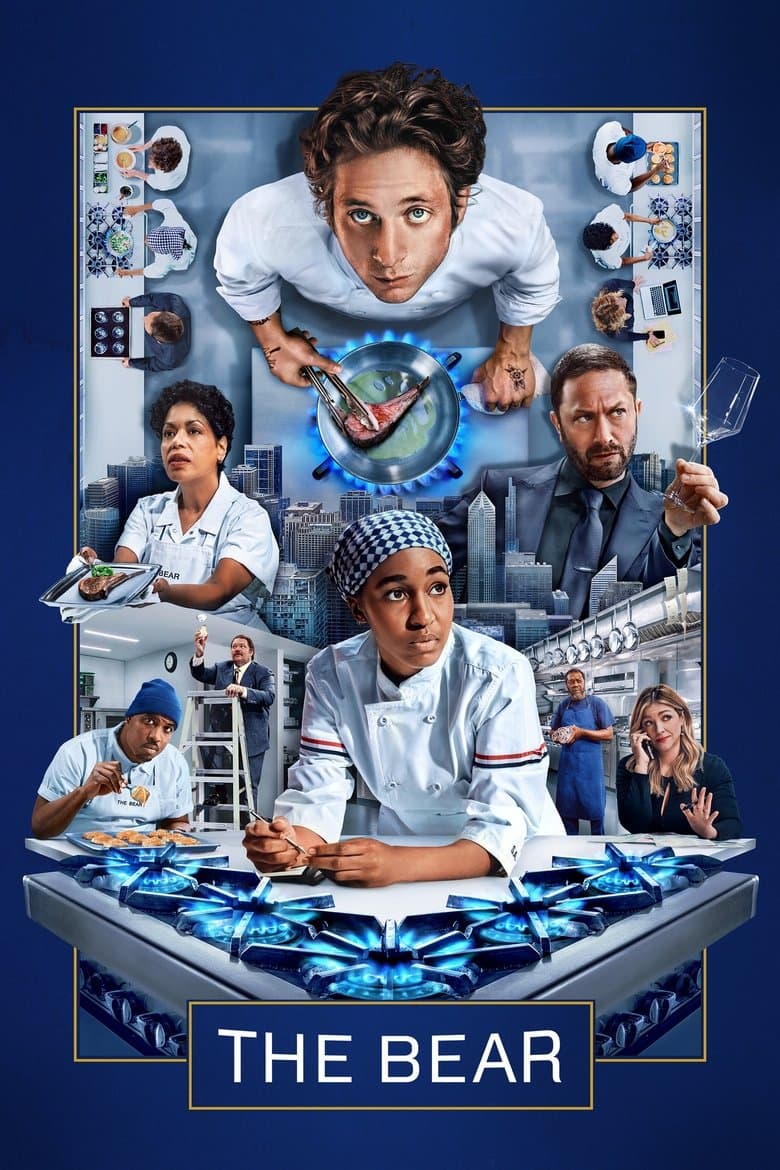
Started June 23, 2022 · Returning Series · Based on 4 seasons, 38 episodes through June 25, 2025 · TV-MA
The Bear follows Carmy Berzatto, a gifted chef who returns to Chicago after his brother dies. He takes over the family’s struggling Italian beef shop and tries to turn it into a fine dining restaurant. Carmy fights debt, grief, addiction, panic, and the damage caused by his own need for control. The fast, loud kitchen slowly becomes a place where broken people learn to trust each other.
The clearest woke elements appear through Sydney, a black chef who becomes Carmy’s main partner and a future leader. Season 4 gives her a full story about her black family, hair care, and choice between two restaurants. The same season strongly suggests that Natalie and Francie once had a sexual relationship, but it treats that detail as part of a family fight. The show also rejects shouting and humiliation in kitchens and favors teaching, care, and shared leadership. These ideas matter in some episodes, but the main story still follows grief, addiction, mental health, work, and chosen family.
Community feedback
Was our 43% Woke rating accurate?
Breakdown
These are the editorial factors and ratings behind our score for The Bear.
Woke representation / casting
The show places Black chef Sydney in a central leadership role beside white chef Carmy. The show also gives several black workers major roles and later gives Sydney a full episode about her black family and hair appointment. The mix fits a diverse Chicago restaurant, so the casting does not look like a story-world mismatch. Interview coverage sometimes presents Sydney as a black woman finding her voice in a male-dominated food world.
28%
Woke political dialogue
Not present in this title.
0%
Identity-driven story themes
Season 4 gives Sydney a full story about her black family, hair care, and choice between two workplaces. A wedding episode strongly suggests that Natalie and Francie once had a sexual relationship. The show treats that detail as part of a family fight instead of making it the main issue. Most major arcs still follow grief, addiction, mental health, work, and chosen family.
45%
Western institutional / cultural critique
The show condemns shouting, humiliation, and harsh control used by male chefs. Carmy’s former boss abuses him, and Carmy repeats that pattern when he pushes his own staff. Season 2 asks Carmy and Sydney to build a kinder kitchen with training and shared growth. The story treats these problems as trauma and restaurant pressure, not as a broad attack on capitalism, patriarchy, religion, or Western institutions.
30%
Woke character or canon changes
Not present in this title.
0%
Anti-woke backlash and complaints
A few small X accounts called later seasons woke or said DEI had taken over the restaurant story. One mid-level right-leaning account called Sydney a “Mary Sue” and objected to her being treated as instantly great. Other posts complained about a “girl boss” shift, but they were sparse and had little reach. No clear boycott, review-bombing campaign, or organized anti-woke backlash appeared.
13%
Creator track record context
Christopher Storer has a low activist profile and frames the show around food, grief, addiction, and family. Most stored notes on the writers, producers, and directors are low or moderate. Ayo Edebiri, Janicza Bravo, and Stacy Osei-Kuffour have stronger records of identity or social-justice work outside this show. That background adds some context, but the series does not become an activist project.
30%
Production

TV Show · 2026
The mayor of a New England town resolves to turn it into the next tourist hot spot, despite local warnings that it's cursed.

TV Show · 2020
New passions. New fashions. New Emily? A plucky American marketing whiz spreads her wings in life and love after landing her dream job in Paris.
TV Show · 2019
Tony had a perfect life. But after his wife Lisa suddenly dies, Tony changes. After contemplating taking his own life, he decides instead to live long enough to punish the world…
TV Show · 2024
When aristocratic Eddie inherits the family estate, he discovers that it's home to an enormous weed empire — and its proprietors aren't going anywhere.

TV Show · 2022
In disguise as her friend, Ha-ri shows up to a blind date to scare him away. But plans go awry when he turns out to be her CEO — and makes a proposal.

TV Show · 2023
The lives of a realtor, a plumber and a former tennis star unexpectedly collide, exposing America’s obsession with true crime, murder and the slow-close toilet seat.

TV Show · 2016
In his funky California beach enclave, Chip's the go-to guy for personal insights. But he isn't quite as enlightened when it comes to his own baggage.

TV Show · 2019
A group of working-class friends finding unconventional ways to win at life in suburban northern England. These lads have dealt, scammed, bribed and conned their way through…
