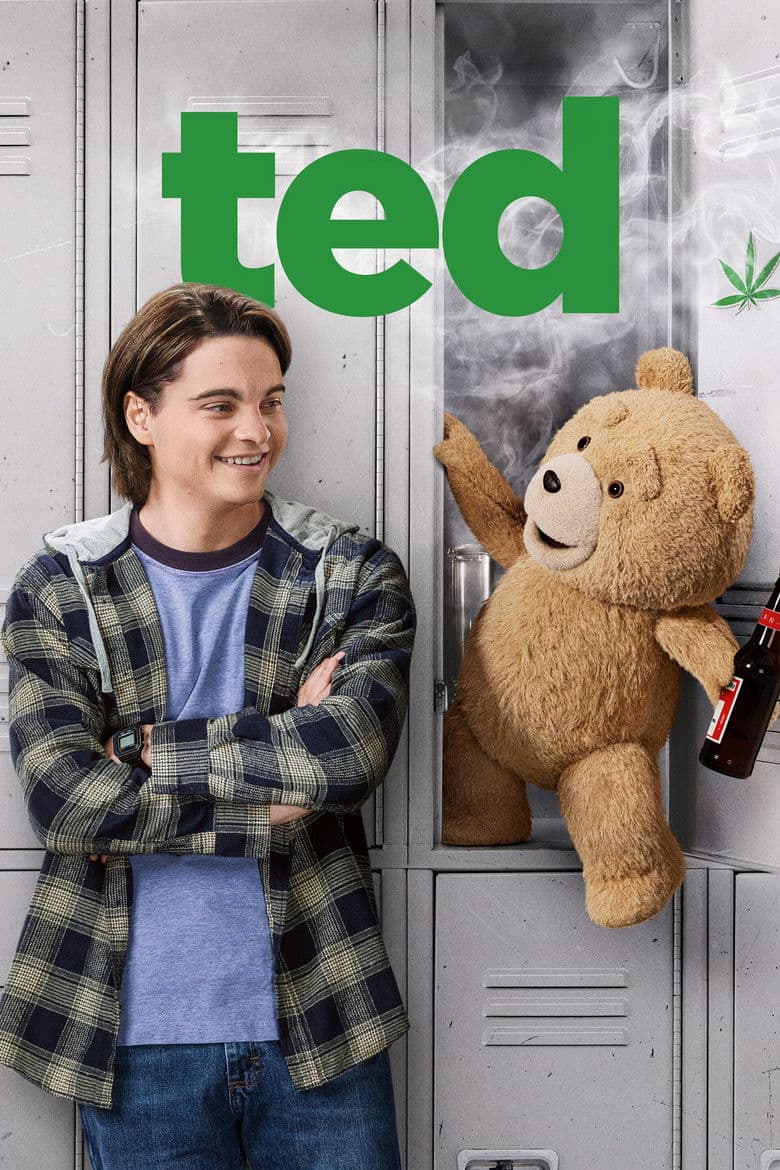
Started January 11, 2024 · Ended · Based on 2 seasons, 15 episodes through March 5, 2026 · TV-MA
Ted is a living teddy bear whose fame has faded after the magic that brought him to life. In 1993 and 1994, he lives in a working-class Boston home with his best friend, John Bennett, John's parents, and John's college-age cousin, Blaire. Ted pushes John toward weed, sex, trouble, and bad choices while still helping him face school and growing up. The story follows their loyal friendship through high school, family fights, dating problems, work trouble, and strange side trips. The tone is foul-mouthed, rude, and often silly, but it also makes room for family warmth and honest feelings.
The clearest woke elements come through Blaire, a prominent queer character who identifies as sexually fluid and dates Sarah. Her coming-out story and her family's reaction shape a major season 1 episode, while season 2 follows a breakup and gives her an abortion story that starts a family fight. Matty often stands for old-style conservative views, and Blaire answers him on racism, homophobia, gender roles, and other political subjects. These ideas return across both seasons, but Ted and John’s crude teen adventures, drug jokes, sex jokes, and friendship remain the main focus. The show treats the political fights as comedy and sometimes mocks both sides, so the woke material is clear without taking over every episode.
Community feedback
Was our 63% Woke rating accurate?
Breakdown
These are the editorial factors and ratings behind our score for ted.
Woke representation / casting
Blaire is a main supporting character in the Bennett home. The show makes her sexually fluid and gives her a girlfriend, Sarah, in several episodes. That queer casting choice is easy for viewers to notice and is tied to major family scenes. The main family remains mostly white, and the show does not build a wider race-based casting pattern.
38%
Woke political dialogue
Matty’s conservative rants and Blaire’s progressive replies recur through both seasons. Season 1 uses arguments about racism, anti-immigration views, homophobia, family roles, and queer identity. Season 2 gives a full episode to abortion and also uses race and current-event jokes. The show mocks both sides at times, but left-right conflict remains a repeated part of the family story.
52%
Identity-driven story themes
Blaire’s queer identity is more than a passing joke. Season 1 shows her relationship with Sarah and a coming-out scene, and season 2 follows their breakup and Blaire’s feelings. Season 2 also centers an unexpected pregnancy and her choice to have an abortion, with family members arguing before helping her. John and Ted’s friendship, sex, weed, and family loyalty still take up most of the show, so identity themes are important but not the whole premise.
58%
Western institutional / cultural critique
The show repeatedly mocks Matty’s sexism, racism, homophobia, and strict ideas about men and women. It turns those views into Dennis, a sentient truck who pushes even harsher anti-immigrant and race-based arguments. Blaire often calls Matty out, while Susan’s home role and her wish to work add more gender conflict. The story mostly uses these points for comedy and family conflict, not a deep attack on capitalism or Western institutions.
40%
Woke character or canon changes
Not relevant. This is an original prequel series with new characters (including Blaire) set before the Ted films; no established canon, source material, or historical figures altered for ideological or identity reasons.
0%
Anti-woke backlash and complaints
Some audience reviews call Blaire a preachy left-wing mouthpiece and say the show forces modern political ideas into its 1993 setting. Other viewers praise the crude humor and say the series makes both sides look foolish. The complaints are scattered across user reviews and forums rather than a major news story or organized boycott.
28%
Creator track record context
Seth MacFarlane is a major donor to Democratic and progressive causes. His comedy often uses political jokes from several sides, and he has spoken about political correctness hurting comedy. The rest of the credited creative team has mostly mainstream comedy careers and no strong public activist record. This gives the show some liberal creator context, but not a clear identity-first creator pattern.
28%
Production
TV Show · 2023
The inner workings of an American jury trial through the eyes of one particular juror, Ronald Gladden. Gladden is unaware the entire case is fake, everyone except him is an actor…
TV Show · 2020
A ghost-hunting duo team up to uncover and film paranormal sightings across the U.K. and share their adventures on an online channel.
TV Show · 2025
Eight years after an unforgivable mistake nukes his promising college football career, hotshot quarterback Russ Holliday tries to resurrect his dreams by disguising himself as…
TV Show · 2019
There is no such thing as an ordinary interaction in this offbeat sketch comedy series that features a deep roster of guest stars.
TV Show · 2024
Comedian Kapil Sharma hosts this laugh-out-loud variety talk show with celebrity guests, hilarious antics and his signature supporting cast.
TV Show · 2020
David Tennant and Michael Sheen (playing themselves) were due to star in a production of 'Six Characters in Search of an Author' in the West End.
TV Show · 2018
Offbeat comic James Acaster covers the strange, the mundane and everything in between in this collection of four wide-ranging stand-up specials.

TV Show · 2016
Jeremy Clarkson, Richard Hammond and James May are back with a show about adventure, excitement and friendship...
