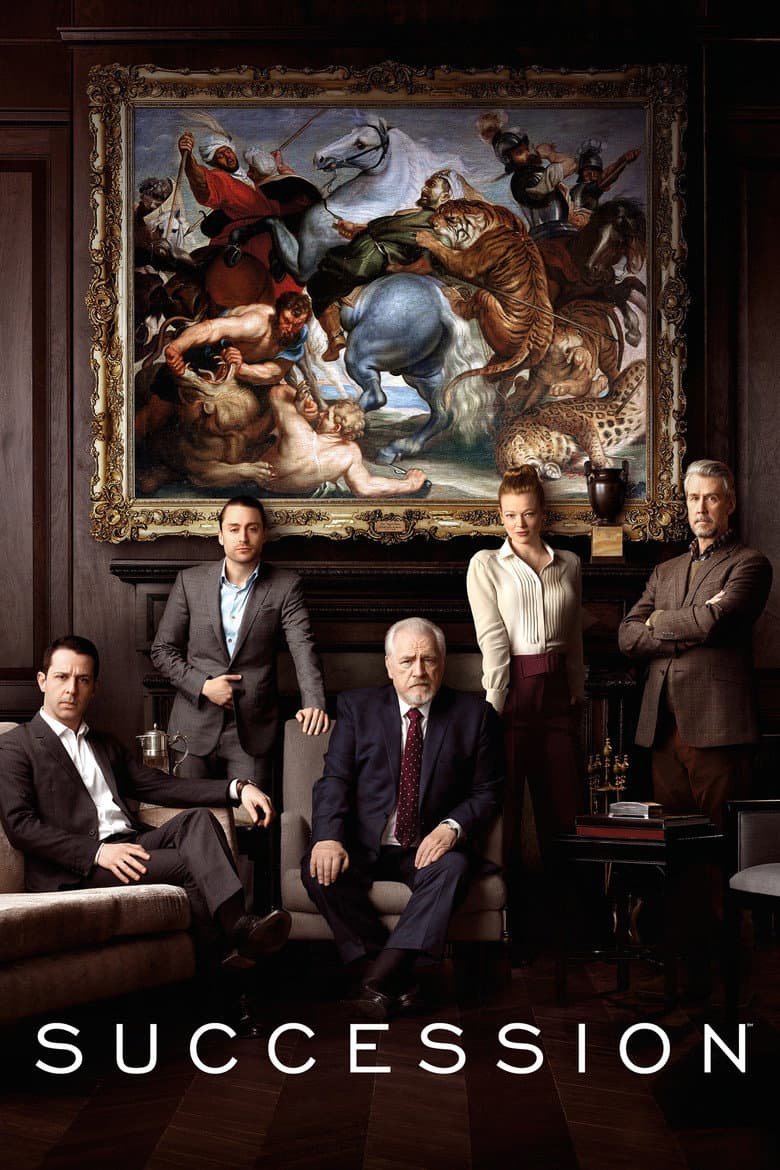
Started June 3, 2018 · Ended · Based on 4 seasons, 39 episodes through May 28, 2023 · TV-MA
Logan Roy runs a huge media and entertainment company. He is old and sick, and his adult kids fight to take his place. The story is set in the world of very rich New York business and news. The tone is dark, funny, and cold. Family love and power games smash into each other in almost every episode.
The show is mainly about power, money, and a broken family, not about a diversity agenda. Viewers will notice a clear left-leaning poke at right-wing cable news, a Trump-like candidate, and empty rich-people “progress” talk. Shiv starts as a left-leaning political worker, and Kendall sometimes uses social-justice slogans that the show treats as fake. Side characters Naomi and Tabitha are shown as having dated each other. Male power, mean bosses, and bad rich behavior are front and center. Most people would call this sharp satire of media and money more than a woke identity story.
Community feedback
Was our 48% Woke rating accurate?
Breakdown
These are the editorial factors and ratings behind our score for Succession.
Woke representation / casting
Not present in this title.
0%
Woke political dialogue
Characters often talk politics in plain progressive or culture-war terms. Shiv works for a left-leaning candidate. Kendall uses social-justice style lines that the show also mocks as empty. ATN airs joke headlines that poke at right-wing news panic. A normal viewer will hear this talk, but it is not constant speech-making in every scene.
38%
Identity-driven story themes
The main plot is family power and company control. Gender and power matter more as the story goes on: Shiv is treated as a token woman in a male world, and male abuse of power is constant. Background queer links (Naomi and Tabitha’s past) appear on screen. Identity is real but secondary to money and succession fights.
32%
Western institutional / cultural critique
The show hits hard at right-wing cable news, billionaire media power, and cruel male bosses. Season 4’s election plot frames a hard-right candidate and ATN’s role in ugly politics. Toxic father rule and broken rich families are shown as rotten. This is strong left-leaning satire of media and elite power, not a DEI classroom lecture.
50%
Woke character or canon changes
Not present in this title.
0%
Anti-woke backlash and complaints
Not present in this title.
0%
Creator track record context
Key writers lean left in past work and talk: Armstrong’s political satire and Labour ties, Birch’s feminist plays, and room comments about a socialist angle. That matches a show that mocks right-wing media and extreme wealth. Directors and many producers in the cached list are milder and less activist.
43%
Production
TV Show · 2019
Burned out on life, Miles undergoes a strange procedure at a strip mall spa -- and wakes to find he's been replaced by a better version of himself.

TV Show · 2019
A paragliding mishap drops a South Korean heiress in North Korea -- and into the life of an army officer, who decides he will help her hide.
TV Show · 2018
A hit man from the Midwest moves to Los Angeles and gets caught up in the city's theatre arts scene.

TV Show · 2016
In his funky California beach enclave, Chip's the go-to guy for personal insights. But he isn't quite as enlightened when it comes to his own baggage.

TV Show · 2023
A disgraced cop in debt is forced to return to his home state of Florida for a shady mission only to get swept up in a wild — and deadly — treasure hunt.

TV Show · 2020
After being bullied and discriminated because of her ugly looks, a high school girl transforms herself into a gorgeous "goddess" and quickly rises to fame after mastering the art…

TV Show · 2023
The lives of a realtor, a plumber and a former tennis star unexpectedly collide, exposing America’s obsession with true crime, murder and the slow-close toilet seat.

TV Show · 2019
To win back his ex-girlfriend, a nerdy teen starts selling ecstasy online out of his bedroom -- and becomes one of Europe's biggest dealers.
