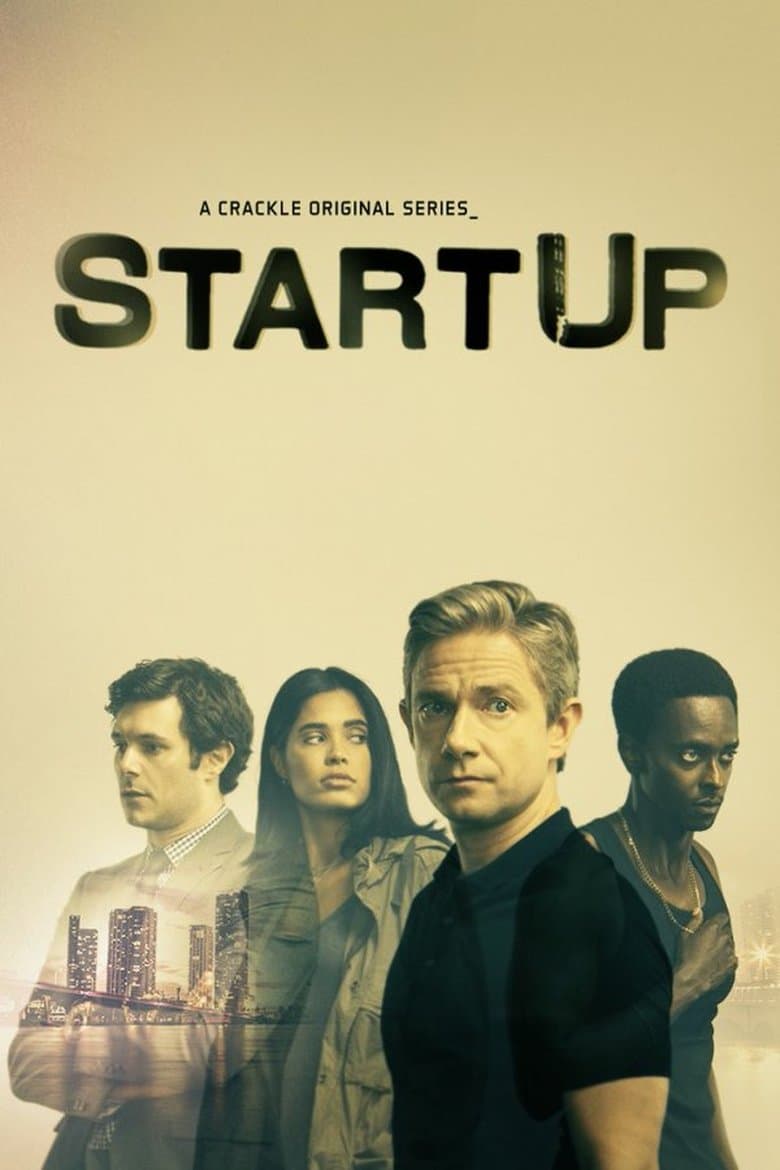
Started September 6, 2016 · Based on 3 seasons, 30 episodes · TV-MA · 45 min
Nick Talman is a Miami banker who takes his father’s stolen money and puts it into GenCoin, a new digital currency. He joins Izzy Morales, a Cuban-American coder, and Ronald Dacey, a Haitian-American gang leader who wants a better life for his family and neighborhood. The three founders face a corrupt FBI agent, rival gangs, Russian criminals, and pressure from the NSA as their company grows. The show is a dark, violent crime drama about money, loyalty, fear, and survival.
The show gives race, immigration, and class a clear place in Ronald’s story. Characters say that Haitian migrants were treated worse than Cuban migrants, that poor people in Little Haiti cannot get bank loans, and that GenCoin could give the community a fair chance. Later seasons turn ArakNet into a fight over private internet use, data collection, and government control. These ideas are visible and repeated, but crime, betrayal, family, and ambition remain the main focus.
Community feedback
Was our 40% Woke rating accurate?
Breakdown
These are the editorial factors and ratings behind our score for StartUp.
Woke representation / casting
StartUp centers a Cuban-American woman who is the brilliant coder behind GenCoin and a Haitian-American man who becomes a founder and leader. The show also places them beside a white banker and ties each person to a real Miami community. This mix fits Miami and the crime plot, so it does not look like a forced one-of-each cast. Early publicity still stresses that its tech founders are unlike the usual white tech men, which adds a small identity signal.
23%
Woke political dialogue
The show has direct dialogue about banks shutting out poor people and about giving Little Haiti a level playing field. Characters also say Haitian immigrants were treated worse than Cuban immigrants and that police protect white residents. Season 3 adds speeches about internet fairness, corporate data mining, and government surveillance. The story uses these ideas inside crime and tech arguments, rather than turning every episode into an activist speech.
37%
Identity-driven story themes
Ronald’s plan is not only to get rich. He says GenCoin could help people in Little Haiti who cannot get bank loans and could give the community a fair chance. The story also contrasts Cuban success with Haitian exclusion and shows Ronald trying to lift his neighborhood. These ideas matter to his arc, but the three-season plot is still mostly about crime, money, loyalty, and survival.
30%
Western institutional / cultural critique
The show repeatedly treats banks, police, the FBI, the NSA, and large tech firms as threats or corrupt systems. Season 1 links Miami’s dirty money to banks and says poor people in Little Haiti cannot get loans. Season 2 uses gentrification and police pressure on the Haitian neighborhood as a major problem. Season 3 presents the U.S. government as the main danger and attacks data mining and surveillance. The show does not focus on patriarchy or Christian institutions.
42%
Woke character or canon changes
Not present in this title.
0%
Anti-woke backlash and complaints
Not present. No documented woke complaints, backlash, or identity-politics debate in news or social media.
0%
Creator track record context
The main creative group has little public activist history. Ben Ketai and the listed directors have no clear identity-driven pattern, and Adam Brody has only mild political context. Ron Perlman has the strongest left-wing public profile among the producers and later plays Wes. No clear evidence shows that Perlman’s politics shaped this show’s story or marketing.
16%
Production
TV Show · 2022
Bosch is now making a living as a private investigator two years after he quit the LAPD and finds himself working with one time enemy and top-notch attorney Honey “Money”…
TV Show · 2022
New York mafia capo Dwight "The General" Manfredi is released from prison after 25 years and exiled by his boss to set up shop in Tulsa, Oklahoma.
TV Show · 2019
Loosely based on infamous crime boss Bumpy Johnson, who in the early 1960s returned from ten years in prison to find the neighborhood he once ruled in shambles.
TV Show · 2019
Gypsy Blanchard struggles to deal with the toxic relationship with her overprotective mother, but her attempts to free herself lead to murder.
TV Show · 2018
Ray Shoesmith is a father, ex-husband, boyfriend and best friend: tough roles to juggle in the modern age. Even harder when you’re a criminal for hire.
TV Show · 2016
Once a powerful lawyer, Billy McBride is now burned out and washed up, spending more time in a bar than a courtroom.
TV Show · 2016
A 26-year-old woman learns to live again after 13 years in captivity.
TV Show · 2020
New Orleans judge Michael Desiato is forced to confront his own deepest convictions when his son is involved in a hit and run that embroils an organized crime family.
