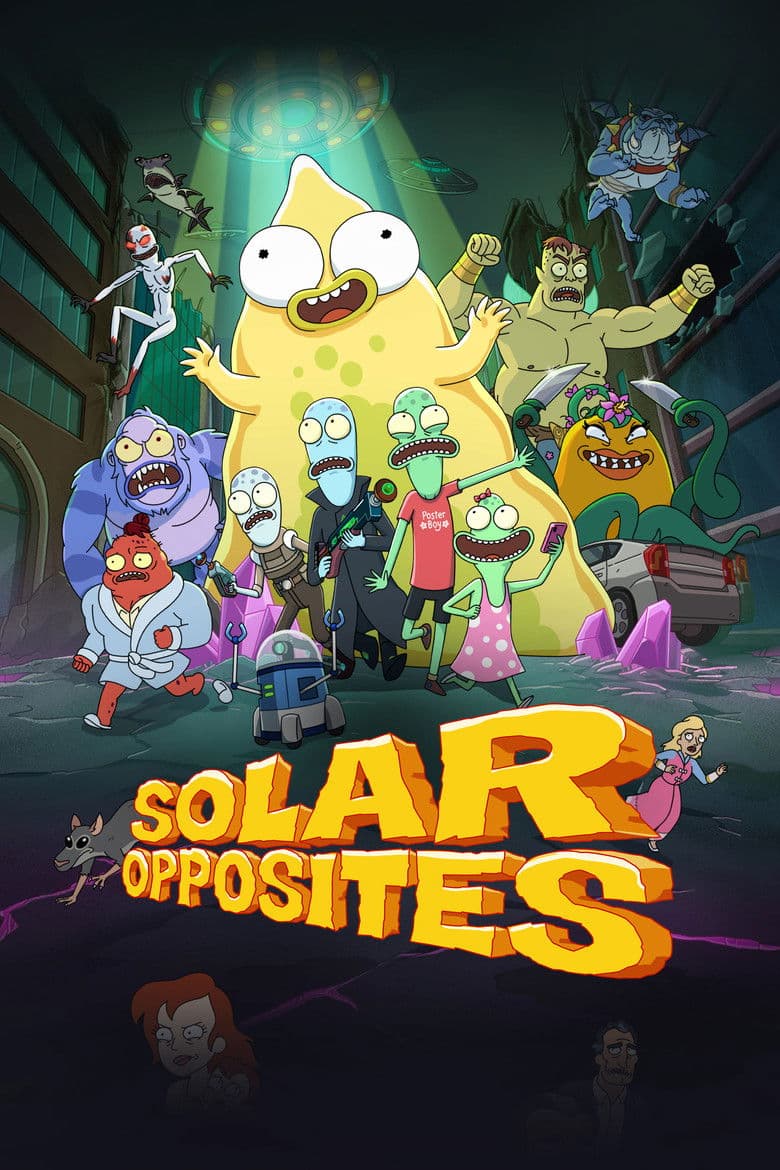
Started May 8, 2020 · Ended · Based on 6 seasons, 59 episodes through October 13, 2025 · TV-MA
Solar Opposites follows Korvo, Terry, Jesse, and Yumyulack, four aliens who flee when their planet is destroyed and land in an American suburb. They must protect the Pupa, a living computer that will one day change Earth into a new home for their species. Korvo wants to finish the mission and leave, while Terry, Jesse, and Yumyulack grow attached to Earth, its people, and its strange habits. The show uses fast, rude, violent jokes and adds a serious side story about tiny humans who build a society inside a wall.
Korvo and Terry slowly become a romantic couple, and the show later presents them as husbands who share a home and raise their copied children. Their relationship and family life become more visible in seasons three through six, especially after their wedding and honeymoon. The show also includes jokes about fighting patriarchy, breaking a glass ceiling, hardline conservative police views, and the Bible, but these moments are usually brief and comic. The Wall and the SilverCops focus more on rulers, police, war, and control than on modern identity politics.
Community feedback
Was our 54% Woke rating accurate?
Breakdown
These are the editorial factors and ratings behind our score for Solar Opposites.
Woke representation / casting
Korvo and Terry are the two adult leads, and the show turns their close partnership into a romance between two male-presenting characters. The pair later marry and remain the main household's parents. This gives the series clear audience-visible queer representation in prominent roles. The show says Shlorpians choose their gender, and the other main roles do not show a repeated race or gender pattern.
35%
Woke political dialogue
The show gives Korvo short jokes about human consumerism, pollution, and weakness. Jesse's school teacher assigns her to fight patriarchy and break a glass ceiling, and that episode uses feminist language throughout the plot. Another episode jokes that a police officer might rethink hardline conservative opinions after learning to read. These ideas appear as brief jokes across the series, not as a steady political speech.
24%
Identity-driven story themes
Korvo and Terry start as mission partners who share a home and care for two copied children. The show makes their romance clear by the end of season three and later shows them marrying, honeymooning, and calling each other husbands. Seasons five and six keep using their marriage and family life as a regular source of stories. The Wall adds a long story about power and revolution, but its main ideas are about control and survival rather than race or gender.
58%
Western institutional / cultural critique
Korvo and Yumyulack repeatedly mock human consumerism, waste, pollution, and suburban rules. The homeowners' group, police, schools, the Bowinian Church, the Wall rulers, and the SilverCops are often shown as foolish, corrupt, or controlling. Jesse's glass-ceiling plot and jokes about the Bible add short attacks on gender rules and religion. The show usually treats these ideas as broad, strange comedy, so it does not build a steady modern activist case.
30%
Woke character or canon changes
Not relevant. This is an original series with no established source material, legacy characters, or historical figures reinterpreted through identity or DEI lenses.
0%
Anti-woke backlash and complaints
Newsbusters published two pieces that accused the show of mocking conservatives, police, Christianity, and patriarchy. A later Metacritic user review called season five woke and said an agenda replaced quality. Some online viewers also called the Korvo and Terry romance forced or too prominent. The reaction stayed small, and no major boycott or lasting campaign appeared.
25%
Creator track record context
Justin Roiland is mainly known for crude, cynical comedy with broad social satire. Mike McMahan has also made optimistic Star Trek comedy and irreverent animation, but he has no known record of identity activism. Interviews describe Solar Opposites as a sitcom built around strange science, and they say Korvo and Terry's relationship grew from the characters. This gives the title a mild creator-context signal.
22%
Production
TV Show · 2020
Smiling Friends Inc. is a small company whose main purpose is to bring happiness and make people smile. The series follows the day-to-day lives and misadventures of its…
TV Show · 2016
An aging police sheriff who has recently lost his position due to an angry outburst begrudgingly joins an alliance with new sheriff, Evie Barret to battle angry demons haunting…
TV Show · 2022
Denji has a simple dream—to live a happy and peaceful life, spending time with a girl he likes. This is a far cry from reality, however, as Denji is forced by the yakuza into…
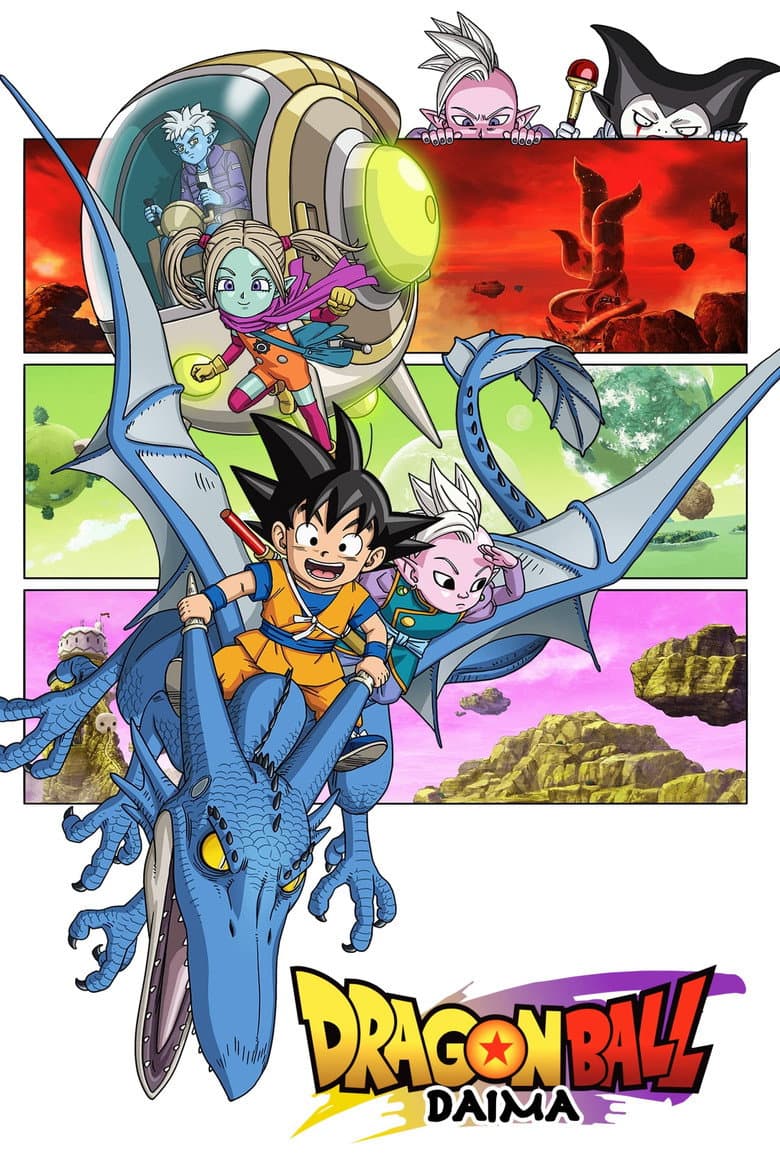
TV Show · 2024
Mysteriously transformed into mini versions of themselves, Goku and his friends travel to the Demon Realm to uncover the truth and find a cure.
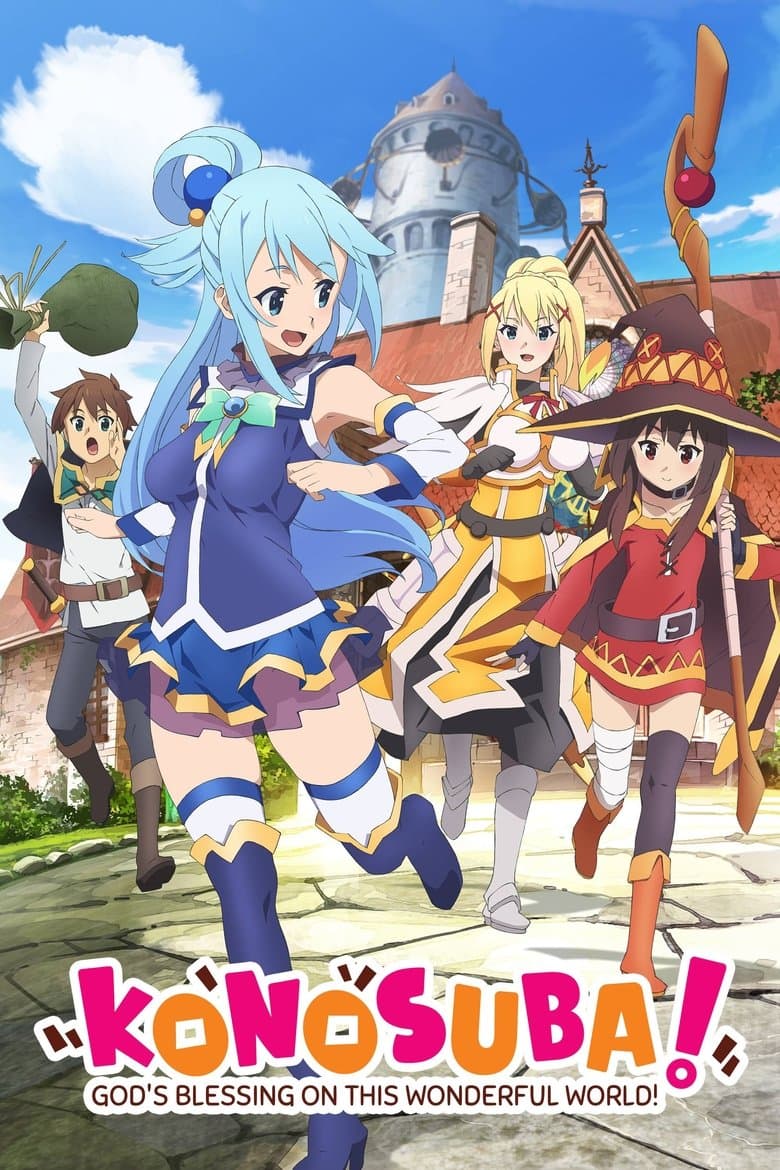
TV Show · 2016
After a traffic accident, Kazuma Sato’s disappointingly brief life was supposed to be over, but he wakes up to see a beautiful girl before him.
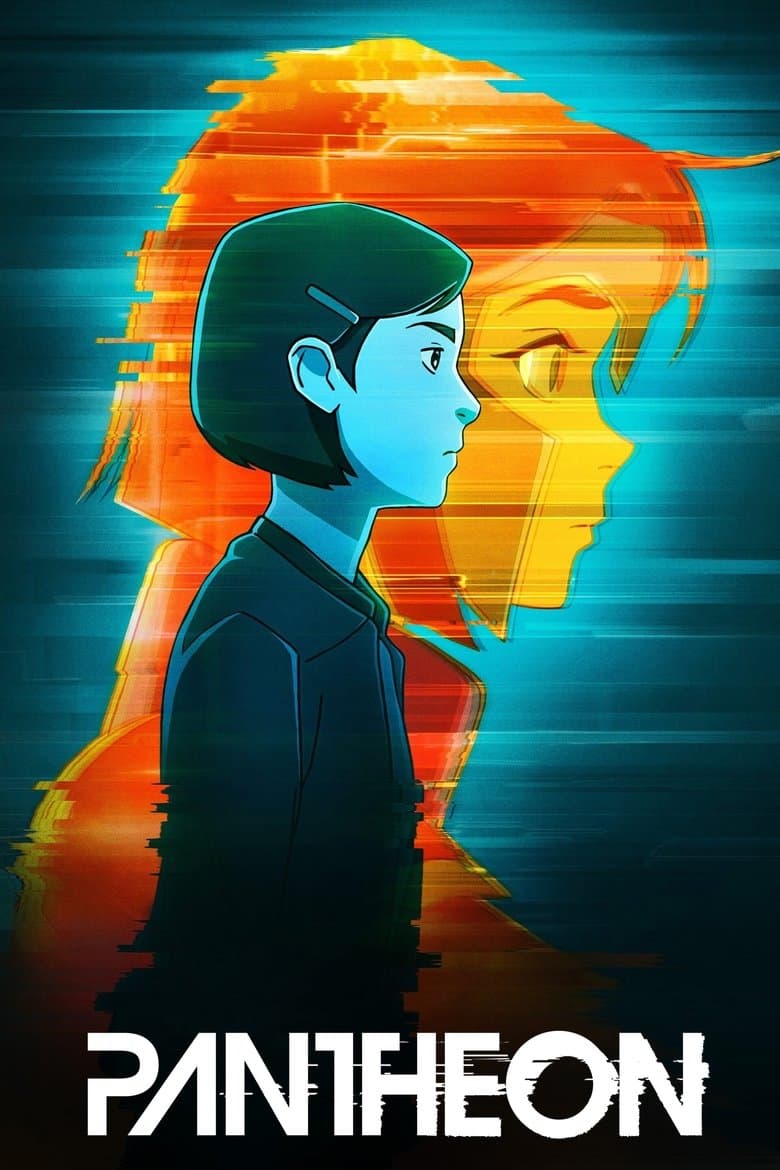
TV Show · 2022
A bullied teen receives mysterious help from someone online: a stranger soon revealed to be her recently deceased father, David, whose consciousness has been uploaded to the Cloud…
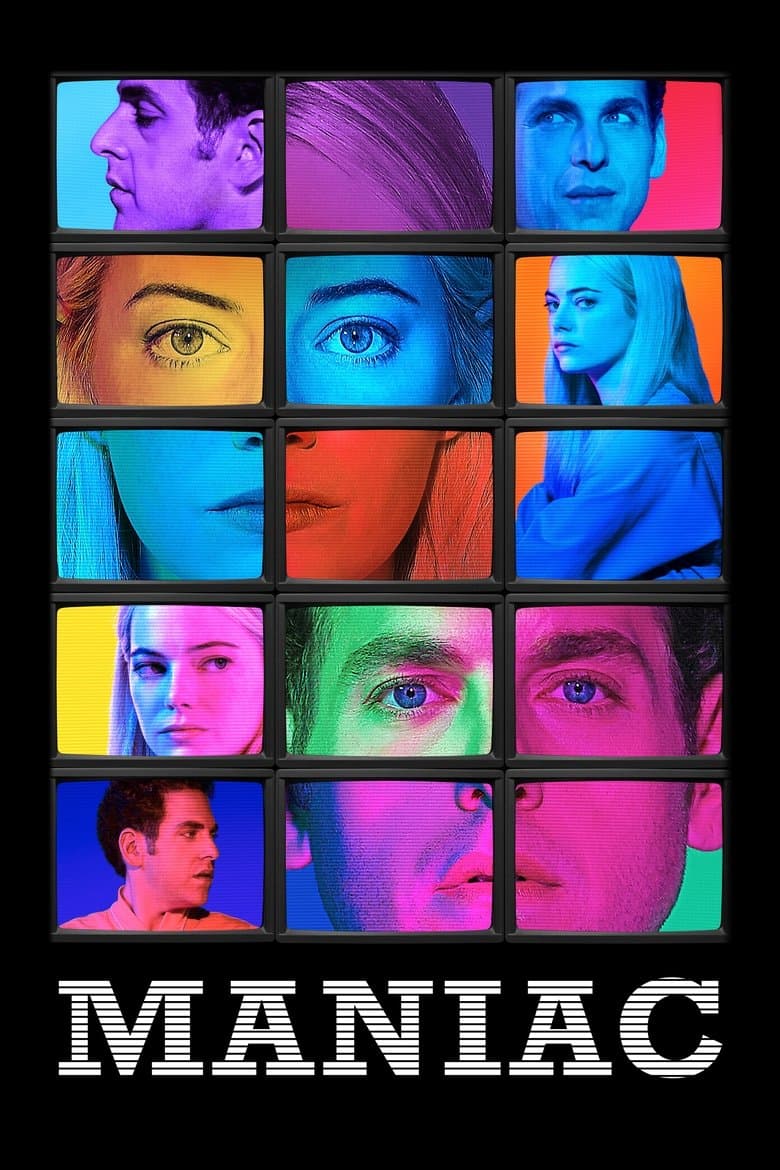
TV Show · 2018
Two strangers are drawn to a mysterious pharmaceutical trial that will, they're assured, with no complications or side-effects whatsoever, solve all of their problems…
TV Show · 2020
A surreal take on transitioning from 20-something to 30-something centering on a married couple juggling such everyday challenges as parenthood, friendship, ham theft, stripper…
