Started July 11, 2024 · Returning Series · Based on 2 seasons, 16 episodes through August 13, 2025 · TV-MA
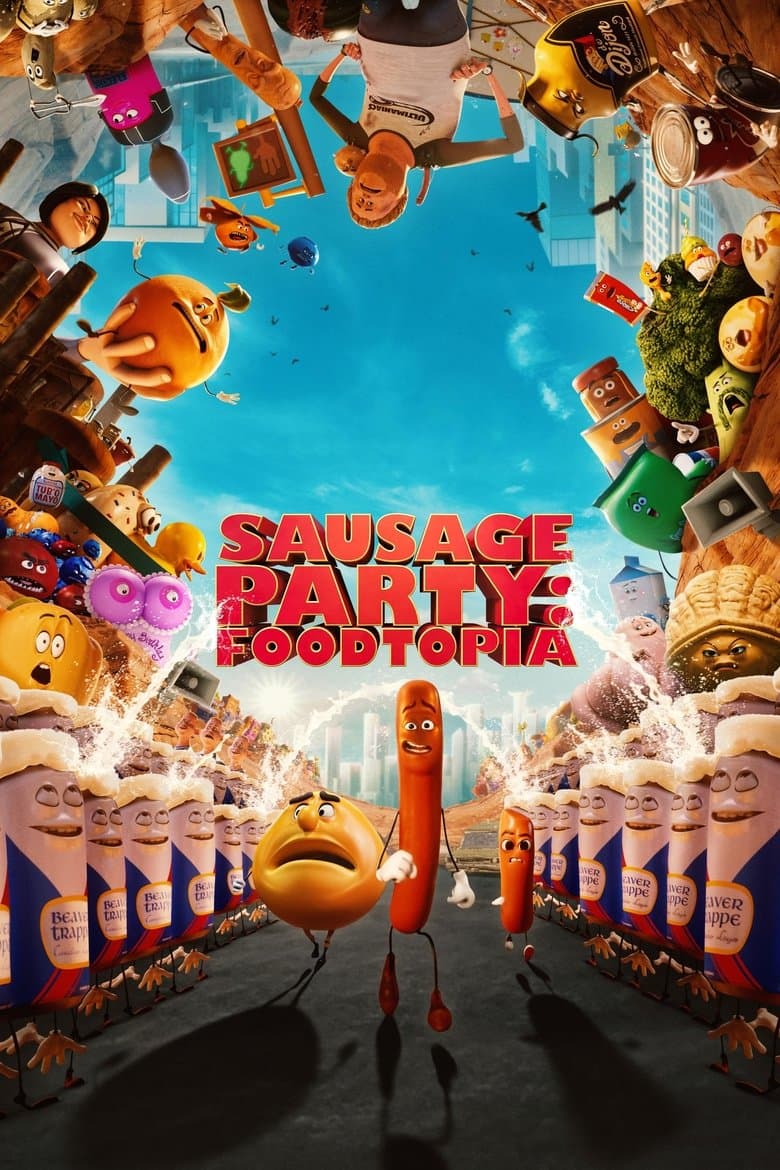
Sausage Party: Foodtopia is an adult animated cartoon show. It continues the story of talking foods who defeat the humans and try to build their own city. The show has visible social-justice themes and political commentary. The characters frequently debate capitalism and wealth redistribution. The main character also has a bisexual relationship with a human male. There are also storylines about corrupt police forces and anti-colonialism.
Community feedback
Was our 81% Woke rating accurate?
Breakdown
These are the editorial factors and ratings behind our score for Sausage Party: Foodtopia.
Woke representation / casting
The voice cast includes diverse actors like Sam Richardson and Natasha Rothwell, as well as transgender actress Patti Harrison. The characters themselves also feature strong LGBTQ+ representation. Frank (the sausage) has a sexual relationship with a human man named Jack. This makes Frank and Jack bisexual. Sammy Bagel Jr. is also bisexual and mourns his dead partner Kareem. This heavy emphasis on queer character identities raises the score.
45%
Woke political dialogue
The characters talk a lot about politics and modern social issues. Brenda (the bun) literally invents communism to share wealth equally. Other characters give preachy speeches about corrupt police and how bad capitalism is. In season two, characters discuss colonialism, class structures, and worker exploitation in the city of New Foodland. These modern political debates are very obvious in the dialogue.
52%
Identity-driven story themes
The show puts queer relationship themes right in the center of the story. In season one, Frank cheats on Brenda by having sex with a human man named Jack. This bizarre gay relationship is a major plot point that carries into season two. Sammy's sadness over losing his male partner, Kareem, is also a key emotional story. These active LGBTQ+ plotlines give the show a clear identity-driven focus.
62%
Western institutional / cultural critique
The show attacks traditional Western values and institutions. It mocks religion and faith, calling belief systems a way to control people. Traditional marriage and family are rejected. Instead, the show celebrates a sexually fluid food society where cheating and multi-partner sex are normal. The show also attacks law enforcement by showing the food police force as instantly corrupt and abusive.
58%
Woke character or canon changes
The show changes legacy characters to fit modern progressive standards. To avoid the movie's crude racial stereotypes, characters like the native American Firewater and the lesbian Teresa del Taco are left out entirely. The show also changes Frank's character. In the movie, he loved Brenda. In the show, he suddenly becomes bisexual and sleeps with a human man. Fans felt this change was forced to add representation.
45%
Anti-woke backlash and complaints
Viewers and critics complained about the preachy, political plot of the show. Many did not like the heavy-handed Donald Trump parody in the orange dictator character Julius. Others disliked the constant attacks on capitalism and police. Fans also complained about Frank's sudden bisexual relationship with Jack. They felt this change was forced into the story to meet modern diversity quotas.
40%
Creator track record context
The main creators have a low-to-moderate history of social-justice projects. But the writing team has several very progressive and activist writers. This includes Dewayne Perkins, a queer black writer who focuses heavily on marginalized identities and GLAAD activism. Writer Jennifer Kim also focuses on DEI representation. This mix of traditional comedy writers and identity-focused writers gives the show a moderate score.
35%
Production
TV Show · 2021
When a 34-year-old underachiever gets run over by a truck, his story doesn't end there. Reincarnated in a new world as an infant, Rudy will seize every opportunity to live the…
TV Show · 2019
After a demon attack leaves his family slain and his sister cursed, Tanjiro embarks upon a perilous journey to find a cure and avenge those he's lost.
TV Show · 2019
One fateful day, all of humanity was petrified by a blinding flash of light. After several millennia, high schooler Taiju awakens and finds himself lost in a world of statues.
TV Show · 2025
Backwoods bounty hunter Hub Halloran comes back from the dead with an unexpected second chance at life, love, and a nearly-forgotten musical career — only to find that his old job…
TV Show · 2016
Shigeo Kageyama, a.k.a. "Mob," is a boy who has trouble expressing himself, but who happens to be a powerful esper.

TV Show · 2016
After a traffic accident, Kazuma Sato’s disappointingly brief life was supposed to be over, but he wakes up to see a beautiful girl before him.
TV Show · 2021
Two siblings - an idealistic teenage boy and his naive younger sister - are forced to pilot an abandoned Jaeger across a hostile landscape in a desperate attempt to find their…
TV Show · 2022
In a dystopia riddled with corruption and cybernetic implants, a talented but reckless street kid strives to become a mercenary outlaw — an edgerunner.
