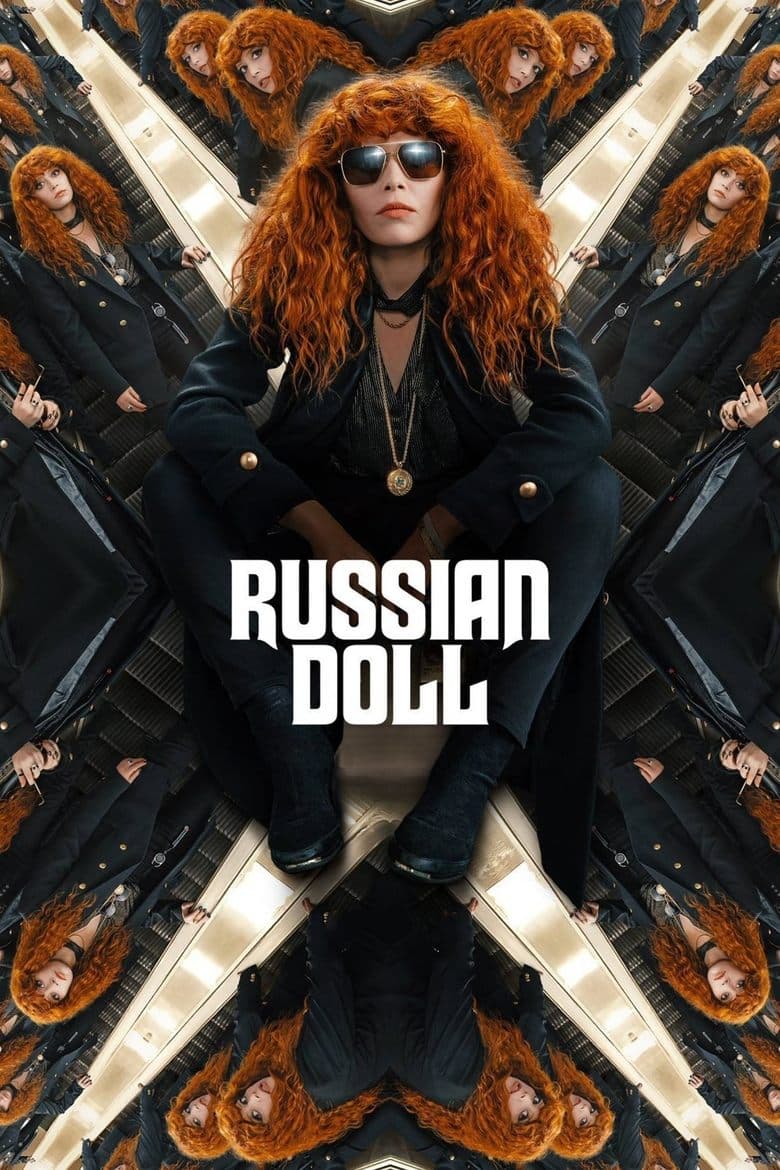
Started February 1, 2019 · Ended · Based on 2 seasons, 15 episodes through April 20, 2022 · TV-MA
Russian Doll is a Netflix comedy-drama about Nadia, a cynical and self-destructive New York game developer who dies repeatedly on her 36th birthday and restarts the same night in a time loop. She meets Alan, who faces his own loop, and together they work through personal traumas to escape. Season 2 shifts to time travel via subway into family history, focusing on intergenerational trauma and Jewish heritage tied to a Holocaust survivor grandmother, with some gender and relationship exploration through body possession.
Community feedback
Was our 37% Woke rating accurate?
Breakdown
These are the editorial factors and ratings behind our score for Russian Doll.
Woke representation / casting
Diverse casting includes black actor Charlie Barnett as co-lead Alan in an original modern NYC story, plus Asian and other ethnic supporting roles. Season 2 body swaps add visible racial and gender body experiences. Diversity fits the setting and plot organically without heavy signaling, quota emphasis, or mismatched identity in prominent competent roles.
28%
Woke political dialogue
No explicit political lectures, activist arguments, or identity-based messaging appear. Conversations stay on personal trauma, addiction, relationships, mortality, and historical family events.
8%
Identity-driven story themes
Season 1 focuses on individual flaws, guilt, addiction, and human connection. Season 2 prominently features Jewish identity and intergenerational trauma from the Holocaust through family time travel. It also includes noticeable gender and queer exploration in Alan's body-swap arc, including euphoria in a female body and same-sex romantic elements in the past, as discussed in reviews. These are audience-visible but tied to personal growth rather than political activism.
32%
Western institutional / cultural critique
Some mild satire of modern life and complex female portrayals with feminist undertones. No activist-style attacks on patriarchy, toxic masculinity, traditional gender roles, Christianity, or Western institutions as systemic flaws. The story stresses personal accountability and historical processing.
14%
Woke character or canon changes
Not relevant. Original series with no established source material, canon characters, or historical figures altered for ideological or identity reasons. Time travel and body possession serve the trauma and family story.
0%
Anti-woke backlash and complaints
Very little public criticism treats the show as pushing woke, DEI, or left-wing identity politics. Reception focused on artistic and emotional qualities. Minor fringe online comments exist, but no significant backlash or debate of this type.
10%
Creator track record context
Prominent creators include several with moderate-to-high scores tied to queer advocacy and feminist or cultural identity work (Lyonne 63, Headland 57, Babbit 64), plus others with race-focused writing. This aligns with the show's personal explorations of heritage and some identity layers without turning into overt activism.
47%
Production
TV Show · 2023
The lives of a realtor, a plumber and a former tennis star unexpectedly collide, exposing America’s obsession with true crime, murder and the slow-close toilet seat.
TV Show · 2019
Tony had a perfect life. But after his wife Lisa suddenly dies, Tony changes. After contemplating taking his own life, he decides instead to live long enough to punish the world…
TV Show · 2019
Burned out on life, Miles undergoes a strange procedure at a strip mall spa -- and wakes to find he's been replaced by a better version of himself.
TV Show · 2016
Rebellious Mickey and good-natured Gus navigate the thrills and agonies of modern relationships.

TV Show · 2019
A paragliding mishap drops a South Korean heiress in North Korea -- and into the life of an army officer, who decides he will help her hide.
TV Show · 2024
When aristocratic Eddie inherits the family estate, he discovers that it's home to an enormous weed empire — and its proprietors aren't going anywhere.

TV Show · 2022
In disguise as her friend, Ha-ri shows up to a blind date to scare him away. But plans go awry when he turns out to be her CEO — and makes a proposal.
TV Show · 2016
After being pulled into the webtoon world created by her father, a surgical resident gets entangled in a murder mystery involving the story's hero.
