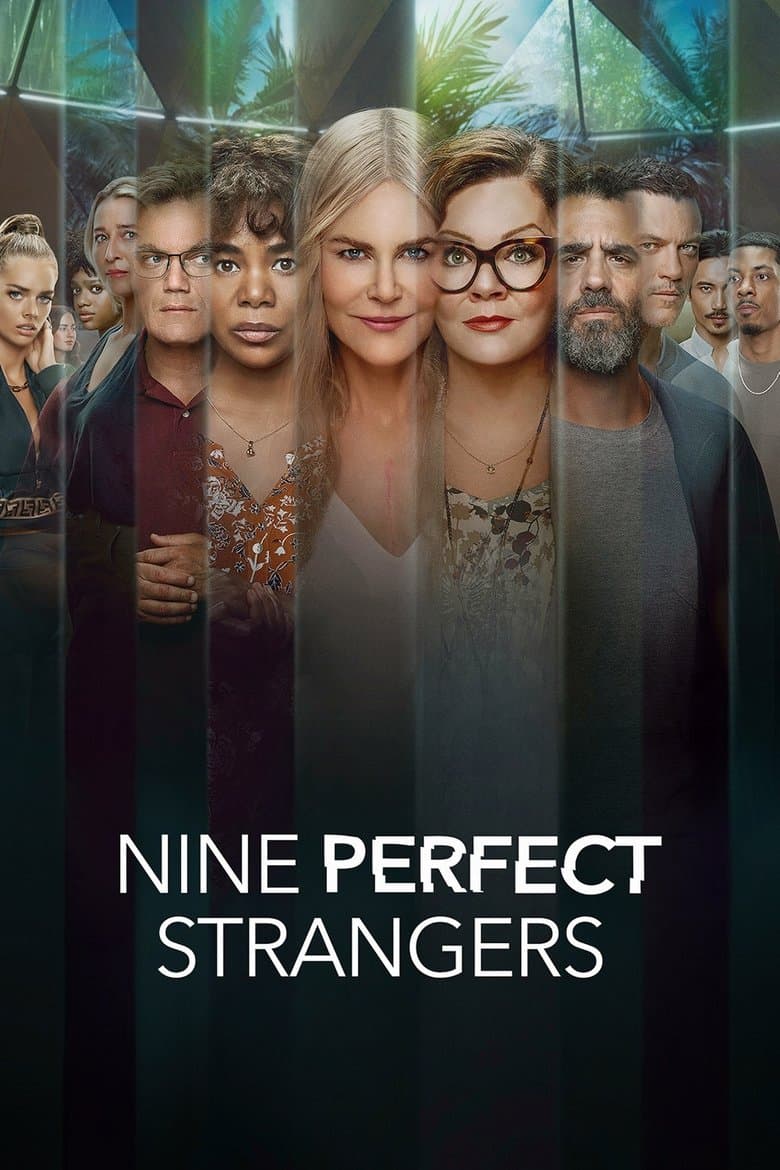
Started August 18, 2021 · Returning Series · Based on 2 seasons, 16 episodes through July 2, 2025 · TV-MA
Nine Perfect Strangers follows people who visit Masha Dmitrichenko’s private wellness retreat to fix painful parts of their lives. Season 1 places them at Tranquillum House in California, where Masha secretly gives them drugs and forces them to face grief, addiction, broken relationships, and fear. Season 2 moves Masha and a new group to an Alpine retreat in Austria, where family wounds and past harm tied to a rich arms businessman come together. The tone mixes mystery, dark comedy, strange visions, and serious emotional drama.
The clearest audience-visible woke element is the queer relationship plot in Season 2. Wolfie and Tina are a lesbian couple whose strained relationship, creative work, and search for self-worth receive a large part of the season. Season 1 also gives Lars a gay identity and a story about love and fatherhood. Season 2 adds criticism of weapons, billionaire power, Western business, the Catholic Church, and cancel culture, but these ideas stay inside personal struggles instead of becoming the whole story.
Community feedback
Was our 59% Woke rating accurate?
Breakdown
These are the editorial factors and ratings behind our score for Nine Perfect Strangers.
Woke representation / casting
Season 2 places a lesbian couple in a major guest storyline, and Season 1 includes a gay reporter among the main guests. The two seasons also use Black, Asian, Filipino, and Turkish performers in prominent roles. The international retreat setting makes most of this mix believable, so it does not look like a made-up checklist. The repeated visible queer casting still gives this factor a light score.
35%
Woke political dialogue
Season 1 has little direct political talk. Season 2 has characters argue about cancel culture, the Catholic Church, and wealthy Western companies taking from Eastern Europe. The finale has Masha pressure billionaire David Sharpe to stop making weapons and put money into charity work. These points are clear in later episodes, but they do not fill most scenes.
35%
Identity-driven story themes
Season 2 gives Wolfie and Tina, a lesbian couple, a major story about love, talent, and self-worth. The show follows Wolfie as she feels erased by Tina’s fame and chooses to leave the relationship. The show follows Tina as she learns that her talent does not define her whole life. Season 1 also follows Lars, a gay man, as he thinks about love, fatherhood, and his partner.
55%
Western institutional / cultural critique
Season 1 questions luxury wellness businesses that take money from troubled customers. Season 2 links a billionaire’s company to war deaths, public shaming, and the guests’ personal pain. The season also treats the Vatican and Catholic rules as targets for jokes and shows a former nun losing trust in her faith. The criticism is strongest near the end, but the show still resolves it through personal healing and business deals.
48%
Woke character or canon changes
Not relevant. The series adapts an original novel without reported identity-driven alterations to source characters or events.
0%
Anti-woke backlash and complaints
NewsBusters called Season 2 anti-Catholic propaganda because of its former nun, faith doubts, and jokes about the Vatican. A tiny French X account said the show had gone woke and that its propaganda was tiring. A second tiny far-right post mentioned the show in a race-based propaganda claim about an actress’s roles, but it had almost no reach. No large boycott, review-bombing push, or organized campaign was found.
18%
Creator track record context
Most key creators have low cached scores and no strong activist record. Jaclyn Moore has a stronger record of trans advocacy and identity-focused work. Jessica Sharzer has a queer background and past LGBTQ-focused work. Their history raises the context score, but the show uses those themes in only part of its personal drama.
36%
Production
TV Show · 2020
Grace and Jonathan Fraser are living the only lives they ever wanted. Overnight a chasm opens in their lives: a violent death and a chain of terrible revelations.
TV Show · 2024
John Sugar is a dashing private eye navigating the dark corners of sunny LA. Though he sees only the good in humanity, Sugar is haunted by a secret too dangerous to expose.
TV Show · 2020
A family's lives are irreparably disrupted when the 14-year-old son is accused of murdering a fellow classmate.
TV Show · 2017
A demented serial killer taunts a retired police detective with a series of lurid letters and emails, forcing the ex-cop to undertake a private, and potentially felonious, crusade…
TV Show · 2018
A troubled war veteran is assigned to protect a controversial politician who may be the target of a terror plot.
TV Show · 2025
A brash but brilliant cop becomes head of a new police department, where he leads an unlikely team of misfits in solving Edinburgh's cold cases.

TV Show · 2024
Kirie tries to escape from her town Kurouzu-cho, where the residents get obsessed with spirals due to an unexplained curse.
TV Show · 2021
When family man Nick Brewer is abducted in a crime with a sinister online twist, those closest to him race to uncover who is behind it and why.
