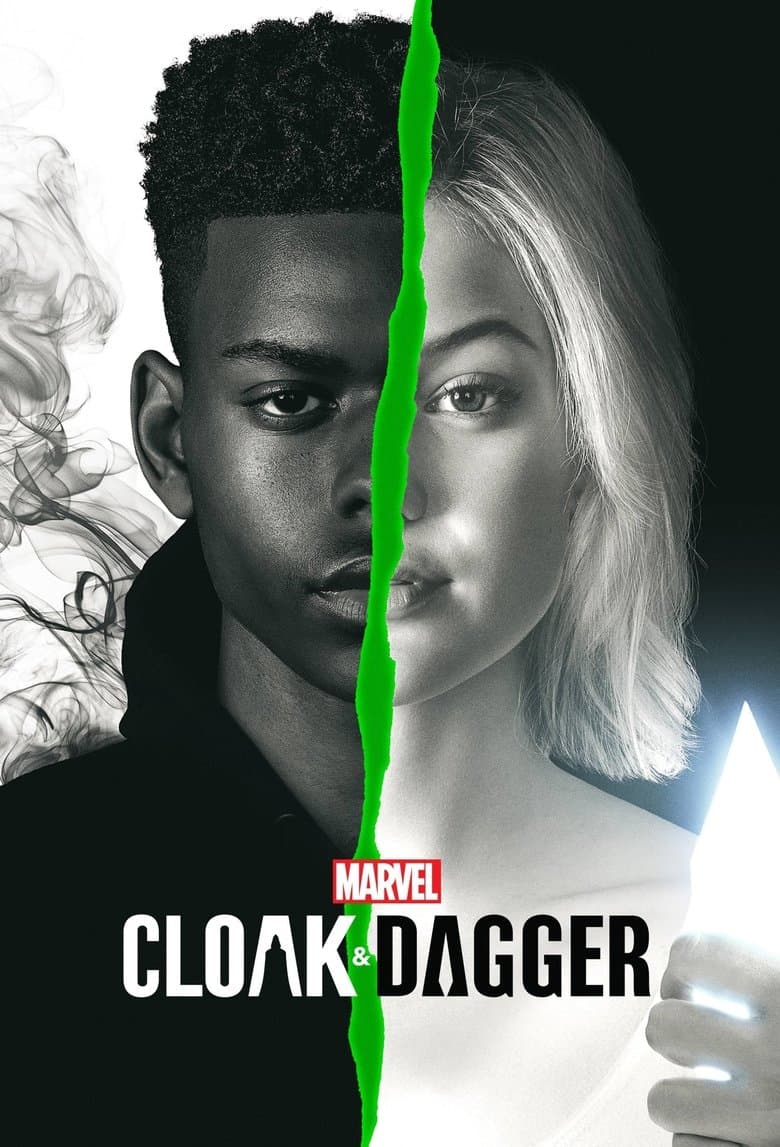
Started June 7, 2018 · Canceled · Based on 2 seasons, 20 episodes through May 30, 2019 · TV-14 · 44 min
Marvel's Cloak and Dagger is a superhero drama set in New Orleans that follows two teenagers named Tyrone and Tandy. They are connected by a childhood tragedy and gain superpowers of darkness and light that work best when they are together. Tyrone can teleport and see people's fears, while Tandy can throw light daggers and see their hopes. Instead of focusing on standard comic book action, the show serves as a slow-paced teen drama centered on social commentary. The story heavily emphasizes modern activist themes such as systemic racism, police brutality, and white privilege. Viewers will easily notice explicit dialogue about racial inequality and how the justice system fails marginalized groups. The series also features background queer representation by revealing that a past historical heroic pairing consisted of two male lovers.
Community feedback
Was our 92% Woke rating accurate?
Breakdown
These are the editorial factors and ratings behind our score for Marvel's Cloak & Dagger.
Woke representation / casting
The show features a diverse lead duo and highlights racial differences. It also includes several prominent, highly competent female characters. To meet the queer representation rules, the score is elevated because the series includes confirmed background LGBTQ+ elements. Specifically, it reveals that a past historical pairing of heroes was an openly gay male couple.
50%
Woke political dialogue
The characters engage in explicit political conversations about race and class. Tyrone and Tandy argue directly about white privilege and how their skin colors affect their daily lives. The dialogue also features heavy critiques of police departments and corporate greed, with characters openly discussing how the justice system works to protect rich white men over marginalized women.
65%
Identity-driven story themes
The narrative relies heavily on identity-driven story themes. Tyrone's entire character arc is shaped by police brutality after he witnesses his brother get shot by a cop. Tandy's light-based weapons are introduced as a direct response to an attempted sexual assault. Season two focuses almost entirely on a human trafficking ring that exploits vulnerable, marginalized young women.
72%
Western institutional / cultural critique
The series presents a strong Western institutional / cultural critique. The New Orleans police force is depicted as deeply corrupt and racist, with multiple officers working actively to cover up the murder of a black youth. Big corporations like Roxxon are portrayed as evil, greedy, and harmful to the environment. The story frames standard justice systems as broken and failing.
75%
Woke character or canon changes
The show features a major woke character or canon change by swapping the backgrounds of the lead characters from the comic books. In the original comics, Tandy comes from a rich family and Tyrone is a poor runaway. The show reverses this so that Tyrone is wealthy and Tandy is poor. The showrunner admitted this change was made to explore modern privilege and systemic racism.
75%
Anti-woke backlash and complaints
The show received noticeable anti-woke backlash and complaints from viewers who felt it was too preachy. Many reviews and social media comments complained that the show prioritized left-wing political lecturing, police brutality storylines, and white privilege debates over traditional superhero action and comic book accuracy.
45%
Creator track record context
The creator Joe Pokaski has a history of telling socially conscious stories. Several key writers and directors on the project, such as J. Holtham, Joy Kecken, and Gina Prince-Bythewood, have strong track records of creating works centered on racial justice, queer advocacy, and progressive activism, resulting in an elevated score for this category.
55%
Production
TV Show · 2023
A girl with extraordinary psychic abilities joins two gifted teen boys at a small ghost-hunting agency to fight the many deadly spirits haunting London.
TV Show · 2022
A powerful sorceress in a blind woman's body encounters a man from a prestigious family, who wants her help to change his destiny.
TV Show · 2016
A disgraced, 75-year-old ex-sheriff, whose life ends at the hands of corrupt cops, is brought back to life and given a second chance by a pair of young tech scientists, as a…
TV Show · 2019
In the dark, early days of a zombie apocalypse, complete strangers band together to find the strength they need to survive and get back to loved ones.
TV Show · 2019
A grim drama that unfolds against the backdrop of a global catastrophe. An unknown new virus turns Moscow into a city of the dead.
TV Show · 2022
An episodic anthology series focused on both new and established characters set in the world of "The Walking Dead."
TV Show · 2019
Iwatani Naofumi, a run-of-the-mill otaku, finds a book in the library that summons him to another world. He is tasked with joining the sword, spear, and bow as one of the Four…
TV Show · 2017
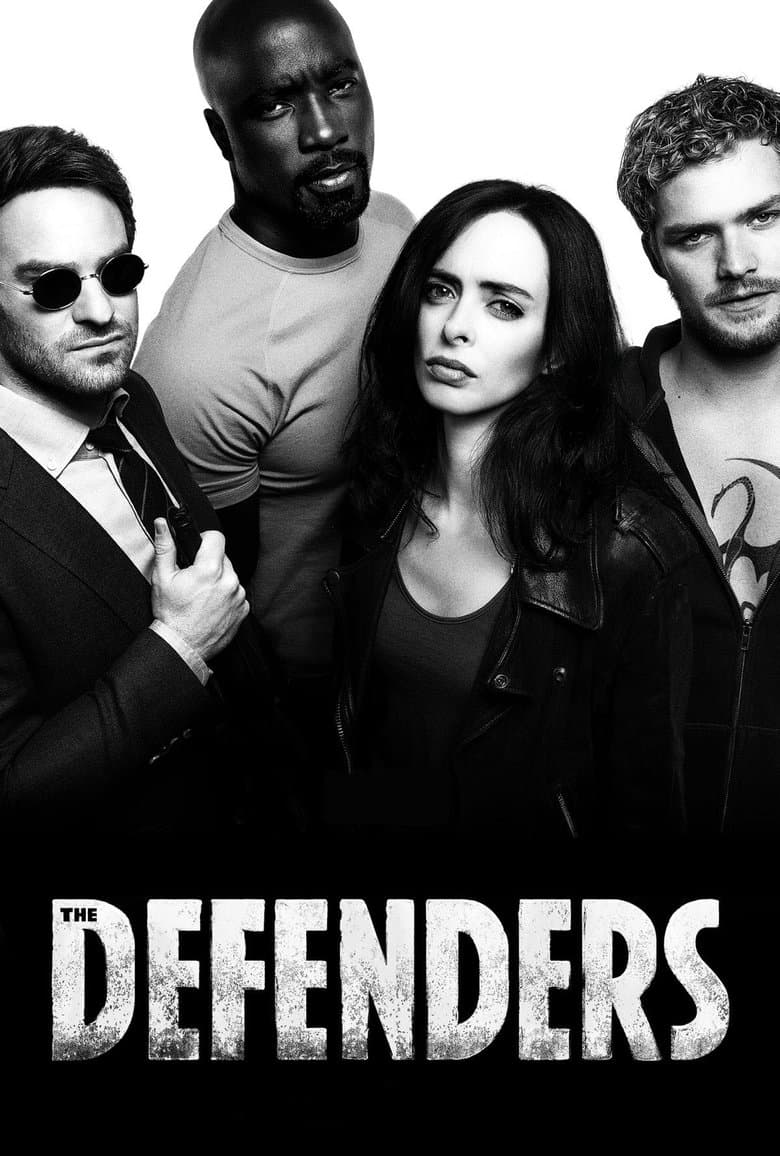
Daredevil, Jessica Jones, Luke Cage and Iron Fist join forces to take on common enemies as a sinister conspiracy threatens New York City.
