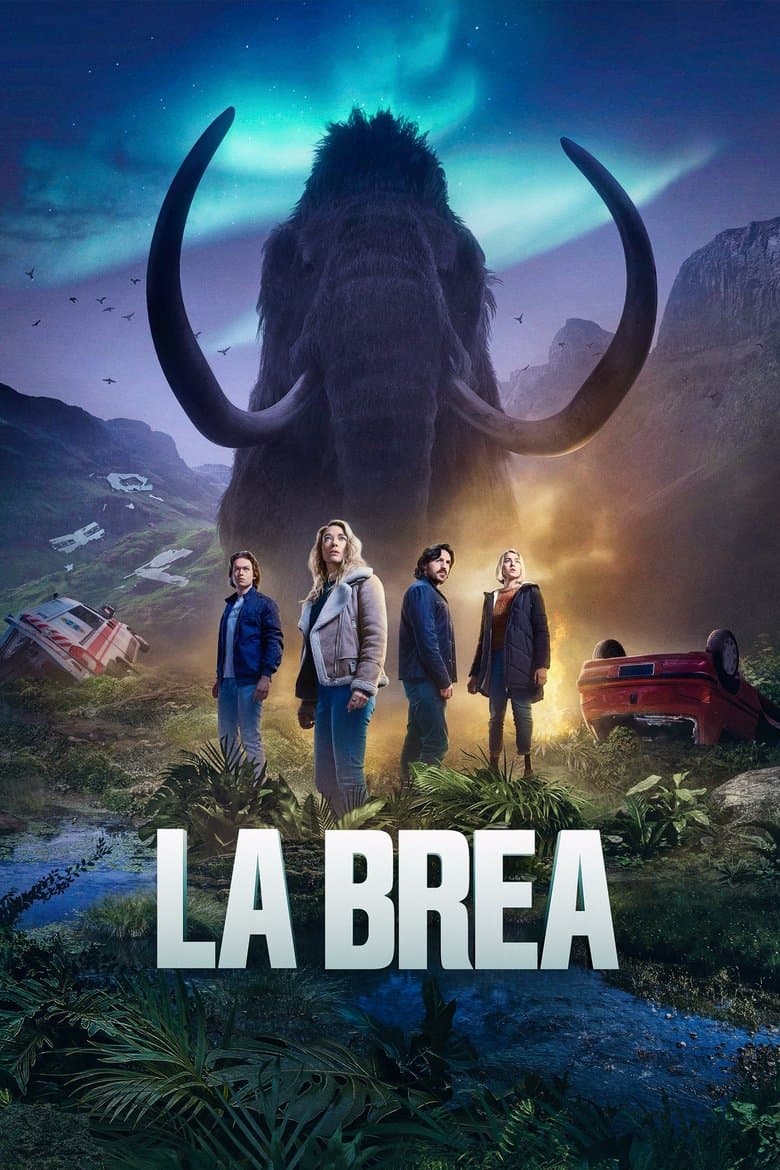
Started September 28, 2021 · Ended · Based on 3 seasons, 30 episodes through February 13, 2024 · TV-14 · 45 min
La Brea is a sci-fi drama about a massive sinkhole that opens in Los Angeles and drops people and buildings into a dangerous prehistoric world from 10,000 years ago. A family gets separated across time, and the survivors must band together to stay alive while others work to understand the event and find a way back. Over three seasons the story adds time portals, a future organization called the Lazarus Project, dinosaur threats, and family reunion plots. The show casts a disabled actress as the main family's disabled teen daughter, uses a multicultural group of survivors from modern LA, and includes a lesbian romance arc for that teen character in the final season.
Community feedback
Was our 38% Woke rating accurate?
Breakdown
These are the editorial factors and ratings behind our score for La Brea.
Woke representation / casting
Visible patterns include casting actors of color in prominent survivor roles such as Chiké Okonkwo as competent psychiatrist Ty Coleman who saves lives and integrates into the group, plus other ethnic diversity in the LA sinkhole survivors. Disabled actress Zyra Gorecki plays the main family's amputee teen daughter Izzy with the disability treated as a character fact from the pilot. Season 3 adds a lesbian romance arc for Izzy with Leyla.
42%
Woke political dialogue
No clear examples of activist speeches, identity lectures, or DEI-style messaging in dialogue across the seasons. Conversations stay centered on immediate survival, family tensions, trust-building, prehistoric dangers, and solving the time-travel mystery.
0%
Identity-driven story themes
The dominant structure is a family survival adventure and reunion story using time travel and prehistoric threats as the engine. Survivors of mixed backgrounds cooperate without identity-based conflict or messaging driving the plot. Izzy's disability is integrated matter-of-factly. The Season 3 lesbian romance for main character Izzy introduces a personal queer identity element that receives some focus in the abbreviated final season, but it stays secondary to portals, the Lazarus Project, dinosaurs, and getting home. No sustained social-justice, anti-patriarchy, or representation-first framing shapes the narrative.
35%
Western institutional / cultural critique
The future Lazarus Project uses "depleted resources" as a sci-fi justification for time travel and de-extinction experiments. This functions as plot mechanics rather than modern activist critique of capitalism, patriarchy, colonialism, or Western institutions. Group conflicts arise from survival stress and personal secrets, not ideological takedowns of traditional norms or authority.
12%
Woke character or canon changes
Not relevant. This is an original series with no prior source material, established characters, or historical figures being race-, gender-, or identity-swapped for ideological reasons. All changes are standard adaptation and serialization choices.
0%
Anti-woke backlash and complaints
Isolated viewer posts and reviews complain about "diversity hires," "woke/SJW" casting or "angry females," and perceived political statements. These appear on Metacritic, Facebook groups, and scattered social media but lack volume, organization, or pickup in major outlets. Most public discussion centers on bad effects, writing, and soapy drama rather than treating the show as activist propaganda. Pro-representation praise exists in niche queer and family media but does not factor into this score.
18%
Creator track record context
Key creatives (Appelbaum, Wynbrandt, Meredith, Hollier, episodic directors, and producers including Keshet executives) come from mainstream network and genre TV backgrounds (procedurals, sci-fi, family dramas) with no repeated public pattern of activist projects, DEI-first statements, queer-centric work, or identity-politics framing. Casting directors follow standard industry practice. Overall context remains low and commercial rather than ideological.
14%
Production
TV Show · 2022
An episodic anthology series focused on both new and established characters set in the world of "The Walking Dead."
TV Show · 2023
After the party of heroes defeated the Demon King, they restored peace to the land and returned to lives of solitude.
TV Show · 2023
A girl with extraordinary psychic abilities joins two gifted teen boys at a small ghost-hunting agency to fight the many deadly spirits haunting London.
TV Show · 2023
After washing ashore in France, Daryl struggles to piece together how he got there and why, as he navigates a fractured, walker-infested landscape to find his way home.
TV Show · 2021
Legendary bounty hunter Boba Fett and mercenary Fennec Shand must navigate the galaxy’s underworld when they return to the sands of Tatooine to stake their claim on the territory…

TV Show · 2022
A powerful sorceress in a blind woman's body encounters a man from a prestigious family, who wants her help to change his destiny.
TV Show · 2019
Iwatani Naofumi, a run-of-the-mill otaku, finds a book in the library that summons him to another world. He is tasked with joining the sword, spear, and bow as one of the Four…
TV Show · 2024
They say whatever doesn’t kill you makes you stronger, but that’s not the case for the world’s weakest hunter Sung Jinwoo.
