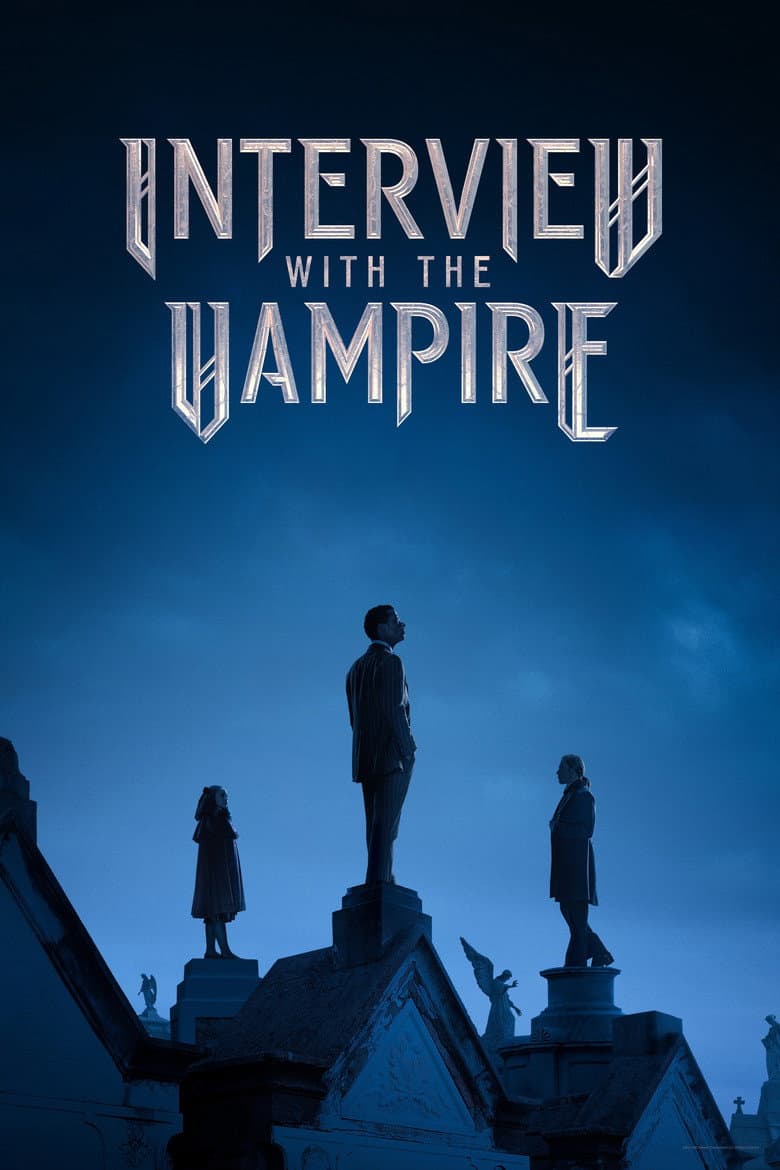
Started October 2, 2022 · Ended · Based on 2 seasons, 15 episodes through June 30, 2024 · TV-MA
This television series is a modern adaptation of Anne Rice's famous gothic horror novel. It follows a vampire named Louis who shares the story of his long life and his dark, romantic relationship with his maker, Lestat. The show places a very strong, highly visible focus on gay romance and sexual relationships. It also centers on themes of racial discrimination and identity politics, changing the main characters' races and histories to emphasize these modern social issues.
Community feedback
Was our 98% Woke rating accurate?
Breakdown
These are the editorial factors and ratings behind our score for Interview with the Vampire.
Woke representation / casting
The show uses prominent, highly visible race-swapped casting for multiple lead characters. The main character Louis, originally a white man, is played by a black actor. Claudia, also white in the book, is played by a black actress. Armand is played by an actor of South Asian descent. These choices are a major shift from the source material and are central to the show's identity.
85%
Woke political dialogue
The characters frequently engage in dialogue about race, prejudice, and social class in America. Louis speaks openly about the struggles of being a black business owner during the Jim Crow era. The dialogue regularly highlights themes of systemic racism, white privilege, and the challenges of being queer in different eras.
65%
Identity-driven story themes
The narrative is heavily driven by queer romance and sexual identity. Louis and Lestat's relationship is explicitly gay and highly graphic, which adds a significant boost under our scoring rules. Additionally, Louis's racial identity and his struggles with historical racism in New Orleans are core drivers of his character arc and actions throughout the first two seasons.
95%
Western institutional / cultural critique
The series presents a strong critique of historical Western institutions, capitalism, and systemic racism. It portrays the white elite of New Orleans as deeply corrupt and racist. It also critiques traditional family dynamics by reshaping the main characters into an alternative, queer household with two gay fathers raising an adopted child.
75%
Woke character or canon changes
The show makes massive, ideologically driven changes to the original source material. Louis is changed from a white, slave-owning plantation owner in the late 1700s to a black brothel owner in 1910 New Orleans. Claudia's age and race are also changed significantly. Furthermore, the homoerotic subtext from the novels is made completely explicit.
90%
Anti-woke backlash and complaints
The show faced significant backlash and negative reviews from fans and conservative commentators. Critics complained about the race-swapping of Louis and Claudia, accusing the production of pushing a woke agenda. There was also pushback against the explicit nature of the gay romance compared to the original book and movie.
75%
Creator track record context
While some creators have a neutral background, the writing and directing team includes several prominent activists. Writers like Hannah Moscovitch, Ben Philippe, and A. Zell Williams have strong histories of focusing on feminism and racial dynamics. Director Levan Akin also has a high-scoring track record of creating queer-centered projects.
52%
Production
TV Show · 2021
On a perilous adventure across a post-apocalyptic world, a lovable boy who's half-human and half-deer searches for a new beginning with a gruff protector.
TV Show · 2019
A police chief takes in a young child she finds near the site of a mysterious accident who has no memory of what has happened.
TV Show · 2018
After landing from a turbulent but routine flight, the crew and passengers of Montego Air Flight 828 discover five years have passed in what seemed like a few hours.
TV Show · 2022
Irene and Franklin York, a retired couple, have a secret: a Chamber buried in their backyard that miraculously leads to a strange, deserted planet.
TV Show · 2024
A mysterious event traps people on a rural Georgia farm, forcing them to unite against an unknown, deadly force. A young boy named Arlo becomes central to uncovering the truth.
TV Show · 2024
Jason Dessen is abducted into an alternate version of his life. To get back to his true family, he embarks on a harrowing journey to save them from the most terrifying foe…
TV Show · 2017
Set in a near-dystopian future, a former cop is forced to take part in a death race where the cars run on human blood. You lose a leg and you lose your head.
TV Show · 2016
Kyle Barnes has been plagued by possession since he was a child. Now an adult, he embarks on a spiritual journey to find answers, but what he uncovers could mean the end of life…
