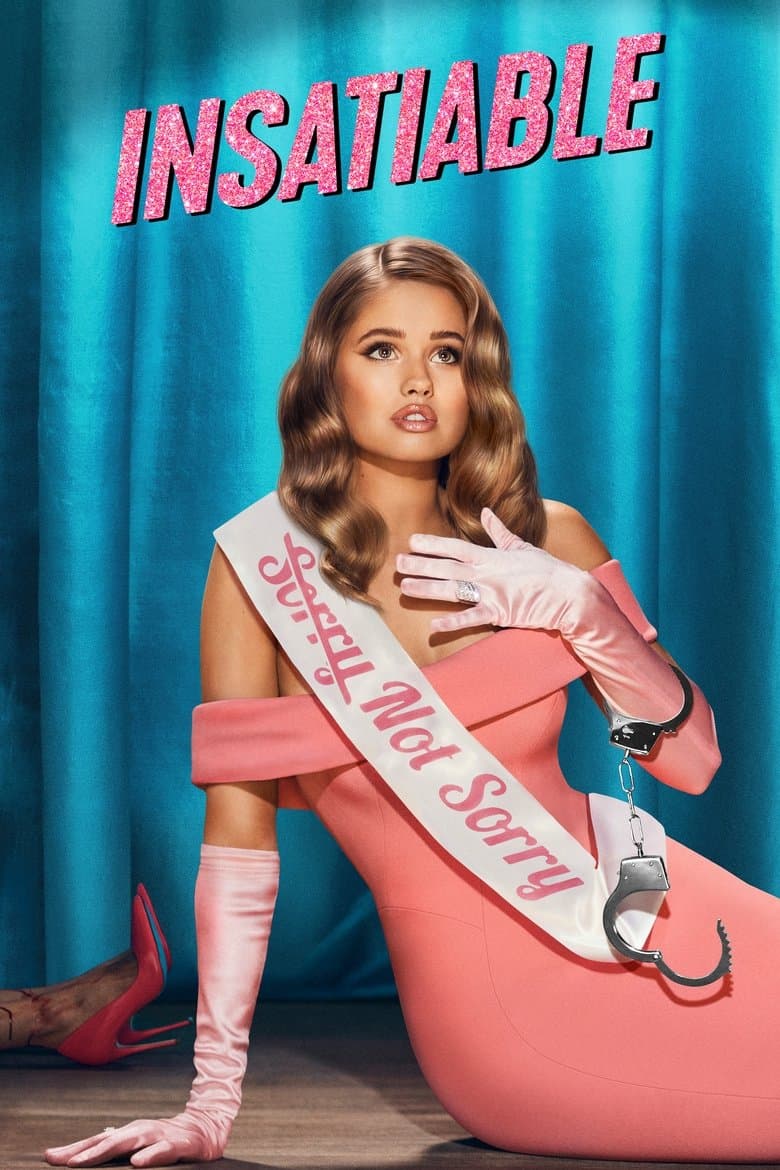
Started August 10, 2018 · Canceled · Based on 2 seasons, 22 episodes through October 11, 2019 · TV-MA · 45 min
Insatiable is a dark comedy television series about Patty, a teenager who was bullied for her weight. After losing weight, she enters beauty pageants to get revenge on her bullies. The show features prominent identity-driven themes, including main characters who explore their gay and bisexual sexualities. It also includes a polyamorous relationship, a lesbian love story, and heavy satirical mockery of Christian pageants and traditional family life.
Community feedback
Was our 93% Woke rating accurate?
Breakdown
These are the editorial factors and ratings behind our score for Insatiable.
Woke representation / casting
The show features prominent, explicit LGBTQ+ casting and representation. This includes a bisexual male lead, his gay romantic partner/rival, a prominent lesbian best friend who gets a girlfriend, and a transgender guest character. There is also a diverse, identity-focused supporting cast including prominent BIPOC actors in key, competent roles like Magnolia Barnard. Due to the extensive, central queer representation, this factor receives a very high score.
80%
Woke political dialogue
The dialogue regularly incorporates progressive ideas around gender identity, sexual freedom, and coming out. Characters frequently discuss labels, bisexuality, and polyamory in explicit detail. The scripts also feature modern activist-style discussions about female empowerment, body image, and the social pressures of societal beauty standards.
Production
65%
Identity-driven story themes
Identity, sexuality, and body-image struggles drive the entire narrative. Central storylines revolve around closeted characters discovering they are gay or bisexual, pursuing a polyamorous "throuple" relationship, coming out as lesbian, and exploring body-acceptance. The show prioritizes queer and sexual-identity exploration as a primary engine for character development.
85%
Western institutional / cultural critique
The series features aggressive, satirical takedowns of traditional Western cultural and religious institutions. It heavily parodies and ridicules evangelical Christianity, most notably in the "Miss Magic Jesus" episode which features highly sexualized songs mocking faith, baptism, and the Holy Spirit. Traditional family models are also consistently undermined, portraying them as toxic, dysfunctional, or obsolete in favor of progressive dynamics.
82%
Woke character or canon changes
Not present in this title.
0%
Anti-woke backlash and complaints
While mainstream media focused on left-wing anger over fat-shaming, conservative and Christian groups launched a substantial backlash against the show. They strongly condemned it for mocking Christian beliefs, sexualizing religious themes (especially in the "Miss Magic Jesus" episode), and promoting polyamorous and queer relationships as positive alternatives to traditional families.
75%
Creator track record context
Key creative leaders have a documented history of progressive activism. Creator Lauren Gussis (60) is heavily committed to identity-driven and LGBTQ+ representation, while director Elodie Keene (75) is a pioneer in progressive television. Writer David Monahan (70) and casting directors Russell Boast (85) and Rob Decina (50) are also prominent advocates for queer visibility and industry DEI initiatives.
55%

TV Show · 2020
New passions. New fashions. New Emily? A plucky American marketing whiz spreads her wings in life and love after landing her dream job in Paris.
TV Show · 2019
Burned out on life, Miles undergoes a strange procedure at a strip mall spa -- and wakes to find he's been replaced by a better version of himself.

TV Show · 2019
Tony had a perfect life. But after his wife Lisa suddenly dies, Tony changes. After contemplating taking his own life, he decides instead to live long enough to punish the world…

TV Show · 2023
The lives of a realtor, a plumber and a former tennis star unexpectedly collide, exposing America’s obsession with true crime, murder and the slow-close toilet seat.

TV Show · 2016
In his funky California beach enclave, Chip's the go-to guy for personal insights. But he isn't quite as enlightened when it comes to his own baggage.
TV Show · 2019
In a city of coaching centers known to train India’s finest collegiate minds, an earnest but unexceptional student and his friends navigate campus life.

TV Show · 2019
A group of working-class friends finding unconventional ways to win at life in suburban northern England. These lads have dealt, scammed, bribed and conned their way through…
TV Show · 2020
The heartwarming and humorous adventures of a young country vet in the Yorkshire Dales in the 1930s. A remake of the 1978 series.
