Started October 25, 2022 · Ended · Based on 1 season, 8 episodes through October 28, 2022 · TV-MA
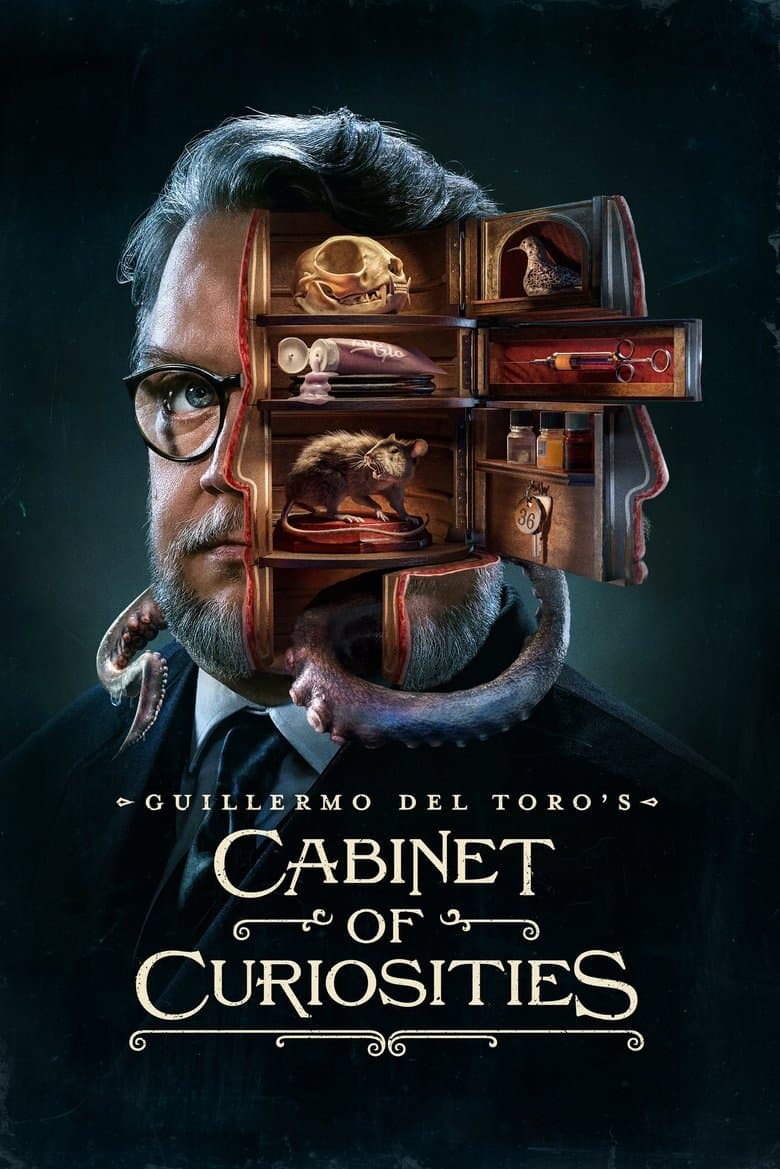
Guillermo del Toro's Cabinet of Curiosities is a 2022 Netflix horror anthology miniseries with eight standalone episodes released over four nights. It features gothic, cosmic, body, and supernatural tales curated by del Toro, drawn from original stories and public-domain works by authors including H.P. Lovecraft and Henry Kuttner, with different directors and writers per episode. Select stories incorporate themes of a xenophobic veteran's greed and prejudice leading to supernatural punishment after he refuses a Mexican immigrant woman's claim on family items, a woman's grotesque body transformation driven by desire to fit into shallow female workplace beauty culture, and a grieving mother's haunting tied to a 1950s domestic tragedy of abandonment and infanticide.
Community feedback
Was our 41% Woke rating accurate?
Breakdown
These are the editorial factors and ratings behind our score for Guillermo del Toro's Cabinet of Curiosities.
Woke representation / casting
Noticeable diversity appears in several episodes in prominent or story-contrast roles, including Latina immigrant Amelia as sympathetic victim of the white bigot in "Lot 36," black actor Glynn Turman as competent sheriff in "The Autopsy," and Asian-American actress Charlyne Yi as accomplished astrophysicist in "The Viewing" alongside black musician guest. Patterns emphasize identity contrasts or competent POC figures in key stories more than pure incidental modern demographics. Casting directors lack activist reputations.
35%
Woke political dialogue
Almost none. Horror relies on visuals, actions, and supernatural outcomes. "Lot 36" lets the protagonist voice xenophobic and right-wing views to mark him as unsympathetic, but these do not drive debate or messaging speeches.
10%
Identity-driven story themes
A minority of episodes foreground identity-tinged or social elements. "The Outside" centers female body dysmorphia, workplace beauty pressures, and conformity horror from a woman's perspective. "The Murmuring" emphasizes maternal grief and historical female tragedy. "Lot 36" uses the protagonist's xenophobia and bigotry as central flaw triggering doom. Remaining episodes stay closer to creature, cosmic, or gothic premises without strong identity arcs.
32%
Western institutional / cultural critique
Mild and story-embedded. "Lot 36" frames a greedy, bitter, xenophobic right-wing veteran amid Nazi items and capitalism-driven desperation as self-doomed. "The Outside" satirizes consumer beauty culture and shallow female social conformity. "The Viewing" shows wealthy elite entitlement and tampering with cosmic forces. "The Murmuring" shows 1950s domestic despair from male abandonment. These function as character flaws or period horror rather than modern activist systemic critiques of capitalism, patriarchy, whiteness, or institutions.
25%
Woke character or canon changes
Not relevant. Episodes use original del Toro stories or adaptations of public-domain Lovecraft and Kuttner works. No established characters, canon, or real historical figures reinterpreted through identity, DEI, or ideological lenses.
0%
Anti-woke backlash and complaints
User complaints appear on Metacritic and Reddit calling the series or episodes "woke" or pushing "identity politics," specifically citing "Lot 36"'s punishment of the conservative bigot and "The Outside"'s female body-image satire. Some reviews express disappointment at del Toro projects "fall[ing] to identity politics." Backlash stayed limited to scattered user reviews and forum comments without major news coverage, viral campaigns, or broad public debate.
20%
Creator track record context
Guillermo del Toro (cached 39/100) curates with a pattern of outsider empathy and occasional representation comments. Contributors include higher-leaning voices such as Haley Z. Boston (cached 49/100, queer horror with feminist theory and women's autonomy focus), Jennifer Kent (feminist horror and historical colonial/patriarchal violence themes in prior films), and Catherine Hardwicke (women director advocacy and social messaging). Balanced by lower figures including Panos Cosmatos (cached 3/100), David S. Goyer (cached 14/100), Ana Lily Amirpour (cached 13/100), and others. Overall selection shows moderate progressive genre lean without dominant activist center.
36%
Production
TV Show · 2020
Young computer engineer Lily Chan investigates the secretive development division of her employer, a cutting-edge tech company based in San Francisco, which she believes is behind…
TV Show · 2016
Kyle Barnes has been plagued by possession since he was a child. Now an adult, he embarks on a spiritual journey to find answers, but what he uncovers could mean the end of life…
TV Show · 2021
A year after a subglacial volcano erupts, mysterious elements from prehistoric times emerge from the melting ice, bringing unforeseen consequences.
TV Show · 2022
The intricate and magical love story of Clare and Henry, and a marriage with a problem… time travel.
TV Show · 2024
When a fatal accident occurs on board the International Space Station, a lone astronaut makes the heroic journey back to Earth, only to discover key pieces of her life—including…
TV Show · 2021
Interconnected phone conversations chronicle the mysterious story of a group of strangers whose lives are thrown into disarray in the lead-up to an apocalyptic event.
TV Show · 2022
An archivist takes a job restoring damaged videotapes and gets pulled into the vortex of a mystery involving the missing director and a demonic cult.
TV Show · 2022
Irene and Franklin York, a retired couple, have a secret: a Chamber buried in their backyard that miraculously leads to a strange, deserted planet.
