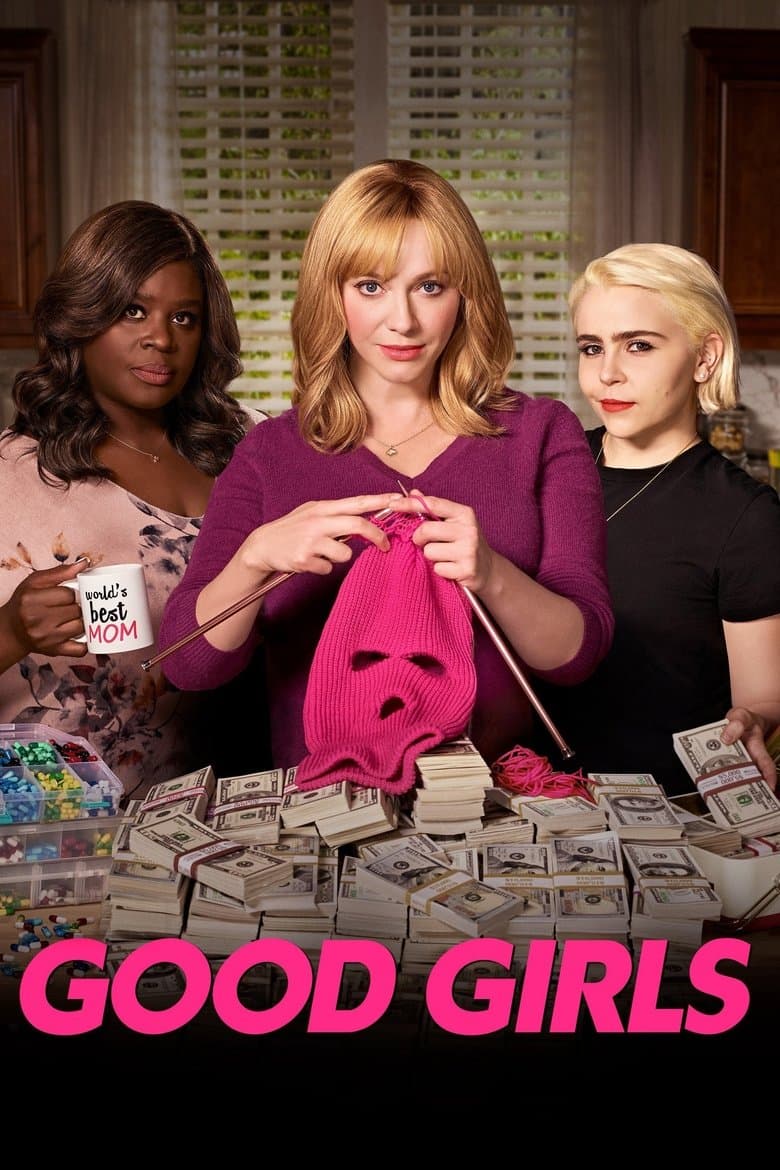
Started February 26, 2018 · Canceled · Based on 4 seasons, 50 episodes through July 22, 2021 · TV-14 · 42 min
Good Girls follows three suburban Michigan mothers—Beth, Ruby, and Annie—who face money troubles, cheating husbands, medical bills, and family pressures and decide to rob a grocery store, pulling them into a world of counterfeit cash, gang ties, and escalating crime across four seasons. The women balance motherhood and double lives while Beth grows more comfortable wielding criminal power. A feminist-leaning story of female agency and friendship runs through the premise, with a recurring transgender character arc for Annie’s child beginning in season 2.
Community feedback
Was our 62% Woke rating accurate?
Breakdown
These are the editorial factors and ratings behind our score for Good Girls.
Woke representation / casting
Prominent black actress in one of three lead roles and a recurring transgender male character (Ben) portrayed by a trans actor from season 2; modern suburban setting features natural diversity without heavy quota-style signaling or story-mismatched “brilliant” identity tropes.
45%
Woke political dialogue
Some lines about women needing to “take their power back” from cheating husbands or unfair domestic burdens, plus female friendship emphasis; remains mostly personal and character-driven rather than explicit activist speeches or systemic lectures.
25%
Identity-driven story themes
Strong focus on suburban mothers gaining agency through crime against patriarchal family pressures and traditional roles; explicit transgender coming-out and acceptance arc for a main character’s child adds clear LGBTQ+ weight; core narrative frames female antiheroines challenging domestic norms.
68%
Western institutional / cultural critique
Mild pushback against traditional marriage expectations, male financial unreliability, and medical/financial system pressures on families; women outsmart authorities who underestimate them; no deep anti-capitalist, anti-police, or identity-based systemic framing.
28%
Woke character or canon changes
Not relevant. Original series with no established source material, historical figures, or prior canon to alter.
0%
Anti-woke backlash and complaints
Almost no public complaints treating the show as ideological propaganda or DEI-driven; reception centered on story quality and cancellation business reasons, with any ideological pushback fringe or nonexistent in coverage.
8%
Creator track record context
Jenna Bans has openly tied her creative choices to concerns about sexism and a desire for empowering women’s stories; supporting writers include two with documented feminist comedy backgrounds; remaining key crew show standard television credits without notable activist or identity-politics patterns.
40%
Production
TV Show · 2019
Erica Shepherd is a brilliant former CIA operative, now known as the most notorious traitor in American history serving life in a Supermax prison.
TV Show · 2017
Covert operative Tom Keen joins forces with Susan "Scottie" Hargrave, the brilliant and cunning chief of a covert mercenary organization that solves problems that are too…
TV Show · 2019
Following an emotional breakup, tough but tender FBI super-agent Will Chase (codename: “Whiskey Cavalier”) is assigned to work with badass CIA operative Frankie Trowbridge…
TV Show · 2021
Facing an existential threat that could bring down the Crime Lab, a brilliant team of forensic investigators must welcome back old friends and deploy new techniques to preserve…
TV Show · 2022
Bosch is now making a living as a private investigator two years after he quit the LAPD and finds himself working with one time enemy and top-notch attorney Honey “Money”…
TV Show · 2026
Ben Reilly, an aging and down on his luck private investigator in 1930s New York, is forced to grapple with his past life as the city's one and only superhero.

TV Show · 2018
Alex Godman, the English-raised son of Russian mafia exiles, has spent his life trying to escape the shadow of their past, building his own legitimate business and forging a life…

TV Show · 2018
The stranger-than-fiction account of a prison break in upstate New York in the summer of 2015, which spawned a massive manhunt for two convicted murderers who were aided in their…
