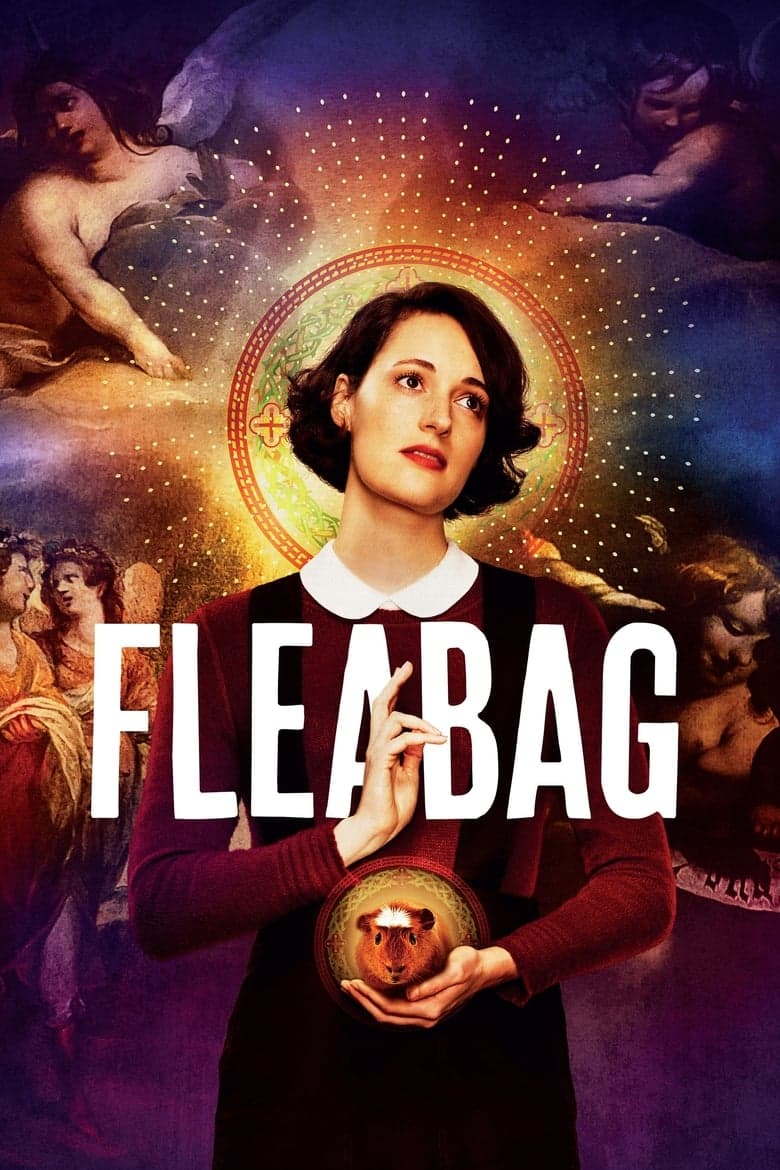
Started July 21, 2016 · Based on 2 seasons, 12 episodes · TV-MA
A dry-witted young woman in London runs a café that starts out struggling and later does better. She uses casual sex as armor and talks to the camera about her life. Season one turns on guilt over her best friend Boo’s death, a hard relationship with her sister Claire, and a chaotic family. Season two shifts toward loneliness, therapy, and a charged romance with a Catholic priest who finally chooses God. The show stays a comedy-drama about grief, family, and messy personal life more than a race politics project.
Feminism and messy womanhood show up as jokes and monologues from early on. Viewers hear lines about bad feminists and a long Belinda speech about women’s pain, menopause as power, and women in business awards. Queer content is clear when Fleabag says she is not strictly a lesbian and shows attraction to Belinda, who is a lesbian guest character. Those identity themes are real and easy to see, but they sit behind grief, sisterhood, and the priest romance rather than taking over the whole series.
Community feedback
Was our 58% Woke rating accurate?
Breakdown
These are the editorial factors and ratings behind our score for Fleabag.
Woke representation / casting
The main cast is a normal modern London mix with mostly white British leads. Minor black supporting roles fit the setting and are not sold as heroic diversity inserts. Marketing pushes a female point of view more than multi-identity quota casting.
15%
Woke political dialogue
Open feminism is on screen from the first episode through jokes and lectures. Belinda’s season two monologue talks about women’s pain, menopause as power, and women-in-business awards. Gendered barbs land clearly, while race slogan talk is rare.
48%
Identity-driven story themes
Womanhood, imperfect feminism, female sexuality, sisterhood, and male entitlement drive both seasons. Queer content is real when Fleabag says she is not strictly a lesbian and wants Belinda. That queer thread stays secondary to grief, family, and the priest romance.
62%
Western institutional / cultural critique
The show digs at marriage traps, bad or abusive men, and gendered social rules. Season two treats Catholicism as a real romantic and spiritual conflict, often irreverently. It is not a broad anti-capitalist or anti-whiteness tract.
42%
Woke character or canon changes
Not relevant. This is an original series from Waller-Bridge’s own stage monologue, not a race or gender rewrite of older IP.
0%
Anti-woke backlash and complaints
There was no big sustained culture-war campaign against the show. Some people called it feminist propaganda or mocked Waller-Bridge as a feminist icon. Overall praise was huge and organized anti-woke backlash looks thin.
12%
Creator track record context
Waller-Bridge talks about feminism and messy female characters but is not a career DEI activist brand. Bradbeer and most producers read as craft and comedy-drama profiles. Joe Lewis’s LGBTQ-adjacent work is only mild supporting context.
25%
Production

TV Show · 2023
The lives of a realtor, a plumber and a former tennis star unexpectedly collide, exposing America’s obsession with true crime, murder and the slow-close toilet seat.
TV Show · 2018
A hit man from the Midwest moves to Los Angeles and gets caught up in the city's theatre arts scene.
TV Show · 2021
A seemingly ordinary British couple become the focus of an extraordinary investigation when two dead bodies are discovered in the back garden of a house in Nottingham.

TV Show · 2016
In his funky California beach enclave, Chip's the go-to guy for personal insights. But he isn't quite as enlightened when it comes to his own baggage.

TV Show · 2016
Rebellious Mickey and good-natured Gus navigate the thrills and agonies of modern relationships.

TV Show · 2019
A paragliding mishap drops a South Korean heiress in North Korea -- and into the life of an army officer, who decides he will help her hide.
TV Show · 2019
Tony had a perfect life. But after his wife Lisa suddenly dies, Tony changes. After contemplating taking his own life, he decides instead to live long enough to punish the world…
TV Show · 2019
Burned out on life, Miles undergoes a strange procedure at a strip mall spa -- and wakes to find he's been replaced by a better version of himself.
