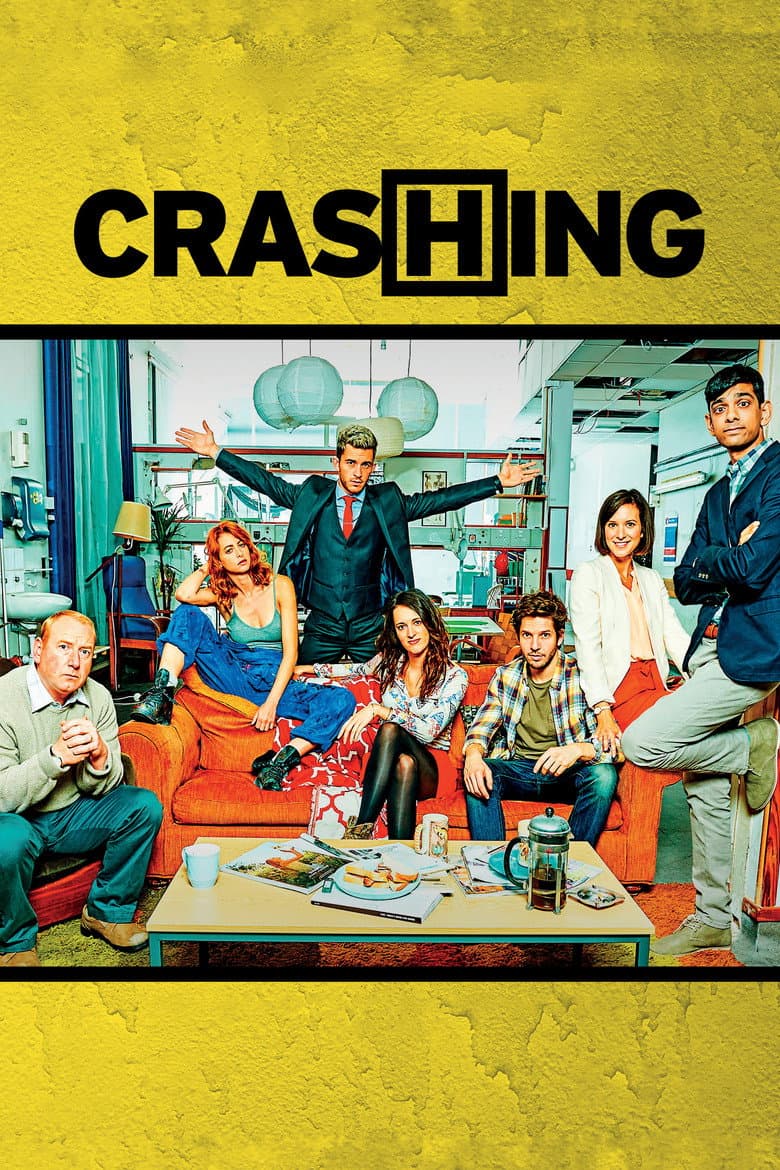
Started January 11, 2016 · Based on 1 season, 6 episodes · TV-MA · 25 min
Six young adults and a middle-aged divorcé live as property guardians in a condemned London hospital. They pay cheap rent in exchange for watching an empty building. Ukulele-playing freeloader Lulu reappears in childhood friend Anthony’s life just as he is engaged to rule-bound Kate. Sex-obsessed Sam latches onto shy gay housemate Fred. French artist Melody turns sad Colin into her muse. Over six episodes, friendships, engagements, and sexual identities tangle, break, and partly rebuild with no neat sitcom reset.
LGBTQ material is built into the story rather than treated as a brief cameo. Fred is openly gay, Will is his boyfriend, and Sam’s multi-episode arc covers repressed attraction, jealousy, homophobic lashing out, and a hospital-bed kiss with Fred after he apologizes. Supporting coworker Jessica is written as bisexual and kisses Kate, which sparks a lesbian-suspicion beat for Anthony. The series is still mainly a messy ensemble sex-and-relationship comedy with a hetero triangle and the Melody and Colin plot. Even so, queer desire and identity are hard to miss across the six episodes and are treated as central emotional material.
Community feedback
Was our 42% Woke rating accurate?
Breakdown
These are the editorial factors and ratings behind our score for Crashing.
Woke representation / casting
The modern London ensemble is mostly white British, with French artist Melody, South Asian Fred as a core housemate, and Black coworker Jessica in a recurring role. That mix fits a contemporary London comedy rather than an advertised diversity showcase. Casting is not framed as representation-first. The score rises only slightly because minority and queer characters hold key parts without hard identity-mismatch casting.
18%
Woke political dialogue
Dialogue is frank, filthy, and personal about sex, jealousy, funerals, and broken engagements. Will needling Sam about being gay, and Sam’s laddish defensiveness, work as character beats rather than activist lectures. There are no sustained speeches about systemic identity politics, representation, or institutional guilt.
8%
Identity-driven story themes
LGBTQ material is built into the narrative rather than treated as a one-off cameo. Fred is openly gay, Will is his boyfriend, and Sam’s multi-episode arc covers repressed attraction, jealousy, homophobic lashing out, and a hospital-bed kiss with Fred after he apologizes. Jessica is written as bisexual and kisses Kate, which prompts a lesbian-suspicion beat for Anthony. The series remains mainly a messy ensemble sex-and-relationship comedy, but queer desire and identity are hard to miss and are treated as central emotional material.
58%
Western institutional / cultural critique
The housing setup and reviews lean on generation-rent property guardianship, with young people in a crumbling building because London rent is impossible. That is light economic and social backdrop rather than modern activist framing of whiteness, patriarchy, or colonial guilt. Traditional engagement and laddish masculinity look hollow or self-destructive through character comedy, not through a manifesto.
16%
Woke character or canon changes
Not relevant. This is an original series, not an adaptation of established characters or history.
0%
Anti-woke backlash and complaints
Not present. No meaningful news or social-media wave treated Crashing as woke, DEI, or identity propaganda. Coverage is mostly positive underrated Waller-Bridge and Bailey precursor chatter. Cancellation talk is about one short season and Fleabag overshadowing it, not right-leaning culture-war boycotts of this title.
0%
Creator track record context
The show is driven by Phoebe Waller-Bridge as writer, creator, and star, with complex female leads and self-aware feminism rather than activist or DEI projects. Directors George Kane and Nicholas White and Big Talk producers sit in low single-digit cached scores, while collaborator Vicky Jones is mild. Overall creative context is character comedy with light feminist craft awareness, not an identity-politics machine.
26%
Production
TV Show · 2019
Tony had a perfect life. But after his wife Lisa suddenly dies, Tony changes. After contemplating taking his own life, he decides instead to live long enough to punish the world…

TV Show · 2019
A group of working-class friends finding unconventional ways to win at life in suburban northern England. These lads have dealt, scammed, bribed and conned their way through…
TV Show · 2019
Burned out on life, Miles undergoes a strange procedure at a strip mall spa -- and wakes to find he's been replaced by a better version of himself.

TV Show · 2019
A paragliding mishap drops a South Korean heiress in North Korea -- and into the life of an army officer, who decides he will help her hide.

TV Show · 2016
Rebellious Mickey and good-natured Gus navigate the thrills and agonies of modern relationships.

TV Show · 2026
The mayor of a New England town resolves to turn it into the next tourist hot spot, despite local warnings that it's cursed.
TV Show · 2020
The heartwarming and humorous adventures of a young country vet in the Yorkshire Dales in the 1930s. A remake of the 1978 series.

TV Show · 2020
After being bullied and discriminated because of her ugly looks, a high school girl transforms herself into a gorgeous "goddess" and quickly rises to fame after mastering the art…
