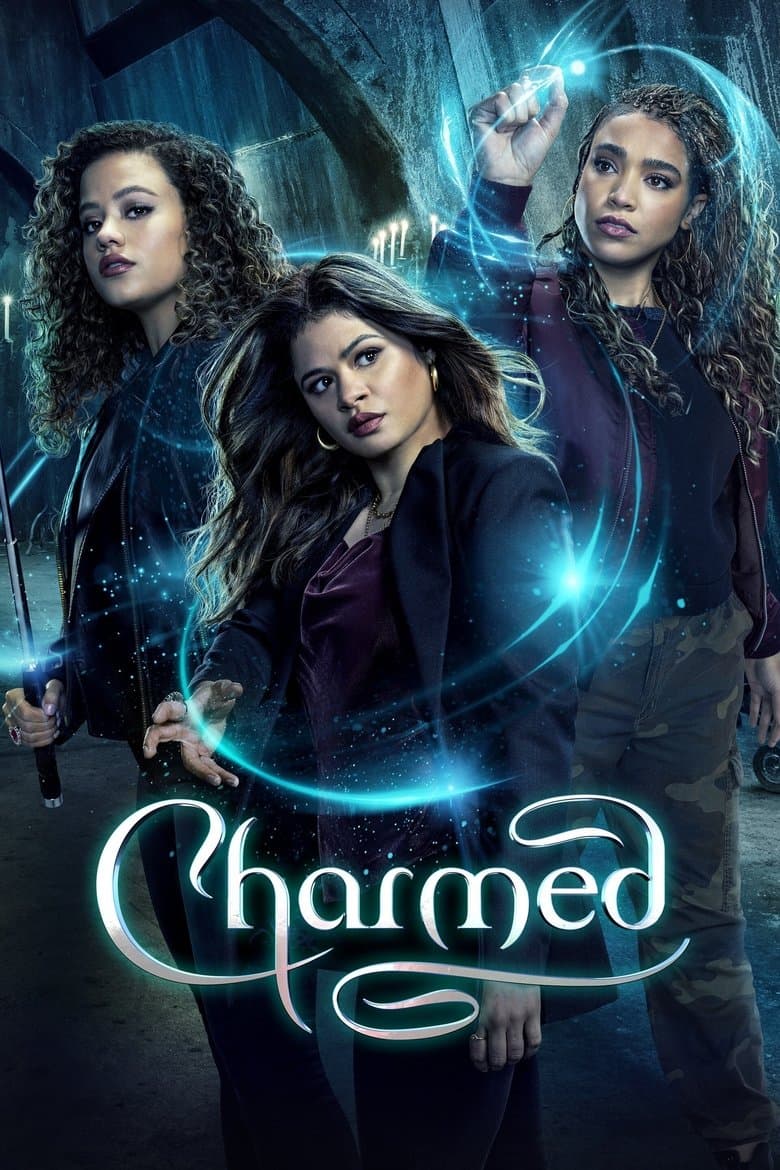
Started October 14, 2018 · Canceled · Based on 4 seasons, 72 episodes through June 10, 2022 · TV-14 · 45 min
Charmed is a fantasy drama show about three sisters who find out they are powerful witches. They must work together to fight evil demons and protect the world. The series heavily features modern social-justice themes, including explicit feminist activism and queer identity. These elements are highly visible through the characters' political dialogue and fight against the patriarchy.
Community feedback
Was our 98% Woke rating accurate?
Breakdown
These are the editorial factors and ratings behind our score for Charmed.
Woke representation / casting
The three main leads were cast as Latina and black actresses to replace the original white cast. Additionally, Mel Vera is a prominent lesbian character whose identity is a major focus, featuring several lesbian relationships across the four seasons. Other recurring characters, such as her girlfriends Niko and Jada, also bring prominent LGBTQ+ representation to the forefront, adding strong activist diversity signaling to the casting.
85%
Woke political dialogue
The series contains very heavy, explicit activist dialogue. Characters frequently discuss "consent" lectures, name-drop cultural critics like Roxane Gay, and speak about "tearing down the patriarchy". Mel, a Women's Studies graduate student, routinely uses modern academic jargon to lecture others on feminism, systemic bias, and social justice, which often breaks the fourth wall and makes the political agenda extremely obvious to the viewer.
Production
80%
Identity-driven story themes
The entire plot is explicitly driven by feminist and queer themes. The central metaphor of the first season frames male authority figures and demons as literal agents of patriarchal oppression. Mel's journey as an activist lesbian feminist and her romantic relationships with women are central to her character arc. The story continuously uses modern intersectional feminism and LGBTQ+ representation as the primary lens through which the characters' magical duties and personal lives are explored.
88%
Western institutional / cultural critique
The show heavily critiques traditional structures and institutions, presenting them as corrupt and inherently biased against women and marginalized groups. Campus administrations are portrayed as complicit in sexual harassment, and the magical hierarchy ("The Elders") is depicted as an outdated, controlling patriarchal institution that the sisters must dismantle. Traditional gender roles are consistently framed as flawed, while conservative social norms are rejected in favor of progressive, activist values.
78%
Woke character or canon changes
The reboot completely changes the canon of the original 1998 series by replacing the white, heterosexual Halliwell sisters with the diverse, multicultural Vera sisters. The character of Mel is a direct, highly politicized update who is written as a lesbian feminist, introducing queer themes absent in the original main cast. The show's lore is also modernized to shift away from traditional European Wiccan roots, incorporating broader multicultural and political themes into the magical rules.
85%
Anti-woke backlash and complaints
The show faced strong, persistent backlash from both fans of the original series and cultural critics who accused the reboot of pushing a forced "woke" agenda. Reviewers and social media users widely complained about "cringe-worthy" dialogue, heavy-handed feminist lecturing, and the decision to swap the original cast to prioritize identity politics. Many original fans felt the focus on modern social justice came at the expense of good storytelling and respectful adaptation.
80%
Creator track record context
The creative team has a mixed to high track record of prioritizing progressive themes. Co-creator Amy Rardin is known for championing intersectional representation, while writer Bianca Sams and producer Howard T. Owens actively work on projects focused on identity politics. Other writers and directors have more neutral or moderate portfolios focused on standard female-led dramas, leading to a noticeable but uneven activist influence behind the scenes.
48%
TV Show · 2016
A disgraced, 75-year-old ex-sheriff, whose life ends at the hands of corrupt cops, is brought back to life and given a second chance by a pair of young tech scientists, as a…
TV Show · 2017
An MIT grad student and a tech superstar bring a low-level Pentagon official a staggering discovery that an asteroid is just six months away from colliding with Earth.
TV Show · 2018
After landing from a turbulent but routine flight, the crew and passengers of Montego Air Flight 828 discover five years have passed in what seemed like a few hours.
TV Show · 2016
In the near future a family must make difficult decisions as they balance staying together with trying to survive.
TV Show · 2016
In his quest for a bride to break his immortal curse, a 939-year-old guardian of souls meets a grim reaper and a sprightly student with a tragic past.
TV Show · 2016
Hundreds of years from now, the last surviving humans discover the means of sending consciousness back through time, directly into people in the 21st century.
TV Show · 2018
After 250 years on ice, a prisoner returns to life in a new body with one chance to win his freedom: by solving a mind-bending murder.
TV Show · 2021
Two federal agents from two different continents, and two different mindsets, must work together to investigate when wreckage from a destroyed alien spacecraft has mysterious…
