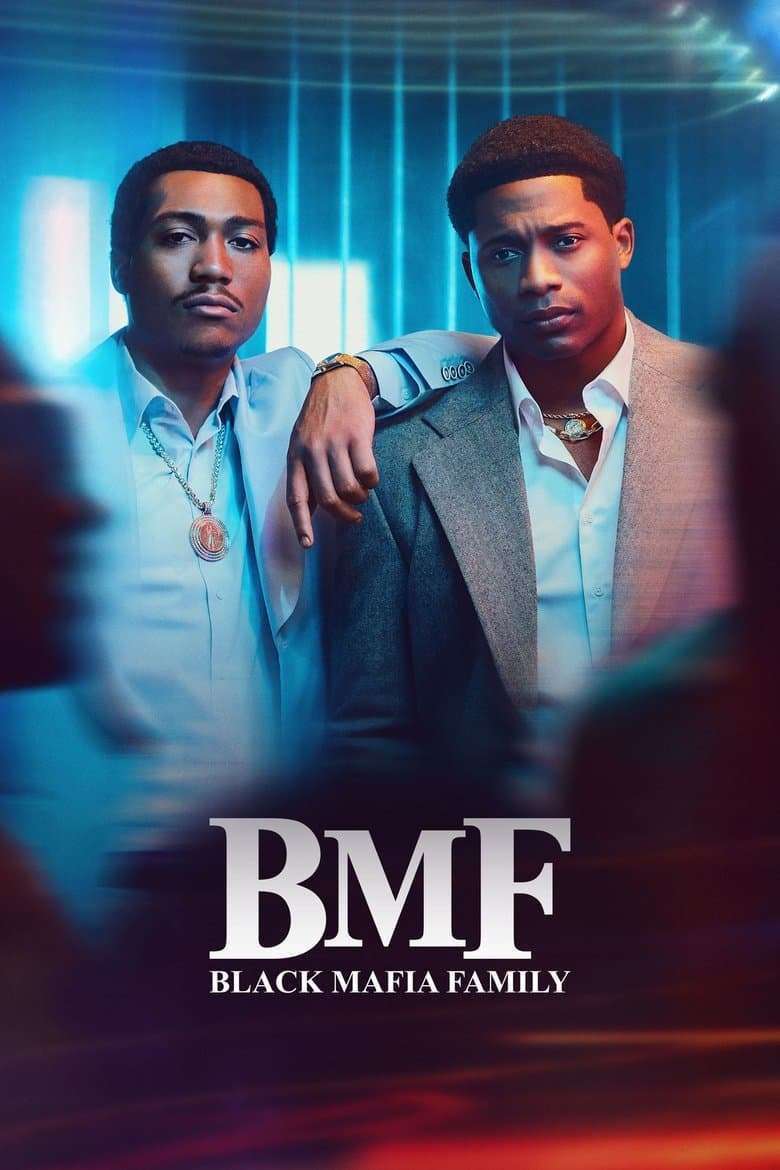
Started September 26, 2021 · Canceled · Based on 4 seasons, 37 episodes through August 15, 2025 · TV-MA · 52 min
BMF is a crime drama based on the real-life Flenory brothers who built a drug empire in Detroit during the late 1980s and 1990s. The series is primarily a gritty street thriller about family loyalty, criminal hustle, and hip-hop culture. However, in Season 3, the show introduces highly visible woke themes. These appear through a prominent, completely fictional gender-fluid and lesbian character who acts as a major villain. This storyline introduces modern gender identity conflicts and queer relationships into the historical setting.
Community feedback
Was our 58% Woke rating accurate?
Breakdown
These are the editorial factors and ratings behind our score for BMF.
Woke representation / casting
The show mostly features a black cast which matches its historical setting. However, in Season 3, the series introduced a highly visible gender-fluid, lesbian drug kingpin named Henrietta "Henri" Andreas, played by non-binary trans actor Ren King. This was heavily promoted as the first LGBTQ+ character in the show's universe, representing a modern identity-first casting choice that many viewers felt was forced and historically unrealistic.
38%
Woke political dialogue
While BMF mostly focuses on street politics and family loyalty, Season 3 introduces modern gender-identity themes. This is highlighted when Henri confronts her father over her name, insisting on being called "Henri" instead of "Henrietta". Outside of these identity-driven arguments, the series features standard discussions on police bias, though it largely avoids direct, heavy-handed activist lecturing.
20%
Identity-driven story themes
Season 3 introduces a major identity-driven subplot around Henrietta, a gender-fluid female living in a male-dominated criminal underworld in the 1990s. The narrative explicitly focuses on her struggles for respect as a queer woman, her romantic relationships with women, and her deep-seated resentment toward her father for not validating her identity. This subplot heavily inserts modern gender and sexuality themes into the historical crime drama.
45%
Western institutional / cultural critique
The series contains typical crime drama critiques of corrupt policing and police bias. It also touches on traditional male dominance, particularly through Henrietta's violent rebellion against her father's traditional views that women are too emotional to lead a criminal organization. However, the show generally respects traditional family structures, and its core theme of pursuing the American dream through hustle keeps the overall institutional critique relatively mild.
10%
Woke character or canon changes
Because BMF is inspired by the real historical events and people of the Flenory brothers' organization, the decision to invent a highly prominent gender-fluid/queer villain like Henrietta "Henri" Andreas is a major, identity-driven deviation from actual history. No such figure existed in the real-life black Mafia Family story. This change was explicitly made to insert modern representation into a historical setting, resulting in a fictionalized plotline that departs heavily from real events.
23%
Anti-woke backlash and complaints
The introduction of the gender-fluid character Henrietta "Henri" Andreas in Season 3 sparked notable backlash among the show's audience. Critics and viewers on social media platforms and online forums widely criticized the character as an unrealistic, "forced" inclusion designed to push a modern agenda and meet diversity quotas. Many pointed out that a gender-fluid female running a major drug syndicate in the early 1990s was completely historically inaccurate and felt out of place in a gritty street drama.
50%
Creator track record context
The creative team behind BMF represents a stark mix of ideological perspectives. Executive producers like 50 Cent and creator Randy Huggins have very low woke ratings and focus purely on gritty, commercial entertainment. However, the writing staff includes highly progressive voices like Rose McAleese, an activist who teaches creative writing to gender-expansive youth, and Terri Kopp, who focuses on system-wide bias and BLM themes. This blend explains how modern identity elements found their way into a series spearheaded by more traditional producers.
35%
Production
TV Show · 2021
In a small Michigan town where the business of incarceration is the only thriving industry, the McClusky family are the power brokers between the police, criminals, inmates…
TV Show · 2017
Detective John Cardinal attempts to uncover the mystery of what happened to the missing 13-year-old girl whose body is discovered in the shaft-head of an abandoned mine.
TV Show · 2021
A world-famous comedian desperately searches for a way out after a night in Philadelphia with his brother threatens to sabotage more than his success.
TV Show · 2022
Under pressure, fraying at the edges. In relentless night-time Liverpool, copper Chris is paired with a rookie. Will they save or destroy each other?
TV Show · 2016
A 26-year-old woman learns to live again after 13 years in captivity.
TV Show · 2020
When an insidious supernatural force edges its way into a seemingly straightforward investigation into the gruesome murder of a young boy, it leads a seasoned cop and an…

TV Show · 2024
Through the eyes of various Irish Republican Army (IRA) members, explore the extremes some people will go to in the name of their beliefs, the way a deeply divided society can…
TV Show · 2020
Picking up just days after the “Power” finale, this sequel series follows Tariq navigating his new life, in which his desire to shed his father’s legacy comes up against the…
