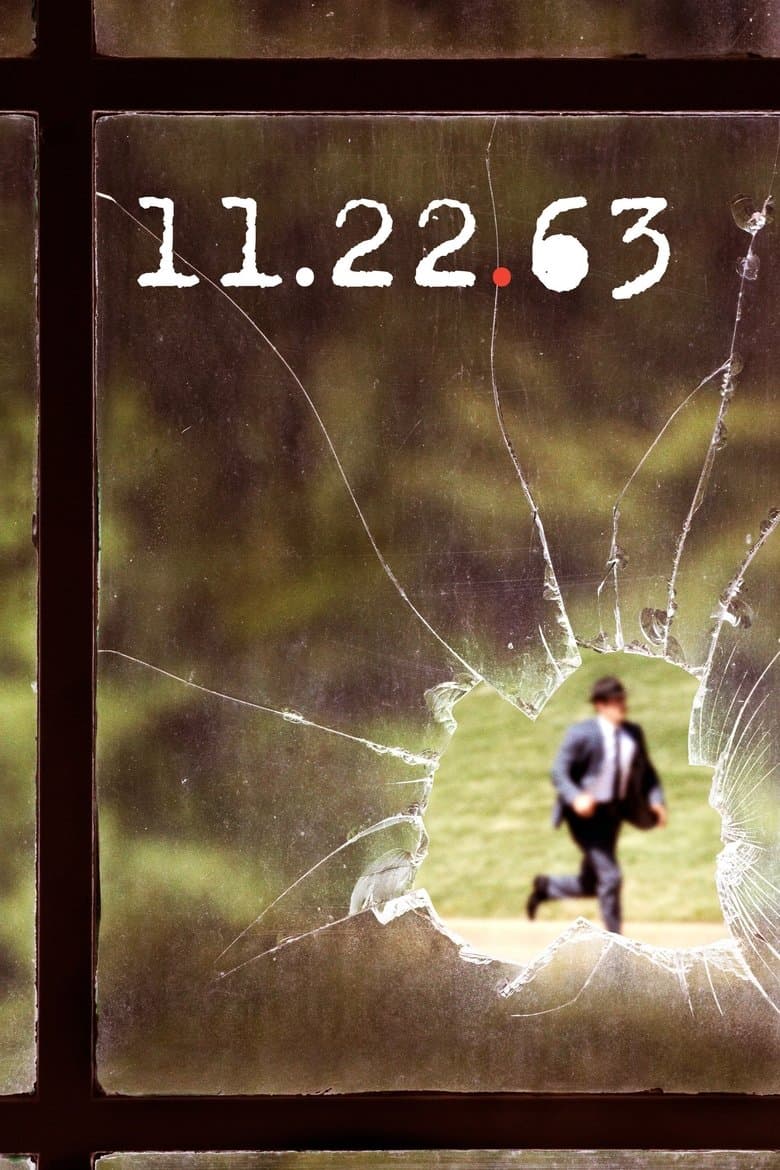
Started February 15, 2016 · Based on 1 season, 8 episodes · TV-MA · 81 min
An eight-episode Hulu miniseries from 2016 follows a divorced high school English teacher from 2016 who discovers a time portal and travels back to 1960. He tries to stop the assassination of President John F. Kennedy but builds a new life in the past, including a deep romance that threatens his mission. The story centers on personal relationships, the costs of changing history, and vivid 1960s period details. A supporting character was recast as black with added scenes showing secret interracial romance and racial tensions of the era, which stands out as a noticeable but secondary element.
Community feedback
Was our 33% Woke rating accurate?
Breakdown
These are the editorial factors and ratings behind our score for 11.22.63.
Woke representation / casting
The lead roles go to white actors James Franco and Sarah Gadon in a straightforward heterosexual romance that matches the novel and 1960s setting. A supporting school administrator, Miz Mimi, was changed to black (Tonya Pinkins) with added scenes of secret interracial romance and racial backlash to highlight era tensions. Jake's present-day ex-wife appears briefly as black. These choices add visible racial contrast across time periods but stay limited to secondary characters, with no prominent lead diversity signaling, girlboss dominance, or identity-based competence tropes.
25%
Woke political dialogue
No modern activist speeches, identity lectures, or explicit contemporary political messaging appear. Any talk of race or social norms stays rooted in 1960s attitudes and arises naturally when the time traveler confronts the setting.
8%
Identity-driven story themes
The core narrative follows time travel ethics, romance, friendship, and the personal cost of altering history. Racial dynamics surface through one supporting character change and period backdrop details but remain background context rather than driving the plot, character arcs, or central conflicts.
18%
Western institutional / cultural critique
The show depicts 1960s American life, including segregation, traditional gender roles, and small-town norms, often through the eyes of a visitor from the future. These elements highlight historical differences in an organic, plot-tied way without reframing them as ongoing systemic critiques of patriarchy, whiteness, or Western institutions.
22%
Woke character or canon changes
The adaptation made a deliberate identity-driven change by recasting supporting character Miz Mimi as black and adding scenes around her secret interracial relationship and racial tensions, none of which exist in Stephen King's novel where she is white. A minor present-day choice also shows Jake's ex-wife as black to underscore era contrasts. These alterations prioritize highlighting 1960s racial issues over strict source fidelity, though they affect only secondary characters.
38%
Anti-woke backlash and complaints
Almost no anti-woke or right-leaning complaints accused the series of promoting woke ideology, identity politics, or DEI agendas. Some book fans noted the Miz Mimi change as noticeable or intrusive, but criticism centered on story adaptation rather than political messaging. No major backlash campaigns emerged.
5%
Creator track record context
Cached scores for key creatives remain low overall. Bridget Carpenter (0/100) and Kevin Macdonald (0/100) show no activist patterns. Stephen King (25/100) holds liberal views but has explicitly said he does not weigh diversity in art and keeps this project focused on character drama. J.J. Abrams (12/100) and other producers bring standard mainstream credits without representation-first emphasis here.
12%
Production
TV Show · 2017
A demented serial killer taunts a retired police detective with a series of lurid letters and emails, forcing the ex-cop to undertake a private, and potentially felonious, crusade…
TV Show · 2025
A Happy alien, Takopi, lands on Earth with one mission: to spread happiness! When he meets Shizuka, a lonely fourth grader, he vows to bring back her smile using his magical Happy…
TV Show · 2018
After 250 years on ice, a prisoner returns to life in a new body with one chance to win his freedom: by solving a mind-bending murder.
TV Show · 2016
Kyle Barnes has been plagued by possession since he was a child. Now an adult, he embarks on a spiritual journey to find answers, but what he uncovers could mean the end of life…
TV Show · 2024
Jason Dessen is abducted into an alternate version of his life. To get back to his true family, he embarks on a harrowing journey to save them from the most terrifying foe…
TV Show · 2016
Hundreds of years from now, the last surviving humans discover the means of sending consciousness back through time, directly into people in the 21st century.
TV Show · 2021
Interconnected phone conversations chronicle the mysterious story of a group of strangers whose lives are thrown into disarray in the lead-up to an apocalyptic event.
TV Show · 2017
Set in a near-dystopian future, a former cop is forced to take part in a death race where the cars run on human blood. You lose a leg and you lose your head.
