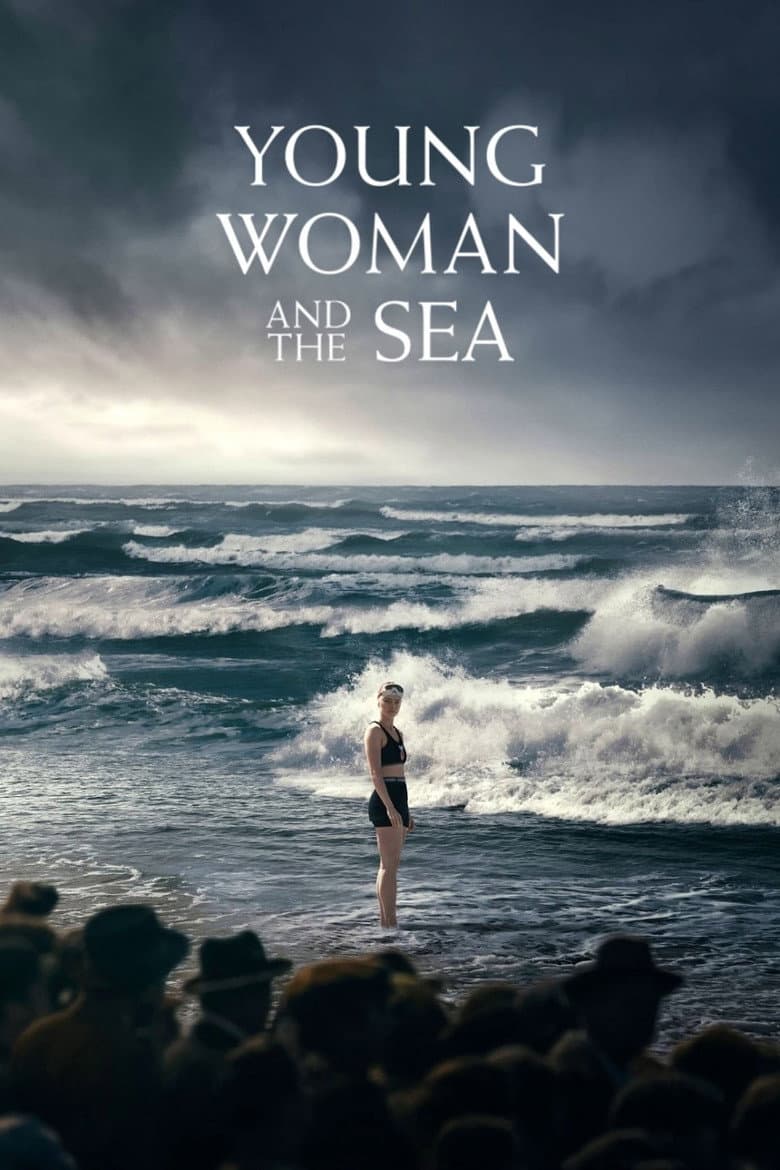
Young Woman and the Sea follows Trudy Ederle, the daughter of German immigrants in New York in the early 1900s. After surviving measles, Trudy learns to swim and trains with her sister Meg and the Women's Swimming Association. She faces strict rules, weak support, and dangerous water before she tries to cross the English Channel from France to England in 1926. The film uses a warm, old-fashioned sports-drama tone, with family love and hard training beside cold seas and real danger.
The film makes Trudy's fight against limits placed on women a main part of the story. Men call swimming indecent, keep female athletes apart from male athletes, limit their training, and doubt that a woman can cross the Channel. Trudy's mother, sister, and female coach give her strong support, while some men later help her after seeing her skill. A fictional Black swimmer named Benji joins the Channel group, but his role stays small beside the main story of female courage and family support.
Community feedback
Was our 50% Woke rating accurate?
Breakdown
These are the editorial factors and ratings behind our score for Young Woman and the Sea.
Woke representation / casting
The main family and Trudy's role are shown by white actors who fit the German American setting and real people. The film also adds Benji, a fictional black swimmer, as a visible supporting character who trains near Trudy. Benji's identity is part of his short role, but the film does not build a broad diversity group or change Trudy's identity.
18%
Woke political dialogue
Male characters repeatedly say that women should not swim, compete, or train like men. A coach orders the women to stay apart from male athletes and eat only fruit, and an official says he once voted against women in the Olympics. The dialogue makes these views sound foolish and shows them being defeated by Trudy's results. The film keeps the debate in the 1920s and does not turn it into a current political speech.
30%
Identity-driven story themes
Trudy's main goal is to prove that a woman can win in a sport treated as a man's field. Her mother, sister, and female coach form a support line that keeps her training. The story links her success to wider chances for women in sports, not only to one personal race. The film treats female courage, sisterhood, and breaking gender limits as its main message.
48%
Western institutional / cultural critique
Swimming clubs, Olympic officials, and coaches limit women because they think female athletes are weak or improper. The film shows the male coach controlling the team's food, training, and contact with men. Trudy's father also treats marriage and safety as reasons to control her choices before he changes his mind. These attacks stay tied to old sports rules and family customs, with no broad modern attack on Western institutions.
27%
Woke character or canon changes
The film turns Charlotte Epstein into Trudy's hands-on female coach, although history gives her a wider team manager role. The film also makes male coach Jabez Wolffe a clear blocker who may drug Trudy, while the real record does not prove that. The film adds Benji as a fictional black swimmer and makes Trudy's father more hostile than the known story suggests. These changes strengthen the women-against-male-gatekeepers message, while other date and training changes look like normal drama.
28%
Anti-woke backlash and complaints
Small X accounts called the film left-wing propaganda about a strong woman, patriarchy, and migrants. A few Reddit viewers said Disney added a forced feminist storyline and made the film too sugar-coated. Most audience posts and reviews praised the story, Daisy Ridley, and the family support. No clear boycott, review-bomb campaign, DEI-casting fight, or LGBT controversy appeared, so the backlash stayed fringe.
14%
Creator track record context
Daisy Ridley is the clearest supporting signal because she has backed women’s marches, equal pay, and stories about female achievement. Her producer role and interviews connect that interest to this film's female sports story. Director Joachim Rønning and writers Jeff Nathanson and Glenn Stout have mainstream careers without a strong activist record. The combined context is mild and supports the film's gender focus without driving the whole movie.
22%
Production

Movie · 2018
A father and daughter live a perfect but mysterious existence in Forest Park, a beautiful nature reserve near Portland, Oregon, rarely making contact with the world.
Movie · 2023
British stockbroker Nicholas Winton visits Czechoslovakia in the 1930s and forms plans to assist in the rescue of Jewish children before the onset of World War II, in an operation…

Movie · 2023
Hirayama is content with his life as a toilet cleaner in Tokyo. Outside of his structured routine, he cherishes music on cassette tapes, books, and taking photos of trees.

Movie · 2024
Inspired by the incredible true story of a hairdresser who single-handedly rallies an entire community to help a widowed father save the life of his critically ill young daughter.

Movie · 2016
Based on the life story of Mahendra Singh Dhoni, and his journey to being the world cup winning captain of the Indian cricket team.
Movie · 2021
The enthralling, against-all-odds story that transfixed the world in 2018: the daring rescue of twelve boys and their coach from deep inside a flooded cave in Northern Thailand.

Movie · 2018
Dan, a 21-year-old carefree boy is always surrounded by a bunch of friends and fellow hotel interns who feed off each other's everyday moments, their ups and downs.

Movie · 2019
An unlikely connection sparks between two creatures: a fiercely independent stray kitten and a pit bull. Together, they experience friendship for the first time.
