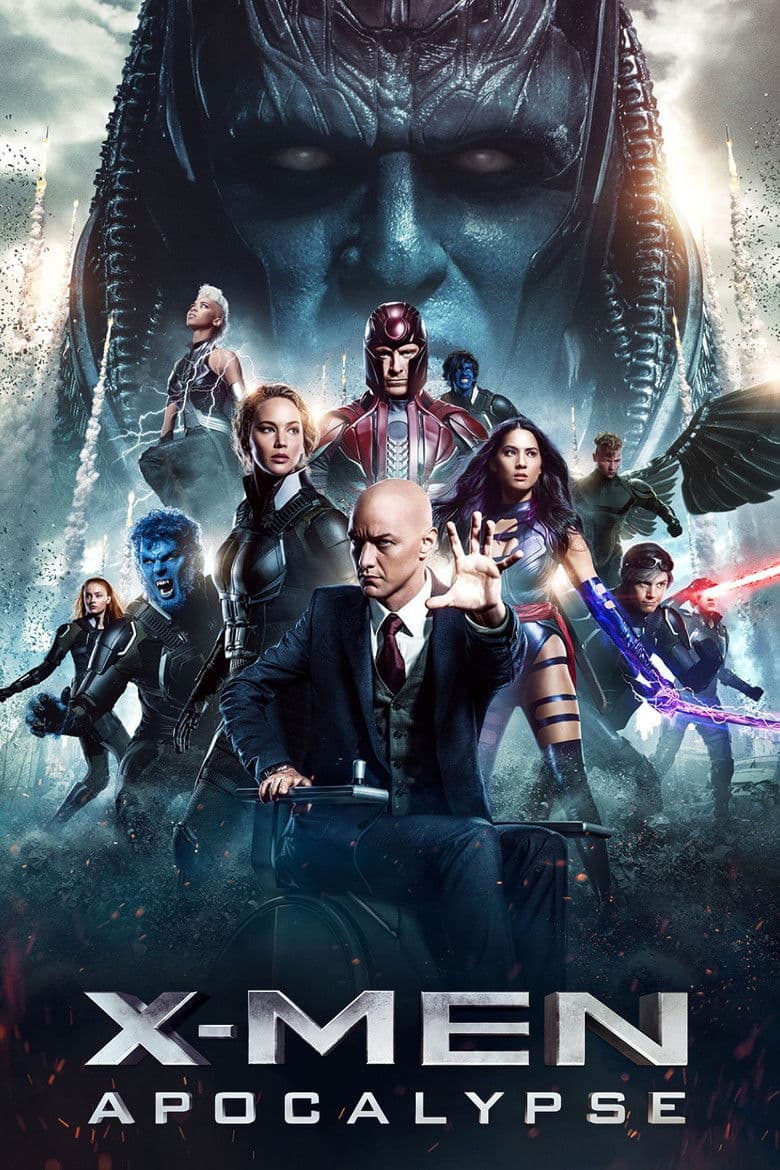
Set in 1983, this sci-fi action movie follows the resurrection of Apocalypse, the world’s first and most powerful mutant, who awakens after thousands of years. Disgusted by the modern world, he recruits a team of powerful mutants, including Magneto and Storm, to cleanse humanity and rebuild a new global order under his rule. To stop this extinction-level threat, Professor Charles Xavier and Beast must gather a new generation of young mutants to fight back. The film features a massive clash in Egypt as the heroes combine their powers in a desperate battle to save the world. Viewers will notice distinct themes of female empowerment, particularly through Mystique, who is framed as a celebrated, heroic leader and mentor rather than her traditional comic villain role. Additionally, Jean Grey is depicted as the ultimate savior of the team, unleashing her hidden, godlike power to defeat the ancient villain. The classic mutant metaphor also functions as a broad allegory for outcast identity and social exclusion.
Community feedback
Was our 33% Woke rating accurate?
Breakdown
These are the editorial factors and ratings behind our score for X-Men: Apocalypse.
Woke representation / casting
The film features a diverse ensemble cast, including ethnic minority actors portraying prominent characters like Storm, Psylocke, and Jubilee. However, these casting choices largely align with the source material's diverse mutant roster. The most noticeable representation-driven choice is the central positioning of Mystique as the prominent female lead and hero, though this was largely a result of her real-world star power. Overall, the diversity feels relatively integrated and does not come across as a forced, modern DEI-style quota system.
20%
Woke political dialogue
The film lacks any explicit modern activist dialogue or overt left-wing political slogans. Characters speak in typical superhero blockbuster terms about survival, unity, and family. The dialogue contains standard mutant-civil-rights allegories about being feared and hated by humanity, but this remains a generic sci-fi trope and never crosses into modern political lectures or social justice preaching.
5%
Identity-driven story themes
The core narrative centers on the classic mutant metaphor, representing marginalized groups and the struggle for acceptance. The film also features clear female empowerment themes, particularly with Mystique acting as an inspiring symbol of liberation for young mutants, and Jean Grey ultimately saving the day with her godlike power. While noticeable, these themes are presented through standard fantasy action-adventure tropes rather than modern, high-priority identity politics.
25%
Western institutional / cultural critique
The villain Apocalypse seeks to destroy modern Western civilization, including its political systems and nuclear arsenals, viewing them as corrupt and weak. However, this is presented as a standard, megalomaniacal supervillain plot to conquer the world rather than an activist critique of systemic capitalism, patriarchy, or Western culture. The film focuses on anti-tyranny and action-hero themes without framing the conflict around modern ideological grievances.
10%
Woke character or canon changes
The film makes a significant departure from comic book canon by transforming Mystique from a traditional villainous terrorist into a beloved public hero and the reluctant leader of the X-Men. This character change was largely driven by Hollywood star power but serves to push a prominent female empowerment narrative, placing her at the head of the team over traditional male leaders like Cyclops or Beast.
30%
Anti-woke backlash and complaints
Anti-woke complaints were relatively minor and mostly confined to comic book purists. Some viewers criticized the movie for pushing Mystique into an unearned "girlboss" leader role to capitalize on Jennifer Lawrence's popularity, while sidelining male characters. The massive controversy surrounding the promotional billboard of Apocalypse choking Mystique was a feminist critique rather than anti-woke backlash, and therefore does not elevate this score.
15%
Creator track record context
The key creative team has a mixed track record, with an average score of 22 based on cached profiles. Screenwriters Dan Harris and Michael Dougherty are known for incorporating queer representation in their work and viewing mutant allegories through an LGBTQ+ lens. Producer Lauren Shuler Donner supports progressive causes and female-focused spin-offs, while other producers and writers maintain low-profile, commercial entertainment track records.
22%
Production
Movie · 2018
It has been ten years since The Battle of the Breach and the oceans are still, but restless. Vindicated by the victory at the Breach, the Jaeger program has evolved into the most…
Movie · 2017
Two alchemist brothers go on a quest for the Philosopher's Stone after an attempt to revive their dead mother goes horribly wrong.
Movie · 2021
When Lois Lane is killed, an unhinged Superman decides to take control of the Earth. Determined to stop him, Batman creates a team of freedom-fighting heroes.
Movie · 2022
Dangerously ill with a rare blood disorder, and determined to save others suffering his same fate, Dr. Michael Morbius attempts a desperate gamble.
Movie · 2016
Robin is sent by Batman to work with the Teen Titans after his volatile behavior botches up a Justice League mission.
Movie · 2018
As the Avengers and their allies have continued to protect the world from threats too large for any one hero to handle, a new danger has emerged from the cosmic shadows: Thanos.
Movie · 2024
In the year 2898 AD, around 6000 years after Kurukshetra war, Ashwatthama gears up for his final battle of redemption at the sign of hope in a dystopian world and Bhairava, a…
Movie · 2022
The Red Ribbon Army, an evil organization that was once destroyed by Goku in the past, has been reformed by a group of people who have created new and mightier Androids, Gamma 1…
