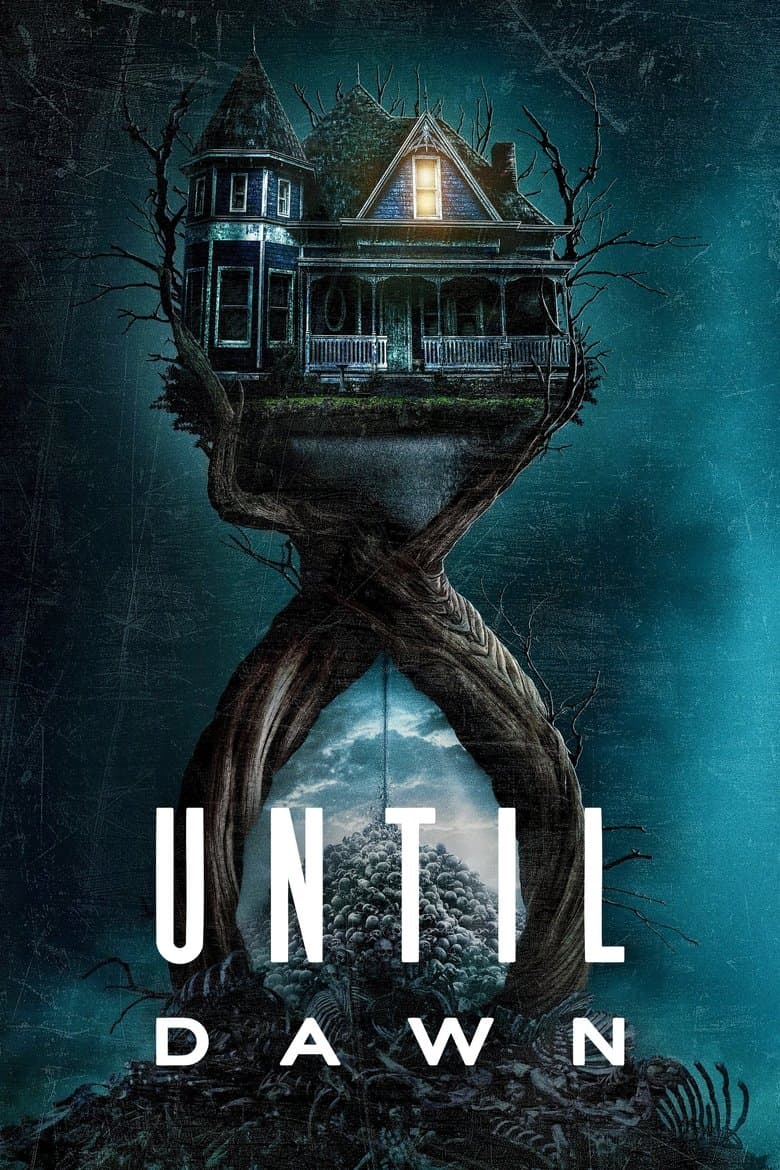
Until Dawn is a 2025 survival horror film directed by David F. Sandberg from a screenplay by Gary Dauberman and Blair Butler. It follows Clover and her friends as they enter a remote valley searching for her missing sister and become trapped in a time loop, repeatedly killed by different masked and supernatural threats until they can survive until dawn. The story centers on personal grief and trauma, with monsters manifesting from the protagonist's depression and fears in a meta, humorous take on horror tropes rather than heavy messaging. A brief incidental reference to one supporting character's past same-sex relationship appears in dialogue, with no other prominent identity-driven or activist elements visible to audiences.
Community feedback
Was our 19% Woke rating accurate?
Breakdown
These are the editorial factors and ratings behind our score for Until Dawn.
Woke representation / casting
The friend group features one East Asian-American actress (Ji-young Yoo as Megan, Max's stepsister with psychic abilities) in a prominent ensemble role alongside white leads. A supporting character (Nina) has a brief incidental dialogue reference to a past same-sex relationship recalled casually by friends. The mixed modern ensemble (three women, two men) shows no marketing emphasis on diversity, no quota-style signaling, and no mismatch with the contemporary story world or character logic. Casting director profile is low with no DEI reputation noted.
22%
Woke political dialogue
Dialogue includes one passing, casual recollection of a supporting character's ex-girlfriend in the context of her dating history. No explicit political, activist, DEI, or identity-politics language, institutional critiques, or social-justice messaging appears in character interactions or plot.
5%
Identity-driven story themes
Premise centers on personal grief, depression, and trauma as the literal engine for supernatural threats (monsters as manifestations of the protagonist's psyche), resolved through confronting individual loss. Meta-humor pokes fun at serious "trauma horror" conventions rather than delivering earnest messaging. The mining disaster backstory fuels horror without activist framing. Incidental background reference to one character's same-sex history adds minor weight but remains unemphasized. No race, gender, sexuality, or representation-first themes drive the narrative.
18%
Western institutional / cultural critique
The villain is a rogue psychiatrist (Dr. Hill) running personal fear experiments on trauma survivors; this is individual mad-scientist villainy in a haunted location, not a systemic critique of psychology, medicine, capitalism, patriarchy, or Western institutions. The mining disaster serves as supernatural origin without anti-industry or colonial-guilt framing. No portrayals of toxic masculinity or traditional norms as flawed targets.
8%
Woke character or canon changes
Not relevant. The film uses an entirely original story and new characters to expand the game's universe, with Peter Stormare returning as Dr. Hill and minor Easter eggs (cabin, Josh tease). It involves no identity-driven or DEI-motivated reinterpretations, swaps, or activist alterations to established game canon, characters, or real historical figures.
0%
Anti-woke backlash and complaints
Audience and fan backlash focuses on loose adaptation, changed story/characters, and marketing the film as "Until Dawn" despite major deviations from the game. Some viewers explicitly praised the lack of "woke or diversity bullshit." No meaningful body of anti-woke or right-leaning complaints accuses it of pushing DEI, identity politics, queer themes, or left-wing content in social media or news.
3%
Creator track record context
Director David F. Sandberg and writer Gary Dauberman have low profiles centered on horror craft, practical effects, and supernatural storytelling without activist patterns. Co-writer Blair Butler has a geek/comics/horror background; one prior screenplay drew limited critical notes for attempted race/class/male-privilege allegory but aligns with entertainment-focused output overall. Producers (cached 14-18/100 range) are business/genre-oriented with no identity-driven records. Lotta Losten and technical crew show no activist histories.
5%
Production
Movie · 2023
Between the events of 'Saw' and 'Saw II', a sick and desperate John Kramer travels to Mexico for a risky and experimental medical procedure in hopes of a miracle cure for his…
Movie · 2025
A woman's obsessive search for her missing sister leads her into a terrifying mystery at the hands of an unknown evil.
Movie · 2017
A group of college friends reunite for a trip to the forest, but encounter a menacing presence in the woods that's stalking them.
Movie · 2016
A young nurse takes care of an elderly author who lives in a haunted house.
Movie · 2017
Two young women at a prestigious prep school are assailed by an evil, invisible power when they're stranded over winter break.
Movie · 2026
In a post-apocalyptic future where an event known as "The Quiet Rapture" caused all known stars and habitable planets in the universe to disappear, a convict is sent to search an…
Movie · 2023
After a Black Friday riot ends in tragedy, a mysterious Thanksgiving-inspired killer terrorizes Plymouth, Massachusetts - the birthplace of the holiday.
Movie · 2016
A stranger arrives in a little village and soon after a mysterious sickness starts spreading. A policeman is drawn into the incident and is forced to solve the mystery in order to…
