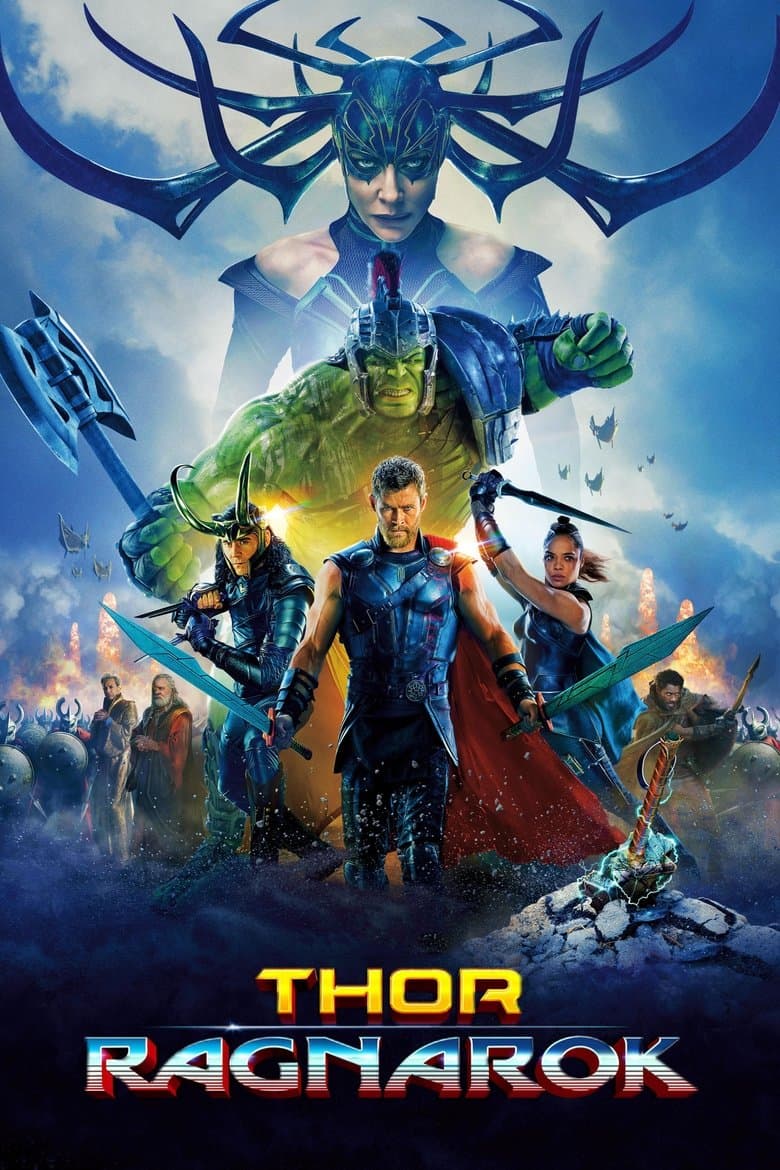
Thor is stranded far from home and must get back to stop Hela. Hela is Odin’s firstborn and the Goddess of Death. She plans to destroy Asgard in the prophesied Ragnarok. The story follows a buddy-comedy escape, gladiator fights, and a mission to save a people. The film mixes action, comedy, and sci-fi spectacle.
Viewers can notice diversity casting in big Asgardian roles, including Valkyrie and Heimdall. Hela is a strong lead villain and Valkyrie is an elite fighter. The film also shows Odin’s past as empire and conquest, not a pure golden age. These parts matter more for people who watch for identity casting and myth-busting than for the main joke-driven adventure. Queer content was planned for Valkyrie but was cut, so it is not clear on screen.
Community feedback
Was our 66% Woke rating accurate?
Breakdown
These are the editorial factors and ratings behind our score for Thor: Ragnarok.
Woke representation / casting
The film puts clear diversity in major Asgardian roles, with Valkyrie as a race swap and strong female power in Hela and Valkyrie. Waititi also said POC casting and female heroes were a real goal for the movie. That choice stands out in a Norse-myth setting. It is visible to audiences even if the plot is still a comedy adventure.
48%
Woke political dialogue
Hela’s lines expose Asgard’s conquest history and resource plunder, with the director calling it relevant today, but no modern activist language or lectures appear.
20%
Identity-driven story themes
The main story is a buddy comedy, gladiator fun, and saving a people. Strong female warriors and Asgard’s conquest past add light identity-adjacent texture. Queer intent for Valkyrie stayed off-screen after a cut. Race and gender identity do not drive the plot.
22%
Western institutional / cultural critique
Odin’s rule is shown as imperial conquest with history covered up by a palace mural. Asgard’s heroic self-image is treated like propaganda. Thor answers with duty and the idea that Asgard is a people, not a long guilt speech. It is not a full attack on Christianity, family, or traditional gender norms.
42%
Woke character or canon changes
Valkyrie is cast as a black woman against a classic fair-haired look, with representation talk around that choice. Hela becomes Odin’s firstborn sister instead of Loki’s daughter, which is a big rewrite but mainly for plot. Bisexual Valkyrie intent was cut from the theatrical version. The clearest identity-linked change is the Valkyrie casting. Race swap of Heimdall.
50%
Anti-woke backlash and complaints
There was real pushback over Valkyrie’s race swap and older complaints about Heimdall. Later posts sometimes call the film an early woke Marvel title. The noise was limited next to later MCU fights. The movie still did well as a popular comedy spectacle.
29%
Creator track record context
Waititi is the main creative face and spoke about diversity and representation for this film. He also has broader advocacy about racism and decolonizing the screen. Studio figures around him also score mid on diversity casting and stories. The overall creator signal is moderate to strong, not a pure activist project.
53%
Production
Movie · 2024
Returning to her home planet, an infamous bounty hunter forms an unexpected alliance with a team of unlikely heroes.
Movie · 2018
As the Avengers and their allies have continued to protect the world from threats too large for any one hero to handle, a new danger has emerged from the cosmic shadows: Thanos.

Movie · 2026
Fighting crime full-time as Spider-Man in a world that doesn't remember him—and the pressure of seeing his old friends move on without him—sparks a change in Peter Parker he may…

Movie · 2025
Set against the backdrop of a postapocalyptic Earth whose Eastern Hemisphere was destroyed by a massive solar flare, leaving what life remains mutated from radiation and fallout.
Movie · 2016
Four losers are thrust into the position of saving the world when they stumble upon a UFO crash site and become genetically equipped to the battle suit on board.
Movie · 2026
A 'Man from the Future' arrives at an LA diner where he must recruit the precise combination of disgruntled patrons to join him on a one-night quest to save the world from the…
Movie · 2019
Stranded at a summer camp when aliens attack the planet, four teens with nothing in common embark on a perilous mission to save the world.
Movie · 2024
A listless Wade Wilson toils away in civilian life with his days as the morally flexible mercenary, Deadpool, behind him.
