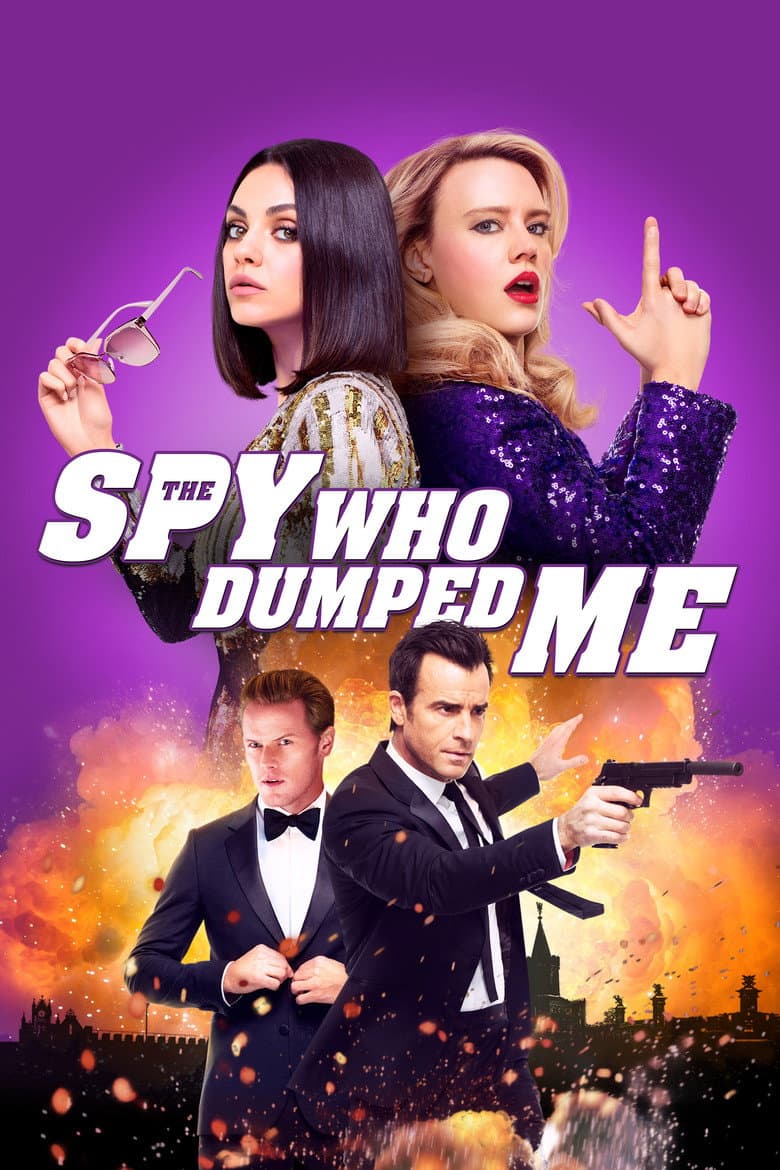
Audrey and Morgan are best friends living in Los Angeles. After Audrey's ex turns out to be a CIA agent, a deadly conspiracy lands on their doorstep. The pair race through Vienna, Prague, Paris, Amsterdam, and Berlin with a USB drive while dodging assassins and meeting a charming British agent. An MI6 boss and a CIA partner orbit the plot around them. The film is a friendship first buddy comedy mixed with bloody spy set pieces, not a lecture movie.
Two women lead the action, and a glamorous female MI6 chief plus a female gymnast assassin add to a stack of capable women on screen. Morgan is written as an open feminist who gives empowerment pep talks, rejects sleazy men, and nods at not liking the patriarchy. The main story sells ordinary women becoming accidental spies while their friendship stays primary and non competitive, framed as a corrective to male buddy movies and catty women fight tropes. Morgan is shaped as not straight identifying and not a heteronormative bar hookup friend, so queer coding sits under the friendship story without becoming a coming out plot. The identity and empowerment framing is noticeable, but the movie remains mainly a spy caper of chases, gore, and buddy banter.
Community feedback
Was our 45% Woke rating accurate?
Breakdown
These are the editorial factors and ratings behind our score for The Spy Who Dumped Me.
Woke representation / casting
Two white women lead the action, with a female MI6 chief and a female gymnast assassin as major threats. Supporting roles include Hasan Minhaj and Lolly Adefope. Mixed casting fits a modern setting, but the stack of highly capable women is a clear design choice rather than a race swap spectacle.
32%
Woke political dialogue
Morgan is framed as an open feminist who gives empowerment pep talks and comedy that rejects sleazy men and nods at the patriarchy. Gillian Anderson's intro plays as comic praise of a powerful woman who has not given up femininity. This shows up in character voice, not as constant activism.
35%
Identity-driven story themes
The main arc follows ordinary women becoming accidental spies while their friendship stays primary and non competitive. That setup is sold as a fix for male buddy movies and catty women fight tropes. Morgan is shaped as not straight identifying without a coming out plot, so queer coding sits under the friendship story. The empowerment framing is noticeable, but the film is still mainly a spy caper.
42%
Western institutional / cultural critique
There is light pushback on traditional gender tropes and male centered genre norms. Morgan's anti sleaze and anti patriarchy flavor is the clearest modern gender note. CIA double crosses, rogue agents, and a Snowden decrypt gag play as generic spy comedy, not a broad attack on capitalism, whiteness, or Western institutions.
28%
Woke character or canon changes
Not relevant. original screenplay; the title is a Bond-style joke, not a remake that rewrites established characters for identity reasons.
0%
Anti-woke backlash and complaints
There was no major news cycle, boycott, or sustained right leaning campaign calling the film DEI propaganda. Some viewers, including on Reddit, said McKinnon's jokes felt like gender equality lectures. Awareness that it was sold as a feminist buddy film exists, but the pushback stayed thin and not mainstream.
12%
Creator track record context
Director and co-writer Susanna Fogel often makes female led friendship stories and has centered queer female characters elsewhere. Co-writer David Iserson and producers Brian Grazer and Erica Huggins score low on that pattern. The casting team is mixed, with some higher and some lower. Overall the creative context is mild to moderate and driven mainly by Fogel's female lens pattern.
30%
Production
Movie · 2023
Special agent Orson Fortune and his team of operatives recruit one of Hollywood's biggest movie stars to help them on an undercover mission when the sale of a deadly new weapons…

Movie · 2024
In the 19th century, a drunken applejack salesman must go from zero to hero and become North America's greatest fur trapper by defeating hundreds of beavers.

Movie · 2016
The origin story of former Special Forces operative turned mercenary Wade Wilson, who, after being subjected to a rogue experiment that leaves him with accelerated healing powers…

Movie · 2024
When 93-year-old Thelma Post gets duped by a phone scammer pretending to be her grandson, she sets out on a treacherous quest across the city to reclaim what was taken from her.

Movie · 2024
When the plots of reclusive author Elly Conway's fictional espionage novels begin to mirror the covert actions of a real-life spy organization, quiet evenings at home become a…

Movie · 2017
Four teenagers in detention discover an old video game console with a game they’ve never heard of. When they decide to play, they are immediately sucked into the jungle world of…

Movie · 2019
Stranded at a summer camp when aliens attack the planet, four teens with nothing in common embark on a perilous mission to save the world.

Movie · 2023
When three friends who live together realize that they don't like their life trajectory, they set off to find a gold treasure that is rumored to be buried in the nearby mountain.
