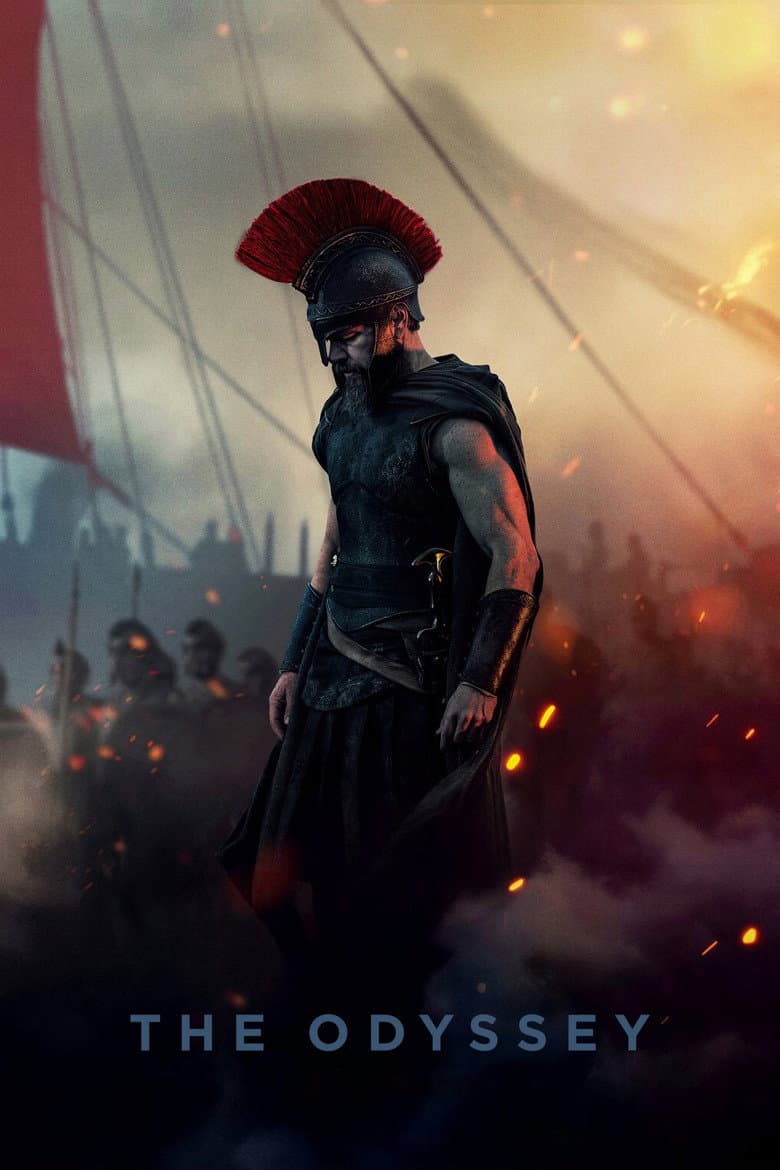
Christopher Nolan’s IMAX epic follows Odysseus (Matt Damon) on his long voyage home after Troy, with gods, monsters, and a heavy focus on homecoming, war guilt, and the collapse of hospitality. The film is a major cultural flashpoint for casting and adaptation choices more than for a full ideological rewrite of Homer’s plot: principal roles go to a multiracial, largely non-Greek ensemble framed as “representative of the world,” including Lupita Nyong’o as Helen (and Clytemnestra), Zendaya as Athena, Himesh Patel as Eurylochus, Will Yun Lee among the crew, and Elliot Page as the expanded male warrior Sinon. Core nostos remains, layered with modern speech, a guilt-heavy Odysseus short on Homeric cunning, and a sharper Penelope monologue about men deciding her fate after twenty years holding the throne. Greek funding and production ties, an open letter from Greek media about living Greeks being written out of their own epic, and dismissals of casting criticism as “irrelevant” or “mythological” made the representation fight the story’s loudest public layer.
Breakdown
These are the editorial factors and ratings behind our score for The Odyssey.
Woke representation / casting
Audience-visible multiracial casting of iconic Greek figures with no reported Greek principals: Nyong’o as Helen/Clytemnestra, Zendaya as Athena, Patel as Eurylochus, Will Yun Lee among the crew, plus other non-Greek-looking Ithacans/suitors. Elliot Page cast as male warrior Sinon in an expanded role. Press framing (“representative of the world”) and Greek funding/letter context make identity-first ensemble casting the film’s most visible ideological choice.
72%
Woke political dialogue
Deliberately modern, plainspoken dialogue rather than Homeric diction. Penelope’s monologue about men deciding her fate and twenty years on the throne without due credit is the clearest progressive-leaning verbal beat; continuous slogan-style speech is thinner than casting debate.
22%
Identity-driven story themes
Story still centers nostos, cunning-turned-guilt, marriage, and Zeus’s hospitality law. Noticeable modernizing: war trauma/conscience over pure heroic glory; Helen humanized beyond pure beauty; Penelope framed as long-suffering equal partner with a gender-power outburst; Clytemnestra rebalanced. Not a full DEI-identity thesis film.
38%
Western institutional / cultural critique
Softens traditional male-hero competence (guilt-heavy Odysseus, crew losses, less *mētis*) and challenges classical packaging of beauty, patience, and female roles. Critique is mainly gender roles and war myth-making for contemporary viewers, not a sustained anti-Christian or anti-capitalist program; hospitality remains moral backbone.
42%
Woke character or canon changes
Clear identity-adjacent and feminist-leaning deviations: race-casting Helen and Athena against traditional Greek visual expectation; Sinon (Virgil, not Homer) elevated into a major male-warrior arc; Helen’s beauty-as-cause undercut; Clytemnestra’s moral role rebalanced; Odysseus’s cunning reduced in favor of trauma. Ordinary compression exists, but race/gender casting and Sinon elevation are the audience-visible ideological deltas.
68%
Anti-woke backlash and complaints
High-volume, sustained backlash: race-swaps, Page as male warrior, “DEI” / “tick-box” casting, Greek cultural-erasure letter and diaspora anger over no Greeks despite state support, modern slang, and Nolan/cast dismissals of criticism. Coverage from Greek and international outlets, right-leaning media, Musk-linked discourse, and social campaigns.
88%
Creator track record context
Nolan (~craft-first, avoids message movies), Emma Thomas, and core team are not an activist leadership cohort; heat is driven by this title’s casting/adaptation choices more than a long DEI filmography.
12%
Production
