Movie review
March 26, 2026 · 110 min · G · Kids · Fantasy · Adventure · Family
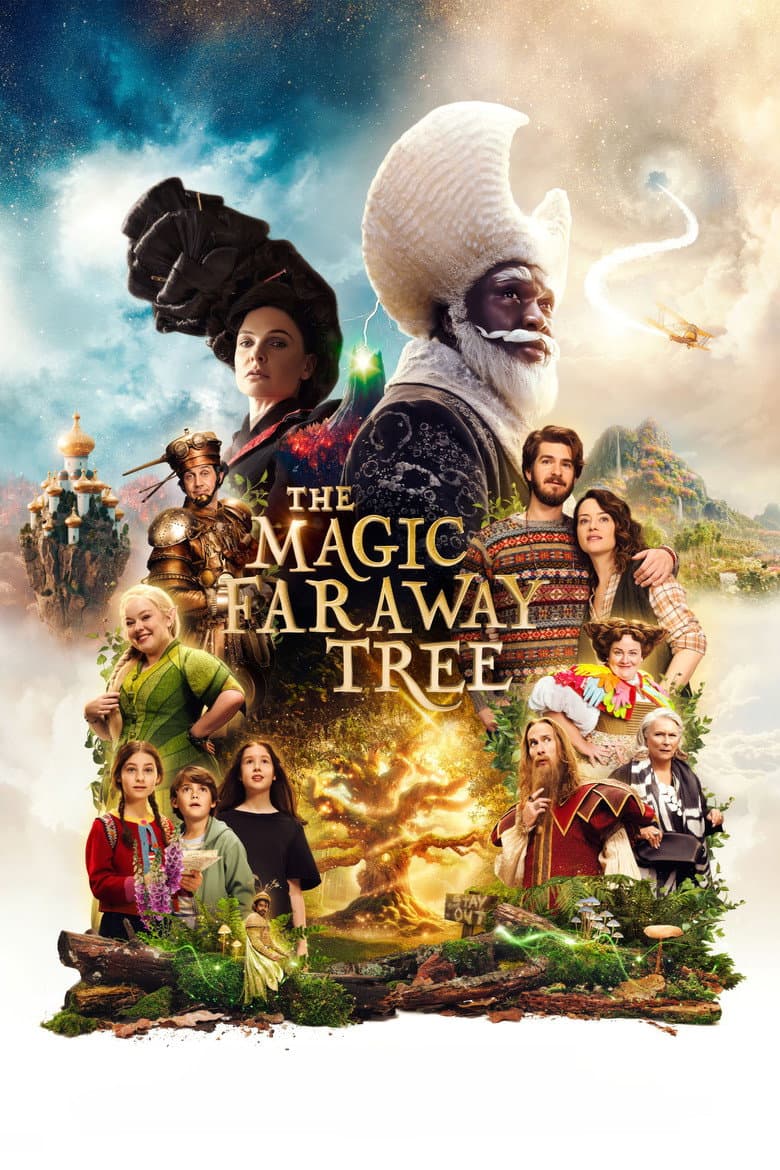
A modern family leaves the city for the countryside so the parents can escape screens and tech and help their three kids reconnect through simple life and nature. The children discover a huge magic tree near their new home and get swept into adventures with its strange residents like Moonface and Silky in different fantasy lands. The film updates the old Enid Blyton books with tech addiction worries, a mom who quits her inventing job after finding hidden cameras in a smart fridge, and a more mixed group of actors in some of the magical roles. A few online fans called out casting changes and what they saw as girl power moments in the kids' story.
Community feedback
Was our 40% Woke rating accurate?
Breakdown
These are the editorial factors and ratings behind our score for The Magic Faraway Tree.
Woke representation / casting
Some prominent fantasy roles went to diverse actors, including black performer Nonso Anozie as Moonface (a key leader among the tree residents) and Lenny Henry as a Know-All, plus South Asian actor Hiran Abeysekera as Angry Pixie. This stands out against the 1930s-1950s British source material and drew online fan notes about race changes, though the main family stays traditionally cast and marketing did not heavily spotlight representation.
35%
Woke political dialogue
The story includes mild criticism of tech companies spying on people and hijacking attention, shown through hidden cameras in a smart fridge and kids glued to devices. No identity politics language, DEI slogans, or activist-style speeches appear; the focus stays on family reconnection and imagination.
0%
Identity-driven story themes
The plot highlights family bonding, a young girl's journey from mute to speaking through magic, and an eldest daughter who takes initiative. Some viewers read "girl power" into the female characters' arcs, but these stay secondary to the adventure and do not drive the story around gender, race, or social justice themes.
20%
Western institutional / cultural critique
A strict school-like land run by Dame Snap appears as a negative, prison-style place, and urban tech life looks isolating compared to countryside simplicity. These elements read as light anti-authority and anti-tech notes rather than modern activist framing around patriarchy, whiteness, or systemic issues.
5%
Woke character or canon changes
Moonface was cast with a black actor in a central tree-resident role, differing from traditional book illustrations, and the setting moved to today with added tech and a mute child character. These are clear adaptation shifts that some fans linked to diversity priorities, though they do not rewrite core plots or add identity-driven backstories.
30%
Anti-woke backlash and complaints
Online posts and reviews from nostalgic fans labeled the film too woke over racial casting swaps, character updates, and perceived girl power or modern agenda elements. The complaints appeared on Facebook, Reddit, and smaller sites but stayed limited and did not grow into broad media debate.
35%
Creator track record context
Director Ben Gregor shows a low activist profile centered on family comedies. Writer Simon Farnaby has a track record of wholesome adaptations. Producer Pippa Harris has liberal political connections and her company ran bursary programs for minority writers, but the overall team leans toward entertainment projects without repeated identity-driven patterns.
20%
Production
Movie · 2024
A solitary cat, displaced by a great flood, finds refuge on a boat with various species and must navigate the challenges of adapting to a transformed world together.
Movie · 2016
An orphan little girl befriends a benevolent giant who takes her to Giant Country, where they attempt to stop the man-eating giants that are invading the human world.
Movie · 2025
When a young girl’s sketchbook falls into a strange pond, her drawings come to life—chaotic, real, and on the loose.
Movie · 2019
It's been ten years since the dragons moved to the Hidden World, and even though Toothless doesn't live in New Berk anymore, Hiccup continues the holiday traditions he once shared…
Movie · 2016
12-year-old Conor encounters an ancient tree monster who proceeds to help him cope with his mother's terminal illness and being bullied in school.
Movie · 2020
After losing his wife seven years earlier, the eccentric Dr. John Dolittle, famed doctor and veterinarian of Queen Victoria’s England, hermits himself away behind the high walls…
Movie · 2020
The previously untold origins of Olaf, the innocent and insightful, summer-loving snowman are revealed as we follow Olaf’s first steps as he comes to life and searches for his…
Movie · 2018
Christopher Robin, the boy who had countless adventures in the Hundred Acre Wood, has grown up and lost his way.
