Movie review
September 15, 2018 · 105 min · PG · Kids · Horror · Fantasy · Comedy · Mystery · Family
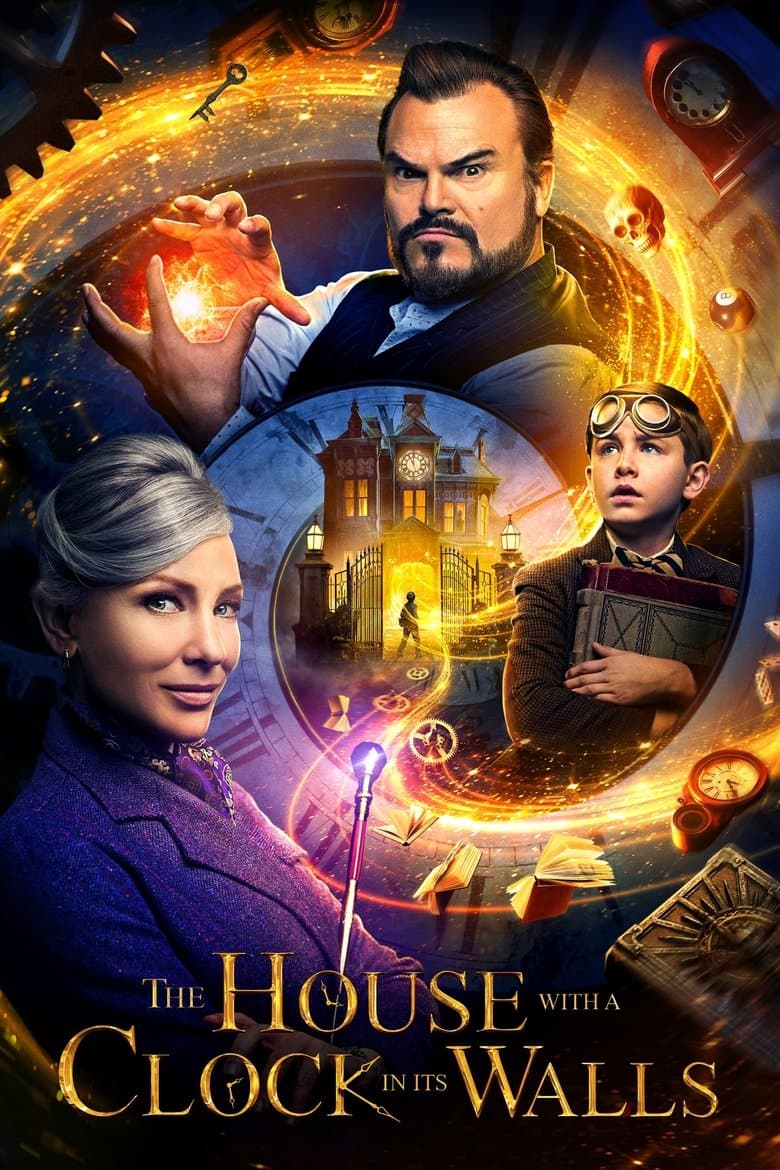
The House with a Clock in Its Walls is a 2018 family fantasy comedy directed by Eli Roth and adapted by Eric Kripke from John Bellairs' 1973 children's book. A ten-year-old orphan moves in with his eccentric warlock uncle in a creepy mansion in 1955 Michigan and learns magic while racing to stop resurrected evil warlocks from using a hidden doomsday clock to destroy the world. The story centers on personal grief, friendship, embracing personal quirks, and a clear good-versus-evil conflict with no modern political or social lectures. Casting places a black actress in a prominent antagonist role in an otherwise mostly White 1950s small-town setting without in-story explanation.
Community feedback
Was our 16% Woke rating accurate?
Breakdown
These are the editorial factors and ratings behind our score for The House with a Clock in Its Walls.
Woke representation / casting
Prominent antagonist role of Selena Izard played by black actress Renée Elise Goldsberry. The story is set in 1955 small-town Michigan where the heroic leads and most community members are White. No in-story backstory or plot justification ties her identity to the character or events. She functions as a villain rather than a positive or competent hero figure, and there was no marketing push around diversity or representation.
20%
Woke political dialogue
No activist language, institutional critiques, or contemporary social/political discussions appear in the dialogue or scenes. Conversations stay on magic rules, personal loss, friendship, family, and stopping clear evil.
0%
Identity-driven story themes
The boy's arc encourages embracing personal quirks and individuality instead of conforming to popular kids at school. This follows classic coming-of-age ideas about being yourself rather than modern group identity, representation, or social-justice framing.
2%
Western institutional / cultural critique
The 1955 American small-town setting serves as a nostalgic backdrop for adventure and makeshift family bonds. No framing of traditional gender roles, family, religion, or Western institutions as toxic or oppressive. Villain motivations tie to personal WWII trauma and a demonic bargain, not systemic or present-day ideological critiques.
0%
Woke character or canon changes
Not relevant. The film adapts the 1973 source with standard live-action changes for pacing, visuals, humor, and action (expanded clock mechanics, pumpkin fights, more spectacle). Minor villain emphasis shift and glamorous take on Mrs. Zimmerman follow typical adaptation choices with no reported ideological or identity-driven intent.
0%
Anti-woke backlash and complaints
No notable public backlash, social media campaigns, or news coverage treated the title as pushing woke, activist, DEI, or left-wing political content. Viewer and critic talk centered on spooky fun, cast, and whether it worked as family entertainment.
0%
Creator track record context
Screenwriter Eric Kripke carries a stored pattern of 61 from later political satire work. Producer Laeta Kalogridis carries 43 from advocacy for diverse writers' rooms and some political activity. Director Eli Roth carries a low 3 with prior satire of activist tropes. Other producers fall in the 11–17 range. The completed film reflects little of the higher activist patterns in its content or marketing.
27%
Production
Movie · 2018
Be careful what you wish for. With their after school junk business, best friends Sonny and Sam hope to find treasure in other people’s trash.

Movie · 2024
After discovering she can see everyone's imaginary friends, a girl embarks on a magical adventure to reconnect forgotten imaginary friends with their kids.

Movie · 2025
Four misfits find themselves struggling with ordinary problems when they are suddenly pulled through a mysterious portal into the Overworld: a bizarre, cubic wonderland that…

Movie · 2020
After losing his wife seven years earlier, the eccentric Dr. John Dolittle, famed doctor and veterinarian of Queen Victoria’s England, hermits himself away behind the high walls…
Movie · 2016
A stuffy businessman finds himself trapped inside the body of his family's cat.

Movie · 2018
The Grinch hatches a scheme to ruin Christmas when the residents of Whoville plan their annual holiday celebration.
Movie · 2026
George Hardy is a shepherd who reads detective novels to his beloved sheep every night, assuming they can't possibly understand.

Movie · 2018
Dracula, Mavis, Johnny and the rest of the Drac Pack take a vacation on a luxury Monster Cruise Ship, where Dracula falls in love with the ship’s captain, Ericka, who’s secretly a…
