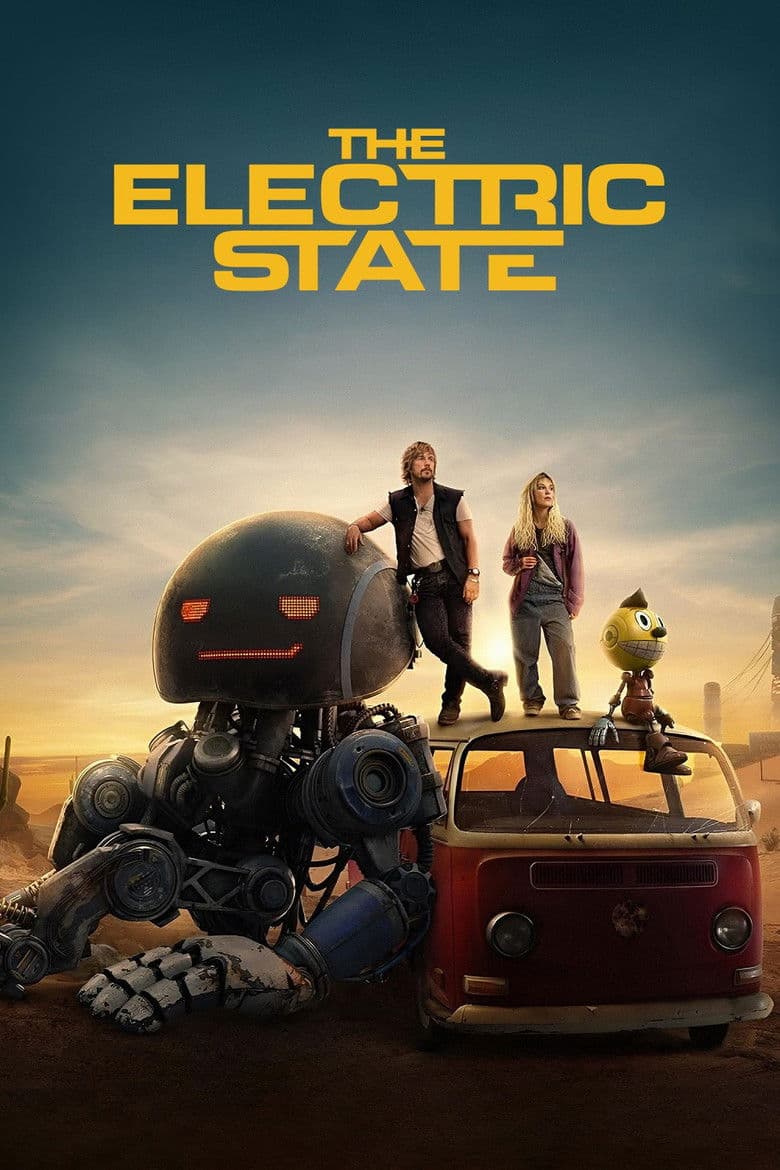
Netflix made The Electric State as a loose take on Simon Stålenhag’s illustrated book. The story is set in an alternate 1990s America after humans win a war against robots. Orphaned teen Michelle crosses the country with Cosmo, a cartoon-style robot that carries her brother’s mind. She teams up with smuggler Keats and his robot partner Herman. Tech boss Ethan Skate runs a VR system that keeps people half checked out of real life. The ending covers a rescue of her brother, a robot uprising, and a public warning about the harm of that technology.
The movie makes robot equal rights and human prejudice easy for viewers to see. Surviving robots are locked in an Exclusion Zone and framed in a civil rights style struggle against bigotry. At the climax Keats tells male-coded Herman he loves him maybe more than a friend, and Herman answers with a sexual size joke that reviewers read as romantic coding. Dialogue also pushes freedom language, prejudice talk, corporate tech greed, and VR addiction. Family love, tech addiction, and a company that exploits a child’s mind stay the emotional spine, so the identity-adjacent material is visible without fully taking over the plot.
Community feedback
Was our 61% Woke rating accurate?
Breakdown
These are the editorial factors and ratings behind our score for The Electric State.
Woke representation / casting
A multiethnic supporting cast fills visible competent roles around white leads Brown and Pratt. The alternate 1990s setting makes that mix feel ordinary rather than identity first. The female teen drives the quest as its moral center without a first female marketing frame. A trans performer appears in a minor part with no reported identity-driven arc.
28%
Woke political dialogue
Characters talk about robot equal rights, freedom, and prejudice in clear terms. They also lecture about corporate tech greed and VR addiction. Reviews called the freedom and prejudice material preachy. The talk is audible but not wall-to-wall race or gender slogan speech.
34%
Identity-driven story themes
A large strand treats robot sentience, exile, and a civil rights style fight against human bigotry as a prejudice allegory. Keats confesses love for male-coded Herman beyond friendship and Herman answers with sexual innuendo. That queer beat is audience-visible though not the film center. Family, tech addiction, and corporate exploitation of a child’s mind remain the core emotional spine.
50%
Western institutional / cultural critique
The main target is a tech oligarch and a society numbed by screens. Skate’s empire, drone-like human labor, and post-war corporate power carry anti Big Tech and anti-corporate messaging. A deadbeat VR-addicted foster dad and neglectful adults support that same tech-society critique. It is not a sustained attack on traditional family, Christianity, or classical Western culture.
40%
Woke character or canon changes
The movie is only loosely the book and invents a human-robot war plus robots campaigning for equal rights. It adds the Keats and Herman queer-coded romance. It also flattens the book’s bleak lonely tone into Guardians-style adventure. Those equal-rights and queer additions are identity-adjacent shifts from the source.
44%
Anti-woke backlash and complaints
Some anti-woke users called it a woke production for prejudice themes, weak men, and border-wall imagery. Scattered jokes and niche coverage exist. That noise is thin next to quality, budget, and adaptation criticism. Mainstream anger focused on cost, bad reviews, AI voice use, and gutting the book rather than a broad DEI campaign.
18%
Creator track record context
Team averages sit in a mild to moderate band across the Russos, Markus and McFeely, and Stålenhag. Casting director Sarah Halley Finn is the clearest representation-forward name. Interviews on this title stress tech addiction, youth audiences, and human connection with machines. DEI branding is not the main public frame for the creators here.
30%
Production
Movie · 2018
As the Avengers and their allies have continued to protect the world from threats too large for any one hero to handle, a new danger has emerged from the cosmic shadows: Thanos.
Movie · 2025
Five years after the events of Jurassic World Dominion, covert operations expert Zora Bennett is contracted to lead a skilled team on a top-secret mission to secure genetic…
Movie · 2026
The evil Empire has fallen, and Imperial warlords remain scattered throughout the galaxy. As the fledgling New Republic works to protect everything the Rebellion fought for, they…
Movie · 2010
Cobb, a skilled thief who commits corporate espionage by infiltrating the subconscious of his targets is offered a chance to regain his old life as payment for a task considered…
Movie · 2022
A mysterious force knocks the moon from its orbit around Earth and sends it hurtling on a collision course with life as we know it.
Movie · 2024
Several generations following Caesar's reign, apes – now the dominant species – live harmoniously while humans have been reduced to living in the shadows.
Movie · 2023
When his attempt to save his family inadvertently alters the future, Barry Allen becomes trapped in a reality in which General Zod has returned and there are no Super Heroes to…
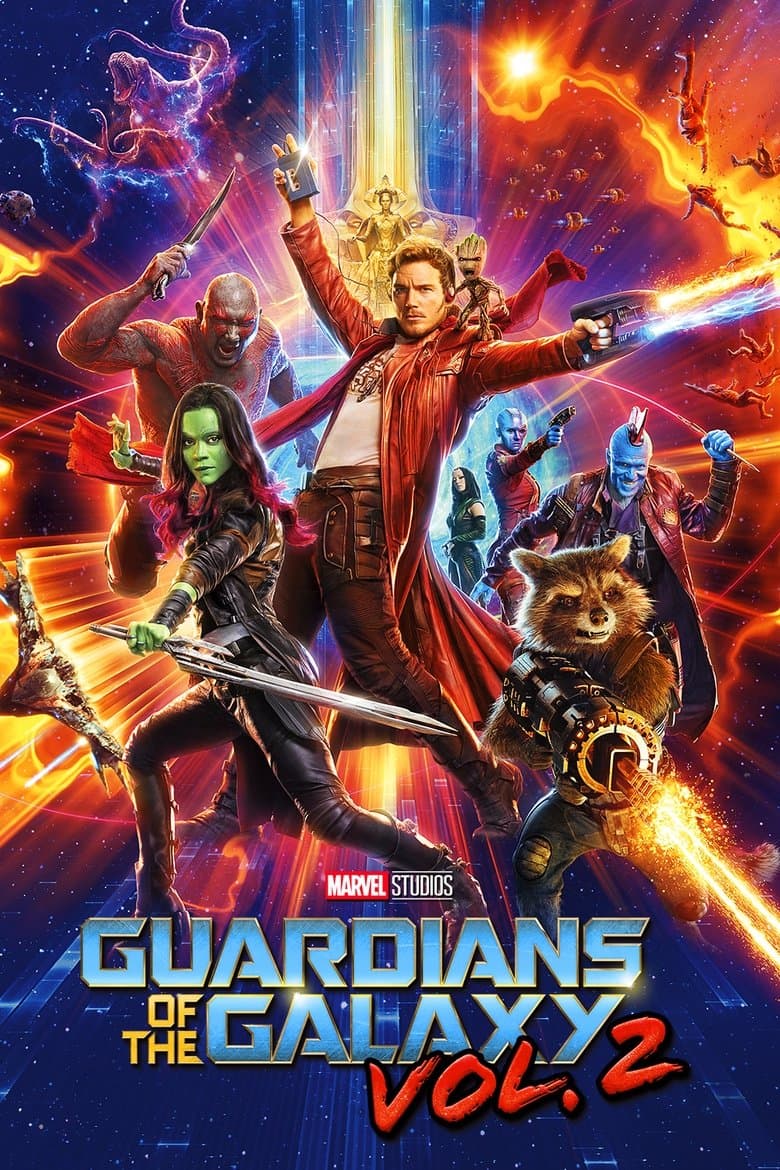
Movie · 2017
The Guardians must fight to keep their newfound family together as they unravel the mysteries of Peter Quill's true parentage.
