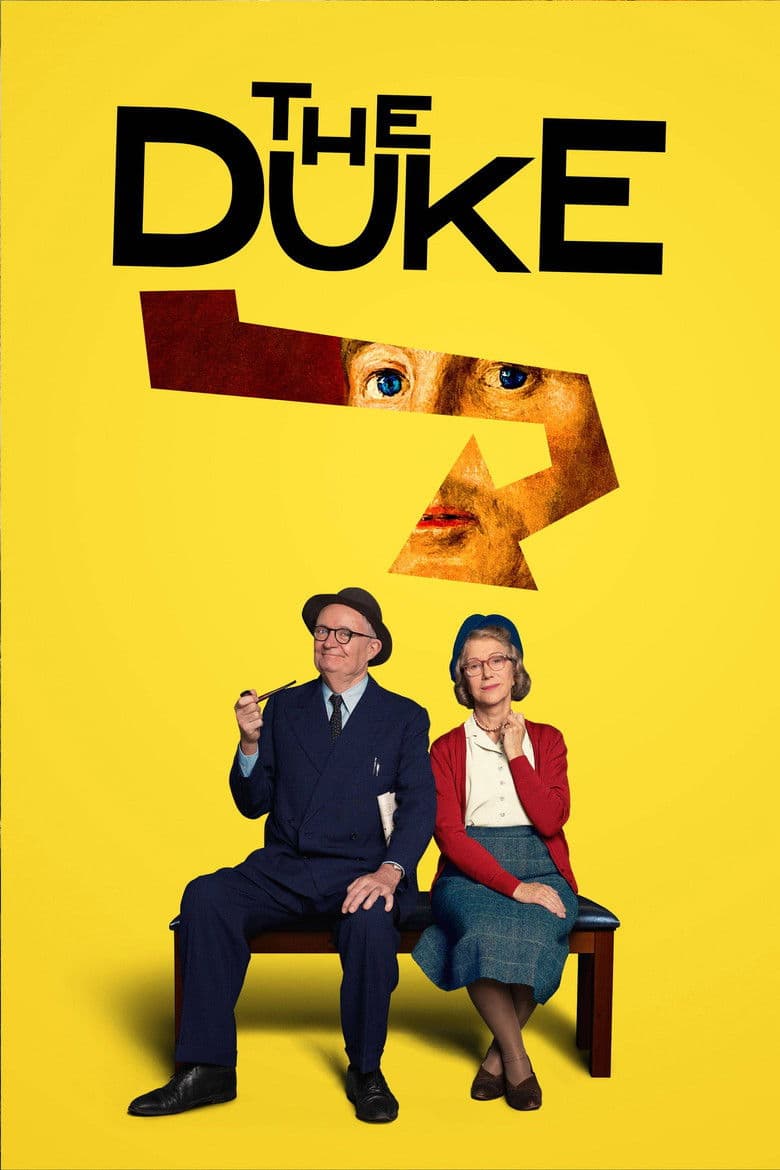
In 1961 Newcastle, Kempton Bunton is a talky, big-hearted taxi driver who hates that older people must pay for a TV licence. He campaigns for free TV for the elderly and the “common man.” After a failed trip to London to get attention, a famous Goya painting of the Duke of Wellington vanishes from the National Gallery. The film is a warm, funny British underdog story about family, grief, and one man’s wild plan.
The story is about class fairness, care for older people, and a little guy fighting stiff rules and big institutions. Kempton is painted as a kind of Robin Hood who wants art money used for people in need. Viewers also see family pain over a daughter’s death and a short workplace moment where he backs a coworker treated unfairly because of race. That is old-style social-fairness storytelling, not a modern identity lecture. A normal viewer notices the protest and the heist charm far more than any identity agenda.
Community feedback
Was our 21% Woke rating accurate?
Breakdown
These are the editorial factors and ratings behind our score for The Duke.
Woke representation / casting
Main roles match the real 1961 Bunton family and British court/police world. Casting is period-true and star-led (Broadbent, Mirren). A brief non-white coworker appears as someone Kempton defends; that is a small plot beat, not quota-style casting of leads.
0%
Woke political dialogue
Lots of talk about free TV for older people, the common man, and fairness. That is classic social-care politics, not modern DEI scripts. One short workplace bit about racial unfairness shows his kindness. Viewers hear protest speech more than identity lectures.
18%
Identity-driven story themes
The engine is class, age, charity vs fancy art, family grief, and a quirky heist. Race is a tiny side moment. No queer plot, no gender-swap arc, no identity-first romance. Mild “help the weak” themes, not race/gender identity as the story’s core.
14%
Western institutional / cultural critique
Clear jab at stiff rules, TV-licence enforcement, and spending big money on a painting while older people struggle. Framed as little man vs big officialdom and snob culture. Not modern “toxic masculinity,” colonial guilt, or anti-Christian messaging—period underdog satire.
22%
Woke character or canon changes
Not relevant. It dramatizes real people and a real theft with normal movie compression and family drama. No identity-driven rewrite of history or known figures.
0%
Anti-woke backlash and complaints
No meaningful right-leaning or anti-woke campaign treating the film as DEI propaganda. Praise was for charm and performances; controversy on identity grounds is not supported.
0%
Creator track record context
Lead directors and writers sit near zero for woke activism; Bean’s public record even pushes against PC orthodoxy. A few producers have mid-range scores from other social-history or LGBTQ projects, but they do not redefine this title’s mild, craft-first slate.
14%
Production
Movie · 2022
Two lifelong friends find themselves at an impasse when one abruptly ends their relationship, with alarming consequences for both of them.
Movie · 2020
Scott has been a case of arrested development ever since his firefighter father died when he was seven. He's now reached his mid-20s having achieved little, chasing a dream of…

Movie · 2023
Single mom Flora is at a loss about what to do with her rebellious teenage son, Max. Her efforts to keep him out of trouble lead to a beat-up acoustic guitar, a washed-up LA…
Movie · 2018
Vignettes weaving together the stories of six individuals in the old West at the end of the Civil War. Following the tales of a sharp-shooting songster, a wannabe bank robber, two…

Movie · 2024
Mismatched cousins David and Benji reunite for a tour through Poland to honor their beloved grandmother. The adventure takes a turn when the pair's old tensions resurface against…
Movie · 2017
Matt Ryder is convinced to drive his estranged and dying father Benjamin Ryder cross country to deliver four old rolls of Kodachrome film to the last lab in the world that can…
Movie · 2017
When dictator Joseph Stalin dies, his parasitic cronies square off in a frantic power struggle to become the next Soviet leader.
Movie · 2016
Having suffered a tragedy, Ben becomes a caregiver to earn money. His first client, Trevor, is a hilarious 18-year-old with muscular dystrophy.
