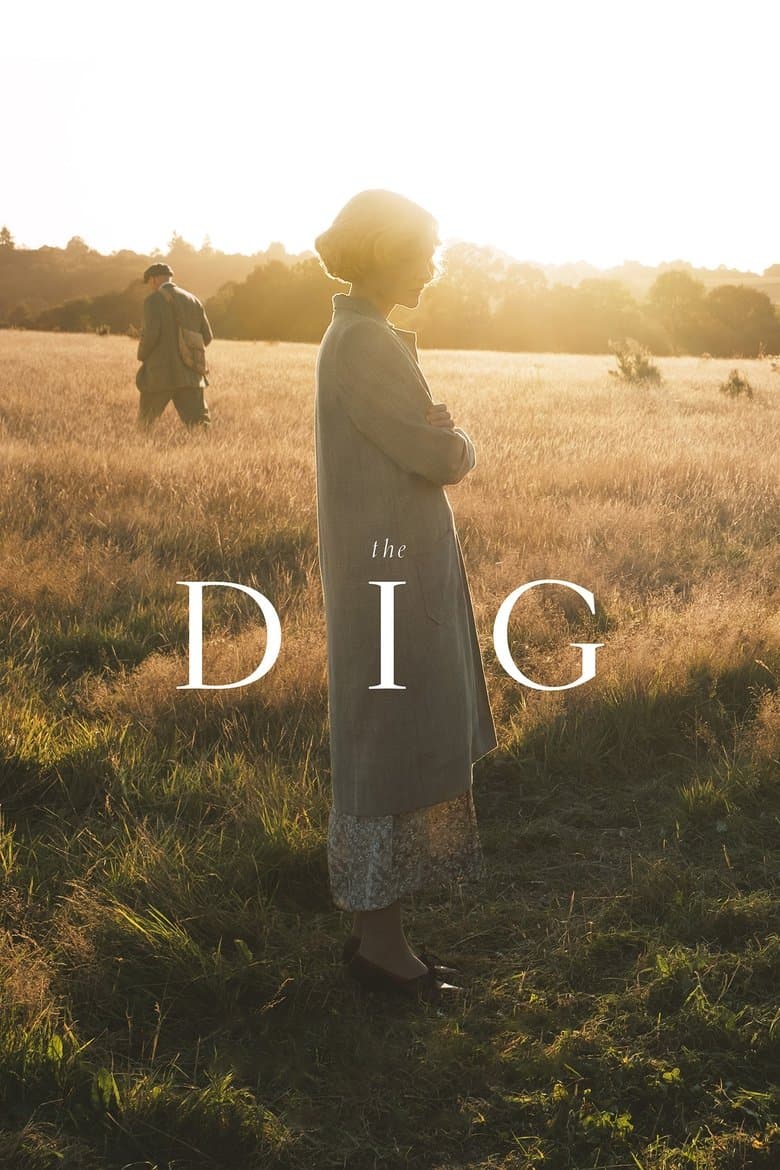
In 1939 England, as World War II draws near, rich widow Edith Pretty hires self-taught digger Basil Brown to dig burial mounds on her Suffolk land. They uncover a huge buried ship and rare treasure from long ago. Museum experts try to take over the site and push Basil aside. The tone is quiet, sad, and thoughtful, with war fear and questions about death, memory, and who gets credit for big finds.
Viewers mainly see a class fight between working diggers and posh museum men, a strong widow who runs her estate, and a side love story. Archaeologist Peggy is stuck in a cold marriage while her husband is shown as gay and close to another man; she then falls for Edith’s cousin. That queer marriage plot is clear if you watch closely, though it is not the whole movie. Class snubs and some unfair treatment of women on the dig show up without long modern lectures. Casting stays mostly period-typical for 1930s rural England. A normal viewer would notice the soft romance and class tension more than loud activist messaging.
Community feedback
Was our 46% Woke rating accurate?
Breakdown
These are the editorial factors and ratings behind our score for The Dig.
Woke representation / casting
Cast matches a 1939 English country dig: mostly white British leads for real historical figures. No race swaps or clear DEI quota pattern in big roles. Women lead because Edith and Peggy were real people in the story, not as modern identity casting stunts.
0%
Woke political dialogue
Talk is mostly about digging, war, health, and who owns the find. Viewers hear class put-downs and cold marriage moments. There are no long modern activist speeches about race, gender theory, or identity politics.
18%
Identity-driven story themes
Heart of the film is the ship, death, memory, and fair credit. A clear second plot shows Peggy trapped with a husband coded as gay, then choosing a new love. Some sexism on the dig also shows. The queer arc is side story, not the whole movie, but it is easy to notice and adds weight.
42%
Western institutional / cultural critique
Elite museum men shove aside working-class Basil; Edith fights for respect and credit. That is classic British class snobbery and a bit of workplace sexism. It is not a modern sermon about whiteness, colonial guilt, or systemic identity politics.
22%
Woke character or canon changes
From the novel into the film, real archaeologist Stuart Piggott is written as a closeted gay husband who neglects Peggy; many historians say that is unproven and unfair. Peggy is also made less skilled than she was. Age cuts and a made-up romance are normal drama choices; the sexuality rewrite is the main identity-linked change.
34%
Anti-woke backlash and complaints
Almost no major anti-woke storm. Headlines were about age casting and fairness to women diggers. A few online posts called out the gay subplot as added or “woke,” but that stayed small and fringe.
8%
Creator track record context
Key writer Buffini has a high feminist progressive track record. Director Stone often centers women and power. Casting lead Bevan advocates diverse casting in her career. Source author Preston is not activist. Overall mid-range for the main creative team, not a full activist project.
45%
Production
Movie · 2026
While people across 1990s Iraq struggle to survive the war and food shortages, Saddam Hussein requires each school in the country to prepare a cake to celebrate his birthday.
Movie · 2017
In 1950, amidst the ravages of the Korean War, Sergeant Süleyman stumbles upon a a half-frozen little girl, with no parents and no help in sight and he risks his own life to save…
Movie · 2025
A logger leads a life of quiet grace as he experiences love and loss during an era of monumental change in early 20th-century America.
Movie · 2023
The story of J. Robert Oppenheimer's role in the development of the atomic bomb during World War II.
Movie · 2022
A quiet, neglected girl is sent away from her dysfunctional family to live with relatives for the summer. She blossoms in their care, but in this house where there are meant to be…
Movie · 2019
Richard Jewell thinks quick, works fast, and saves hundreds, perhaps thousands, of lives after a domestic terrorist plants several pipe bombs and they explode during a concert…
Movie · 2016
WWII American Army Medic Desmond T. Doss, who served during the Battle of Okinawa, refuses to kill people and becomes the first Conscientious Objector in American history to…

Movie · 2025
An eccentric lottery winner who lives alone on a remote island tries to make his fantasies come true by getting his favourite musicians to perform at his home.
