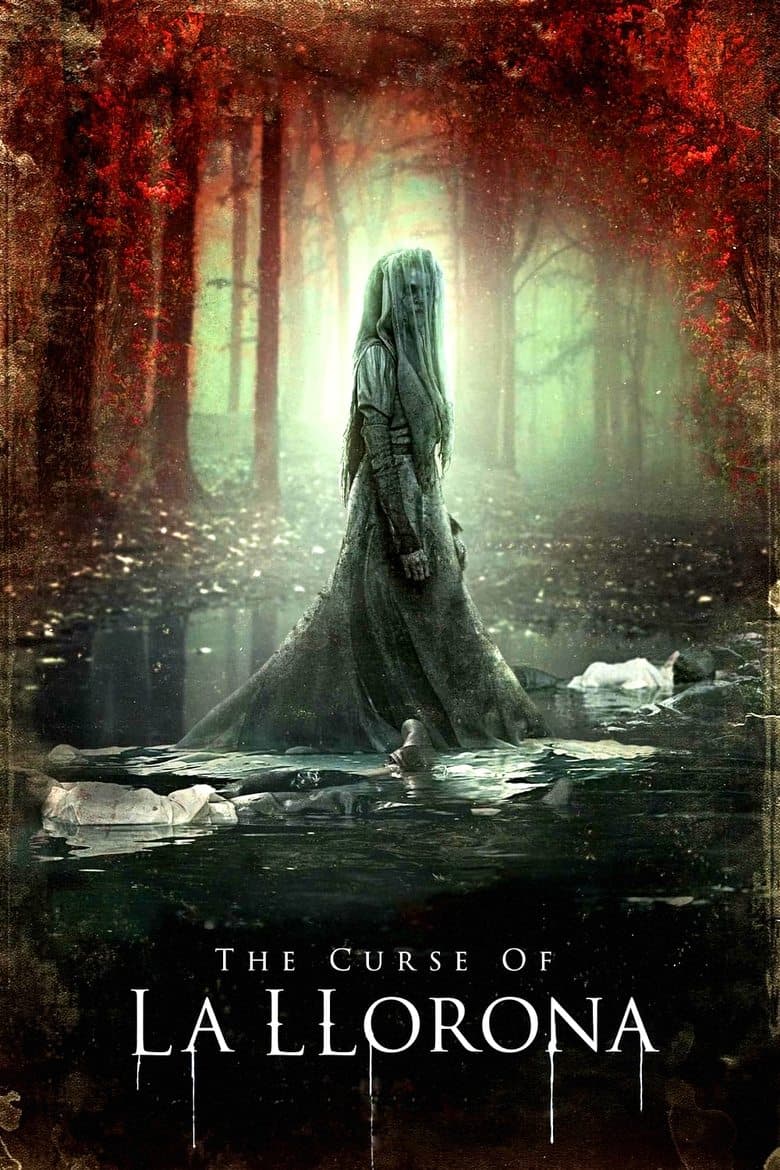
Anna Tate-Garcia is a widowed social worker and mother raising two children in 1970s Los Angeles. She removes two boys from the home of Patricia Alvarez after finding signs of danger, but the boys are soon killed by La Llorona, the crying ghost from Latin American folklore. The spirit then follows Anna’s family and tries to take her children. Anna turns to Father Perez and Rafael Olvera, a former priest who uses faith and folk healing, to protect them. The film uses jump scares, haunted houses, grief, and family danger in a dark supernatural horror story.
The clearest woke-related signal comes from the casting and female focus. A white actress leads a story built around Mexican folklore, while Anna carries a Latino family name but shows few clear cultural ties. Three mothers drive the main conflict, and the women make the key choices while protecting their children. The story does not use modern political dialogue, queer themes, or a broad attack on Western institutions. Its main ideas remain motherhood, guilt, grief, faith, and the fight against a supernatural enemy.
Community feedback
Was our 15% Woke rating accurate?
Breakdown
These are the editorial factors and ratings behind our score for The Curse of La Llorona.
Woke representation / casting
The film puts white actress Linda Cardellini at the center of a story built around Mexican and Latin American folklore. The film gives Anna the Garcia name and Latino family links, but it shows few clear cultural ties in her family life. The film also centers three mothers and makes them the main people who fight, protect, and make key choices.
25%
Woke political dialogue
Not present. No activist or identity-driven dialogue; conversations center on grief, maternal protection, faith, and fighting supernatural evil.
0%
Identity-driven story themes
Not present in this title.
0%
Western institutional / cultural critique
Not present. Faith elements (Catholic prayers, crosses, St. Michael medal) portrayed positively as necessary against evil; social worker role serves only as horror setup with no critique of institutions, patriarchy, or Western norms.
0%
Woke character or canon changes
Not relevant. Standard folklore adaptation with mainstream horror adjustments (1970s LA setting, social worker protagonist, Conjuring tie-in); no identity-driven alterations to established characters or historical figures.
0%
Anti-woke backlash and complaints
Not present. No notable anti-woke or right-leaning criticism treating the film as pushing identity politics or DEI messaging; all reported controversy came from progressive and Latino critics calling for more authentic representation.
0%
Creator track record context
The cached context gives writer Mikki Daughtry a past romance about women in love. The cached context gives producer Emile Gladstone later horror work with #MeToo and Black Lives Matter ideas about power. The cached context also gives Aaron A. Goffman a short about homelessness. The film itself does not use these themes, so the creator signal is weak.
12%
Production
Movie · 2025
Paranormal investigators Ed and Lorraine Warren take on one last terrifying case involving mysterious entities they must confront.
Movie · 2022
Inspired by the true story of a family who believed they were possessed by spirits. This film follows a woman who must protect her child from a curse.
Movie · 2023
Eight year old Peter is plagued by a mysterious, constant tapping from inside his bedroom wall—one that his parents insist is all in his imagination.
Movie · 2016
In 1630, a farmer relocates his family to a remote plot of land on the edge of a forest where strange, unsettling things happen.
Movie · 2016
Rebecca must unlock the terror behind her little brother's experiences that once tested her sanity, bringing her face to face with a supernatural spirit attached to their mother.
Movie · 2022
Trapped on her family’s isolated farm, Pearl must tend to her ailing father under the bitter and overbearing watch of her devout mother.
Movie · 2024
A live broadcast of a late-night talk show in 1977 goes horribly wrong, unleashing evil into the nation's living rooms.
Movie · 2026
After breaking the mysterious "One Wish Willow" to win his crush's heart, a hopeless romantic finds himself getting exactly what he asked for but soon discovers that some desires…
