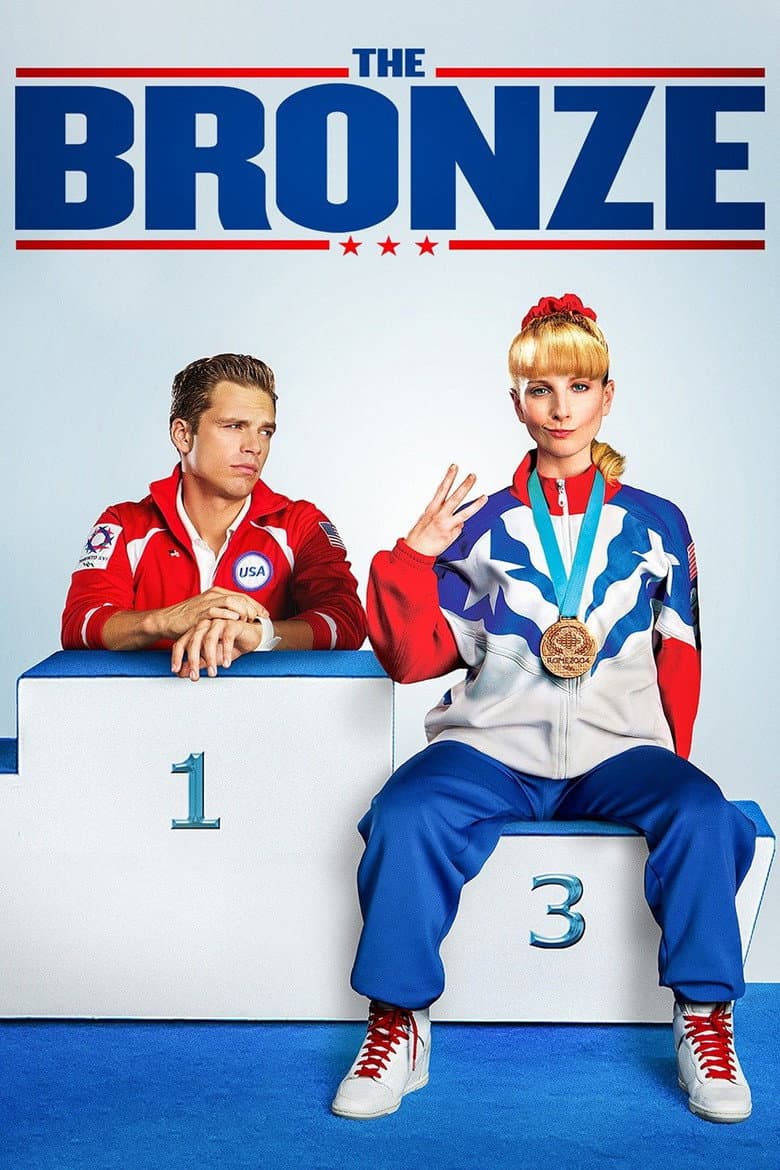
Hope Ann Greggory won a bronze medal for the United States at the 2004 Olympics after finishing a routine with a serious injury. Years later, she lives in her father's basement in Amherst, Ohio, and treats her old fame as a job. After her former coach dies, a letter claims Hope can receive a large inheritance if she trains a promising young gymnast named Maggie. The film is a crude, dark comedy about jealousy, lost fame, selfishness, and growing up.
The movie shows Hope and Maggie in a women's gymnastics world because that is the sport at the center of the plot. Hope's bitter rivalry with Maggie turns coaching into a fight over status, money, and attention. Hope also struggles with her father, old rival Lance, and kind gym manager Ben as her choices damage the people around her. The ending gives her a smaller purpose as a local coach, while the jokes stay crude, sexual, and focused on personal behavior.
Community feedback
Was our 2% Woke rating accurate?
Breakdown
These are the editorial factors and ratings behind our score for The Bronze.
Woke representation / casting
Not present. The prominent cast fits the small-town Ohio setting and women's gymnastics story. The film does not use the cast to make a broader representation or identity statement.
0%
Woke political dialogue
Not present. The characters talk about gymnastics, fame, money, sex, and family. The dialogue does not make political or activist arguments.
0%
Identity-driven story themes
Not present. The story follows Hope's jealousy, injury, fading fame, and gradual change. Maggie challenges Hope's fear of being forgotten rather than carrying a group identity message.
0%
Western institutional / cultural critique
Not present. Hope's father enables her, Lance uses her, and Hope mistreats Ben and Maggie. These are personal failures in a crude comedy, not a broad argument about men, family, religion, or Western culture.
0%
Woke character or canon changes
Not relevant. The film uses fictional characters and does not adapt a known story or historical person.
0%
Anti-woke backlash and complaints
Not present. The separate X research pass found no anti-woke posts, boycott, or review-bomb campaign. Web and audience discussion focuses on the crude comedy, the sex scene, and Hope's likability rather than woke, DEI, or identity politics claims.
0%
Creator track record context
Bryan Buckley later made public art that criticized Donald Trump, but his main career is in commercials. Melissa and Winston Rauch have no known activist pattern, and their interviews describe this film as a story about fame and bitterness. The Duplass-related producers mainly make character-focused independent projects.
10%
Production
Movie · 2017
When dictator Joseph Stalin dies, his parasitic cronies square off in a frantic power struggle to become the next Soviet leader.

Movie · 2019
A young Scottish singer, Rose-Lynn Harlan, dreams of making it as a country artist in Nashville after being released from prison.
Movie · 2017
Ingrid becomes obsessed with a social network star named Taylor Sloane who seemingly has a perfect life. But when Ingrid decides to drop everything and move west to be Taylor's…
Movie · 2017
Steve Coogan and Rob Brydon embark on a road trip along the coast of Spain.
Movie · 2018
Vignettes weaving together the stories of six individuals in the old West at the end of the Civil War. Following the tales of a sharp-shooting songster, a wannabe bank robber, two…
Movie · 2016
An improv group deals with several crises, including the loss of their lease and one member hitting the big time.
Movie · 2018
Thirteen-year-old Kayla endures the tidal wave of contemporary suburban adolescence as she makes her way through the last week of middle school — the end of her thus far…
Movie · 2023
Allison's life falls apart following her involvement in a fatal accident. The unlikely relationship she forms with her would-be father-in-law helps her live a life worth living.
