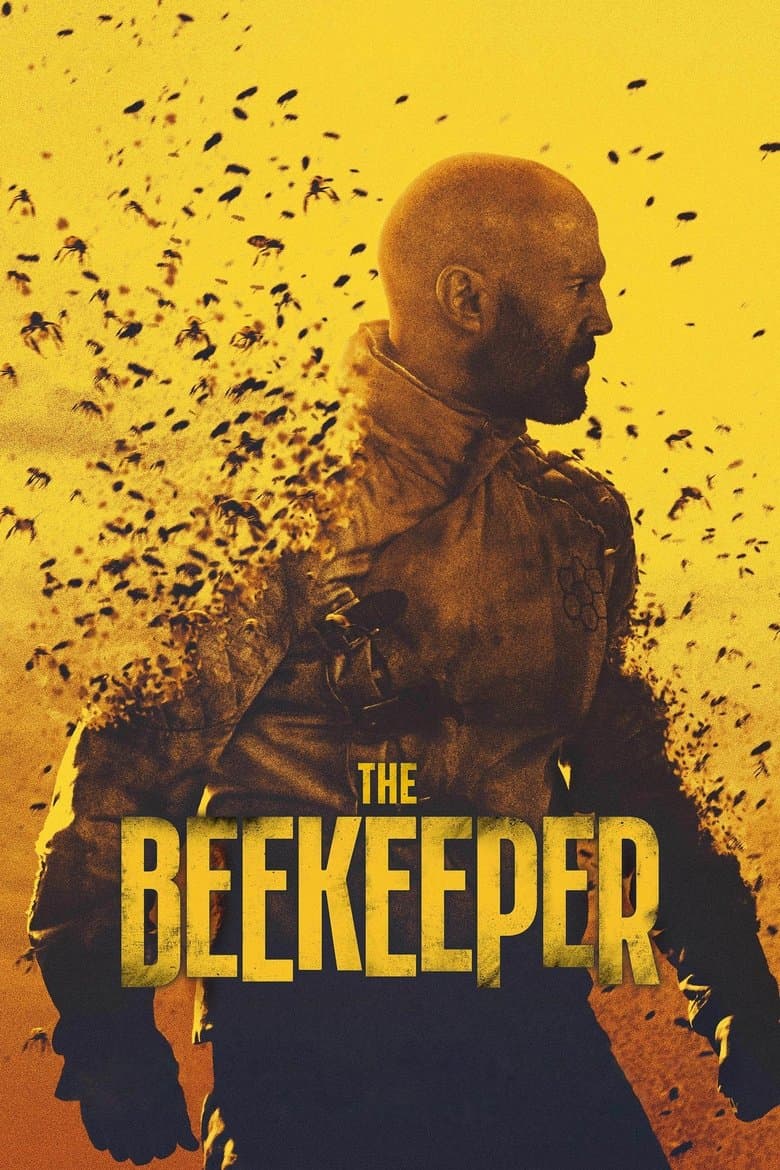
Retired operative Adam Clay lives quietly as a beekeeper until his landlady is ruined by a phishing scam and dies by suicide. He climbs a criminal ladder of call-center fraud, private security, and corrupt power tied to a tech empire and the U.S. presidency. An FBI team tries to stop him along the way. The film is a hard R revenge action thriller about elder scams, elite corruption, and justice outside the law. It is not a story about identity politics.
The movie does show women and minorities in many authority jobs, including a Black FBI co-lead, a black landlady who leads a charity, a Black FBI deputy director, a female U.S. president, a female CIA director, and an Asian female Beekeeper assassin. None of this is sold on screen as a diversity message, and the hero remains the main force of skill and power. Dialogue and themes stay on scams, revenge, and right versus wrong rather than race or gender ideology. Some viewers complained about casting and authority roles, but that pushback was limited and not a big mainstream fight.
Community feedback
Was our 23% Woke rating accurate?
Breakdown
These are the editorial factors and ratings behind our score for The Beekeeper.
Woke representation / casting
The film gives women and minorities many visible power jobs such as FBI leadership, the presidency, CIA leadership, and a Beekeeper assassin. The story never treats this as a diversity speech on screen. Statham still stands as the one unstoppable skilled hero. The mix fits a modern U.S. setting but still looks like common Hollywood casting habits rather than a representation-first plot.
28%
Woke political dialogue
Not present. Dialogue centers on scams, bees and hive metaphors, revenge, right versus wrong, and law versus vigilante justice with no race, gender, sexuality, or DEI talking points.
0%
Identity-driven story themes
Not present. Core premise is personal vengeance after elder fraud and exposure of a tech-scam empire linked to campaign dirty money, and identity categories do not drive character arcs or themes.
0%
Western institutional / cultural critique
The story goes after scam artists, a rich tech heir, and dirty campaign money. Big agencies look slow, weak, or secretive. It does not blame whiteness, men as a class, colonial guilt, or Western culture itself. The mild beat is that the system fails the elderly while elites stay protected.
8%
Woke character or canon changes
Not relevant. because this is an original property with no legacy-character or historical identity rewrite.
0%
Anti-woke backlash and complaints
Some niche sites and social posts called the FBI cast a DEI hire or complained about female leaders. That reaction stayed limited and never became a big mainstream fight. Some conservative viewers even praised the movie as straight action without lectures. The gripes mostly targeted casting and a subplot, not the whole film as a culture war.
22%
Creator track record context
Ayer is known for tough crime and action without activist identity focus. Wimmer, Statham, and the main producers do not show a pattern of social-justice filmmaking. The casting director shows only mild normal industry diversity interest. The whole team reads as standard action-thriller talent, not activists.
12%
Production
Movie · 2025
Levon Cade left behind a decorated military career in the black ops to live a simple life working construction.

Movie · 2021
Danger, deception and murder descend upon a sleepy town when a professional assassin accepts a new assignment from his enigmatic boss.
Movie · 2024
The adoptive son of the Adattu family, Marco, sets off on a ruthless quest for vengeance after his brother is brutally murdered, finding only betrayal, loss and unimaginable…
Movie · 2023
With the price on his head ever increasing, John Wick uncovers a path to defeating The High Table. But before he can earn his freedom, Wick must face off against a new enemy with…
Movie · 2016
In the aftermath of an unspeakable act of terror, Police Sergeant Tommy Saunders joins courageous survivors, first responders and investigators in a race against the clock to hunt…

Movie · 2025
Newly released from prison and marked for death by unrelenting enemies, Nate must now protect his estranged 9-year-old daughter, Polly, at all costs.

Movie · 2024
A contract killer, after being diagnosed with a fast-moving form of dementia, is presented with the opportunity to redeem himself by saving the life of his estranged adult son.

Movie · 2018
Agent Matt Graver teams up with operative Alejandro Gillick to prevent Mexican drug cartels from smuggling terrorists across the United States border.
