Movie review
July 31, 2023 · 100 min · PG · Sci-Fi · Animation · Comedy · Action
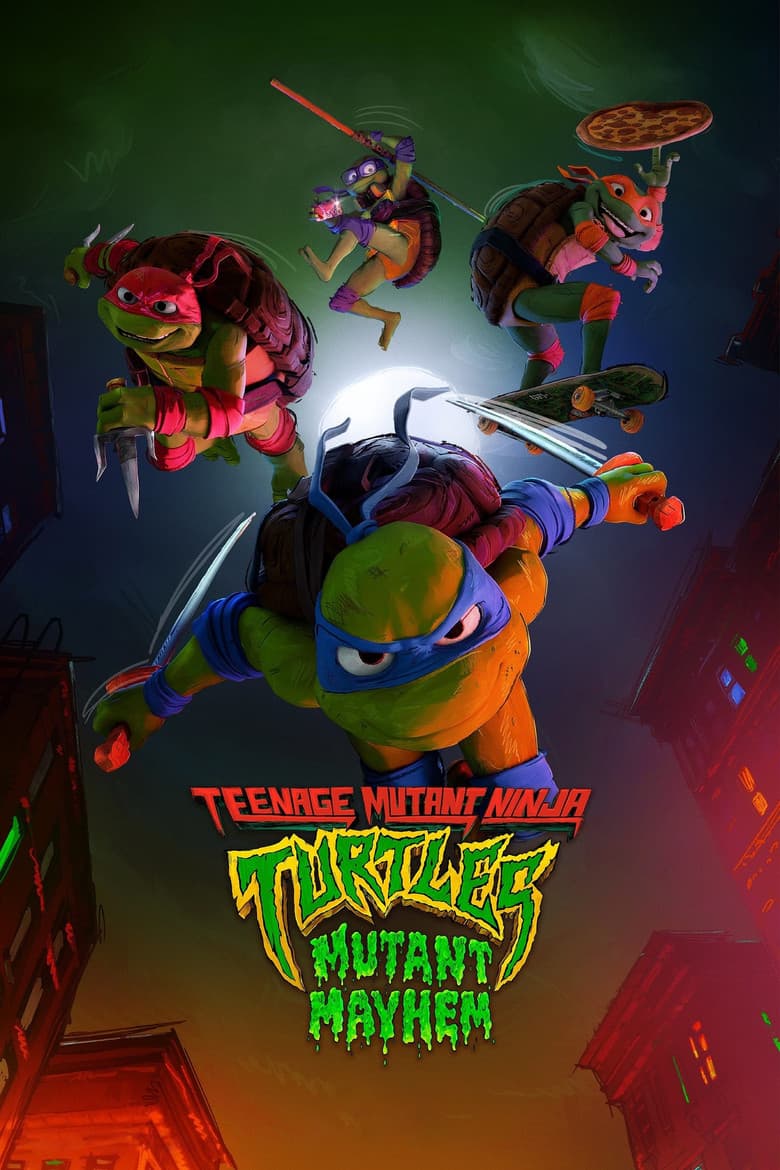
Four turtle brothers live under New York City with their rat dad, Splinter. They want to go to the surface and be treated like normal teens. They meet April O’Neil and try to become heroes so people will accept them. Their plan gets messy when a mutant crime boss named Superfly and his mutant gang show up. The movie is a loud, funny, sketch-style action comedy about family, friendship, and fitting in.
The main “woke” stuff most viewers can spot is casting and a soft outsider story, not a politics lecture. April is a black teen in a role long played by a white red-haired woman, and that change is easy to notice. Two of the four turtle voice actors are black, and some supporting mutants are cast in a diverse way. The plot is about mutants being feared, wanting acceptance, and rejecting Superfly’s plan to wipe out humans. That lands more like a classic “be yourself / don’t hate people who look different” teen movie than modern race or gender activism. Dialogue is mostly jokes, brother fights, and hero talk, not slogans. Some people online called the black April casting “woke” and there was light review-bomb talk, but the film was widely liked and was not a big culture-war fight.
Community feedback
Was our 52% Woke rating accurate?
Breakdown
These are the editorial factors and ratings behind our score for Teenage Mutant Ninja Turtles: Mutant Mayhem.
Woke representation / casting
April is a clear race reimagining of a long-white franchise face, voiced by Ayo Edebiri and drawn as black. Two of four turtle VAs are black teens, which some coverage treated as black-coding of lead heroes. Ensemble voices are diverse (Maya Rudolph, Ice Cube, Jackie Chan, etc.). This is noticeable identity casting in major roles, but not a wall of quota girlboss types or constant identity signaling in every scene.
40%
Woke political dialogue
Talk is mostly jokes, brother banter, and “we want to be accepted” lines. Superfly’s rants about humans never liking mutants and wiping them out read as villain extremism, not modern activist slogans about race, gender, or DEI. A normal viewer would not hear lecture-style politics.
14%
Identity-driven story themes
The whole movie is about mutants being feared and wanting to live as normal teens. Superfly’s “mutants vs humans” plan vs the turtles’ “live together” path makes otherness and acceptance hard to miss. It stays at soft outsider allegory and teen fitting-in, not a plot about real-world race, gender, or queer identity as the subject.
36%
Western institutional / cultural critique
TCRI is a shady company that wants super-soldier mutants. That is standard bad-corporation action, not a modern attack on Western culture, faith, family, or traditional gender roles. Splinter’s strict parenting is treated with love and fixed by care, not by tearing down the family.
16%
Woke character or canon changes
Black April is an identity-driven change to a famous character and is audience-visible. Leatherhead is played as female (Rose Byrne) where many older versions are male. Baxter Stockman being black matches some comics more than the 1980s cartoon, so that is weaker as a “woke rewrite.” Other changes (teen focus, Superfly as main villain) are normal reboot choices.
42%
Anti-woke backlash and complaints
There was real but limited pushback: black April race-swap anger, “woke” casting posts, and talk of review bombing. It was not a huge national boycott story, and most coverage stayed on the film’s style and fun. Score stays moderate-low because anti-woke complaints exist mainly around casting, not around heavy on-screen ideology.
24%
Creator track record context
Using the stored crew scores, most key people are low (Spears, O’Brien, Goldberg, Rowe, Williams). Rogen is higher at 46 and pulls the team average up a bit, but public talk about this title still centers on comedy and teen movies, not activist careers.
28%
Production
Movie · 2018
Earth is peaceful following the Tournament of Power. Realizing that the universes still hold many more strong people yet to see, Goku spends all his days training to reach even…
Movie · 2018
All the major DC superheroes are starring in their own films, all but the Teen Titans, so Robin is determined to remedy this situation by getting over his role as a sidekick and…
Movie · 2024
Gru and Lucy and their girls—Margo, Edith and Agnes—welcome a new member to the Gru family, Gru Jr., who is intent on tormenting his dad.
Movie · 2016
Tripp is a high school senior with a knack for building trucks who makes an incredible discovery - a gas-guzzling creature named Creech.
Movie · 2016
After supervillain Shredder escapes custody, he joins forces with mad scientist Baxter Stockman and two dimwitted henchmen, Bebop and Rocksteady, to unleash a diabolical plan to…
Movie · 2019
ZIM discovers his almighty leaders never had any intention of coming to Earth and he loses confidence in himself for the first time in his life, which is the big break his human…
Movie · 2018
A friendship with a top-secret robot turns a lonely girl's life into a thrilling adventure as they take on bullies, evil bots and a scheming madman.
Movie · 2016
Adam West and Burt Ward returns to their iconic roles of Batman and Robin. The film sees the superheroes going up against classic villains like The Joker, The Riddler, The Penguin…
