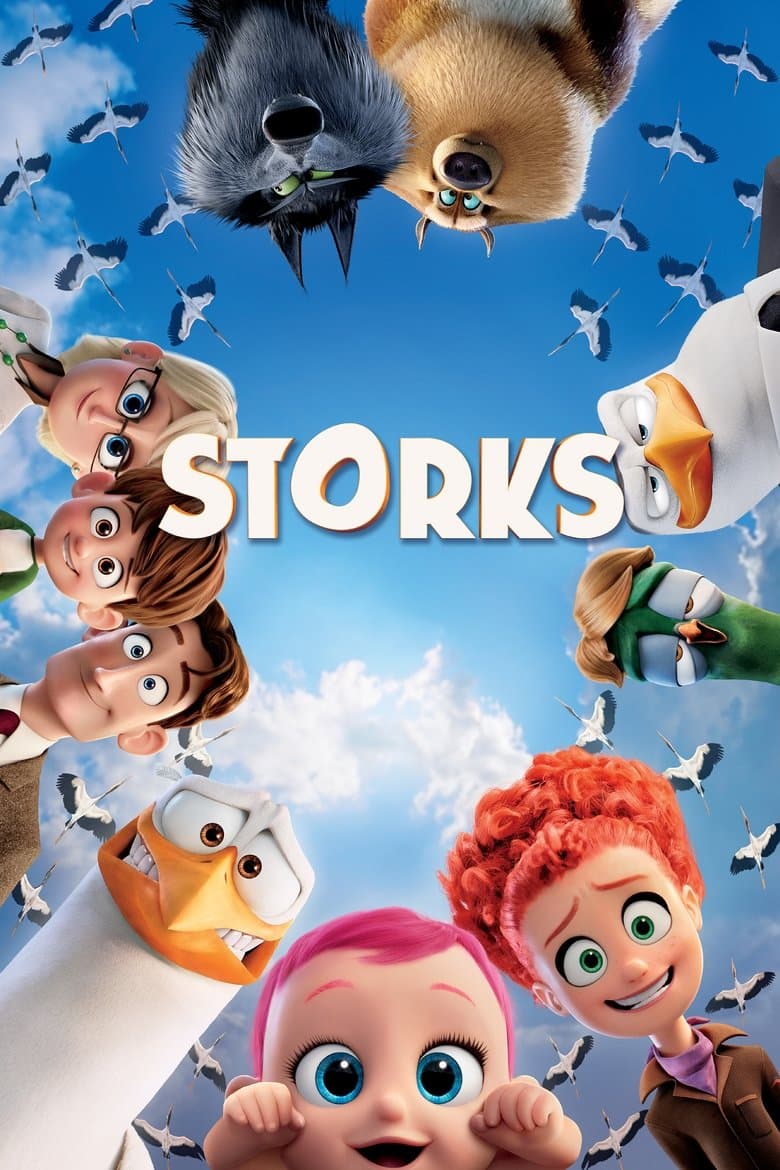
Storks is an animated movie about storks who stopped delivering babies and now ship packages for a big company called Cornerstore.com. Junior is a top stork who works with Tulip, a human orphan living at the warehouse. They accidentally create a baby and must deliver her while the boss Hunter cares more about stock prices than babies. At the same time, a lonely boy named Nate waits for his busy parents to notice him. The story focuses on parenthood, found family, work versus kids, and the idea that you should always deliver.
Near the end, a short montage shows storks bringing babies to many kinds of families, including multi-ethnic households and same-sex couples. Gay and lesbian pairs appear as equal recipients of babies next to other parents. That moment was treated as intentional inclusion, and some Christian and conservative outlets saw it as worldview messaging that normalizes same-sex parenting in a kids film. The main plot is still a buddy adventure about bonding and parenthood, so the identity beat is brief and secondary rather than the whole story.
Community feedback
Was our 45% Woke rating accurate?
Breakdown
These are the editorial factors and ratings behind our score for Storks.
Woke representation / casting
The main voice cast is ordinary for a mainstream U.S. family cartoon. The clear identity signal is the closing baby-delivery montage with ethnically varied families and gay and lesbian couples as equal recipients of babies. That inclusion is audience-visible and intentional, and both GLAAD and conservative critics noticed it. It is background-to-climax diversity rather than a full main-cast overhaul.
32%
Woke political dialogue
The film has no identity-politics speeches, DEI slogans, or activist race and gender dialogue. Hunter sounds like a generic profit-first CEO who puts packages over babies. That is not modern social-justice rhetoric.
5%
Identity-driven story themes
The main arc is adventure, bonding with a baby, an orphan finding home, and parents learning to be present. That is ordinary family entertainment. The ideological beat is a wider idea of family, with same-sex parents shown among every kind of household at the end. That affirmation is real but secondary, not a queer-centered plot.
42%
Western institutional / cultural critique
Cornerstore and workaholic-parent jokes poke at corporate greed and neglectful modern work culture. That is mild family-movie business satire. It does not frame whiteness, patriarchy, colonial guilt, or anti-conservative identity politics.
12%
Woke character or canon changes
Not relevant. This is an original story with no race or gender swaps of established characters or historical figures.
0%
Anti-woke backlash and complaints
Conservative and Christian outlets objected that the film pushes LGBT-affirming family norms on kids. Coverage treated the montage as worldview messaging or a gay agenda, even when calling it fleeting. That is real pushback for a 2016 kids film, not a huge later culture-war storm.
38%
Creator track record context
Nicholas Stoller is the main elevated signal through later work and public queer-representation framing. Other key directors, writers, and producers score low in the source. The team is largely craft and comedy animation rather than activist-led as a whole.
34%
Production

Movie · 2022
Decades since their successful television series was canceled, Chip has succumbed to a life of suburban domesticity as an insurance salesman.
Movie · 2024
Gromit’s concern that Wallace is becoming too dependent on his inventions proves justified, when Wallace invents a “smart” gnome that seems to develop a mind of its own.
Movie · 2016
The quiet life of a terrier named Max is upended when his owner takes in Duke, a stray whom Max instantly dislikes.
Movie · 2021
Tired of being locked in a reptile house where humans gawk at them like they are monsters, a ragtag group of Australia’s deadliest creatures plot an escape from their zoo to the…
Movie · 2025
When a faithful police dog and his human police officer owner are injured together on the job, a harebrained but life-saving surgery fuses the two of them together and Dog Man is…
Movie · 2015
When 11-year-old Riley moves to a new city, her Emotions team up to help her through the transition. Joy, Fear, Anger, Disgust and Sadness work together, but when Joy and Sadness…
Movie · 2022
Puss in Boots discovers that his passion for adventure has taken its toll: He has burned through eight of his nine lives, leaving him with only one life left.
Movie · 2021
The Addams get tangled up in more wacky adventures and find themselves involved in hilarious run-ins with all sorts of unsuspecting characters.
