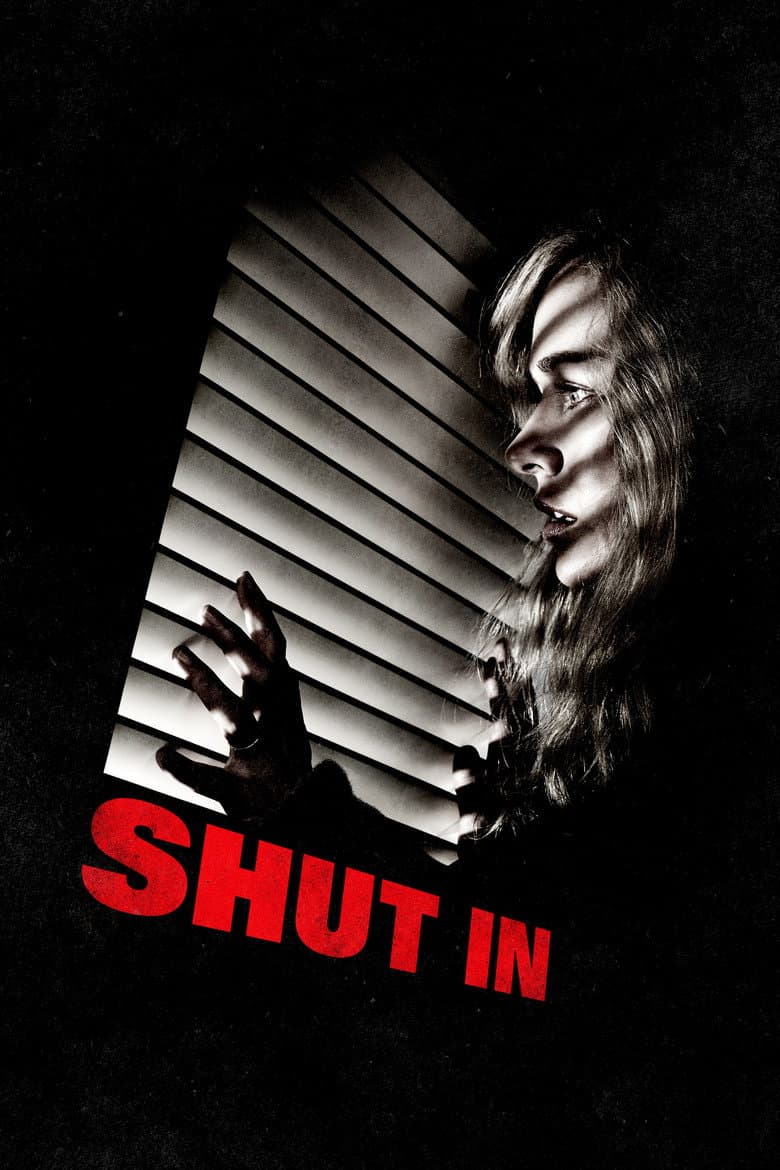
Widowed child psychologist Mary Portman lives alone in rural Maine and cares for her stepson Stephen. He seems stuck in a vegetative state after a car crash that also killed her husband. A young deaf patient vanishes, and a deadly ice storm cuts her off from help. Strange events in the house force her to fight to survive. The film’s twist changes who has been controlling the household.
The story is a low-woke psychological thriller about isolation, grief, and threat inside one home. There is no race, gender-identity, queer, colonial, or systemic oppression message driving the plot. Villainy stays personal and psychological, including faked disability, murder, and captivity. Dialogue stays on grief, caregiving stress, therapy, and thriller plot points. Disability and deafness work as thriller devices, not as progressive advocacy.
Community feedback
Was our 6% Woke rating accurate?
Breakdown
These are the editorial factors and ratings behind our score for Shut In.
Woke representation / casting
Not present. Lead and supporting cast fit a rural New England psychological thriller. There is no quota-style diversity, race or gender swaps, or marketing sold as identity casting. A female psychologist lead and final survivor are normal for this kind of domestic thriller.
0%
Woke political dialogue
Not present. The film has no activist, identity-politics, DEI, or modern social-justice dialogue. Speech stays inside grief, caregiving stress, therapy, and thriller plot explanation.
0%
Identity-driven story themes
Not present. The main themes are isolation, grief, gaslighting, parasomnia versus real threat, and a disturbed stepson’s obsession and violence. Race, gender identity, queer life, colonial guilt, and systemic oppression do not structure the story.
0%
Western institutional / cultural critique
Not present. The wrongdoing is personal and psychological, including faked disability, murder, and captivity. It is not recast as toxic masculinity, patriarchy, Christian hypocrisy, capitalism, or other modern institutional activist critique.
0%
Woke character or canon changes
Not relevant. This is an original screenplay. It is not an adaptation of established characters, canon, or historical figures, so that kind of change does not apply.
0%
Anti-woke backlash and complaints
Not present. No clear anti-woke, anti-DEI, or agenda backlash showed up in news or social search. Talk about the film centers on poor quality, including about five percent on Rotten Tomatoes and a Razzie nomination for Watts.
0%
Creator track record context
Writer Christina Hodson has done female-led genre and action work and later empowerment-framed projects. Director Farren Blackburn has no activist profile. Most producers score very low, with only mild notes for a few names, so the team is not strongly activist on this title.
30%
Production
Movie · 2017
A former rodeo star, now a motel manager, meets a young man who is responsible for the violence that suddenly has seized his small town.
Movie · 2025
Seasoned deep-sea divers battle the raging elements to rescue their crewmate trapped hundreds of feet below the ocean's surface.

Movie · 2016
Irish Commandant Pat Quinlan leads a stand off with troops against French and Belgian Mercenaries in the Congo during the early 1960s.
Movie · 2016
While surfing on a secluded beach, Nancy finds herself in the feeding grounds of a great white shark. Though stranded only 200 yards from shore, survival proves to be the ultimate…
Movie · 2021
A cold and mysterious new security guard for a Los Angeles cash truck company surprises his co-workers when he unleashes precision skills during a heist.
Movie · 2016
When Krisha returns to her estranged family for Thanksgiving dinner, past demons threaten to ruin the festivities.
Movie · 2019
In New York, former convict Pete Koslow, related to the Polish mafia, must deal with both Klimek the General, his ruthless boss, and the twisted ambitions of two federal agents…
Movie · 2017
Barcelona, Spain. Adrián Doria, a young and successful businessman accused of murder, meets one night with Virginia Goodman, an expert interrogation lawyer, in order to devise a…
