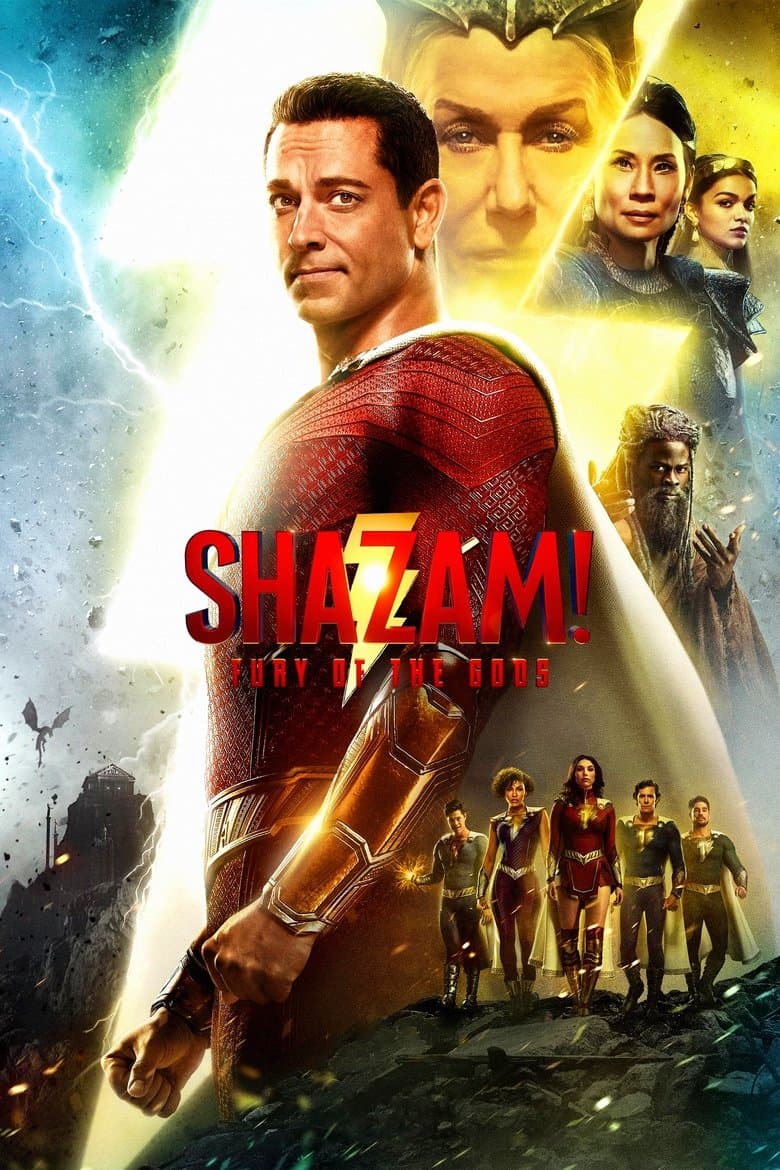
Billy Batson is a foster teen who can become the adult hero Shazam by saying the magic word. He and his foster siblings use their powers to protect Philadelphia, but their mistakes make the city call them the Philadelphia Fiascos. Three daughters of Atlas steal the wizard’s staff and take control of the heroes’ powers. The family must learn to work together before the goddesses destroy the city and the world. The film uses bright comedy, fantasy creatures, big fights, and family drama.
The film gives Pedro Peña a clear gay identity through two short moments. He looks at a male baseball player in an underwear ad, then says he is gay while the family is sharing secrets. His foster family says they already knew and supports him, so the scene is friendly but not part of the main battle. The rest of the story follows Billy’s fear of growing up, the family’s fear of breaking apart, Freddy’s crush on Anthea, and the need to choose courage and teamwork.
Community feedback
Was our 31% Woke rating accurate?
Breakdown
These are the editorial factors and ratings behind our score for Shazam! Fury of the Gods.
Woke representation / casting
The central foster team visibly includes Black, Asian, Latino, and white children in prominent roles. Modern Philadelphia can plausibly have this mix, and the film does not frame the casting as a diversity campaign. The three goddesses are new fantasy characters, and interviews describe star casting and auditions rather than identity signaling. Two goddess roles use Asian and Latina actresses in a Greek-myth story, creating a noticeable mismatch.
30%
Woke political dialogue
Not present. The heroes talk about family, school, fear, and saving people. The film has no activist speech or modern political lesson.
0%
Identity-driven story themes
Pedro looks at a male baseball player in an underwear ad. Pedro then says he is gay while the family is sharing secrets. His foster family says they already knew and supports him. The film treats this as a short identity moment, while the main story follows family unity, growing up, and saving the world.
25%
Western institutional / cultural critique
Not present. Billy worries about growing up and leaving foster care, but the film does not attack foster care, masculinity, capitalism, religion, or Western institutions. The villains are mythological enemies, not symbols of a modern political system.
0%
Woke character or canon changes
The sequel makes Pedro’s hinted sexuality explicit. Writer Henry Gayden said he fought to bring that detail forward. Pedro’s coming-out scene is short and does not change the Shazam powers, family structure, or main villain story. The Daughters of Atlas were made for this film, so their casting is not a change to an old character.
20%
Anti-woke backlash and complaints
Small right-leaning accounts used “go woke, go broke” and boycott language about Pedro’s gay confirmation. A few culture-war posts and reviews called the scene a woke agenda or a way to score social points. Other viewers said the film was not especially woke and blamed weak quality, franchise fatigue, or general DC problems. No title-specific mass boycott or review-bombing campaign was found.
15%
Creator track record context
David F. Sandberg, Peter Safran, Rich Delia, Diane Durant, Bill Parker, C. C. Beck, Chris Morgan, and Henry Gayden have low stored scores and no strong activist pattern. William Moulton Marston has a higher stored score because Wonder Woman used early feminist ideas, but he is a historical source creator, not a current voice on this film. Henry Gayden’s interview shows that he personally valued making Pedro’s sexuality clearer. The wider team is tied mainly to horror, superhero, family, and action work.
15%
Production
Movie · 2019
A boy is given the ability to become an adult superhero in times of need with a single magic word.

Movie · 2024
After Santa Claus (codename: Red One) is kidnapped, the North Pole's Head of Security must team up with the world's most infamous tracker in a globe-trotting, action-packed…

Movie · 2022
When a team of mercenaries breaks into a wealthy family compound on Christmas Eve, taking everyone inside hostage, the team isn’t prepared for a surprise combatant: Santa Claus is…
Movie · 2020
Earth is decimated after intergalactic tyrant Darkseid has devastated the Justice League in a poorly executed war by the DC Super Heroes.

Movie · 2023
Hapless family man Paul Matthews finds his life turned upside down when millions of strangers suddenly start seeing him in their dreams.
Movie · 2022
A new adventure begins for Luffy and his crew when mysterious pop superstar Uta unveils her identity — and launches a misguided plan for world peace.
Movie · 2021
Yuta Okkotsu is a nervous high school student who is suffering from a serious problem—his childhood friend Rika has turned into a curse and won't leave him alone.
Movie · 2020
Tanjiro Kamado, joined with Inosuke Hashibira, a boy raised by boars who wears a boar's head, and Zenitsu Agatsuma, a scared boy who reveals his true power when he sleeps, boards…
