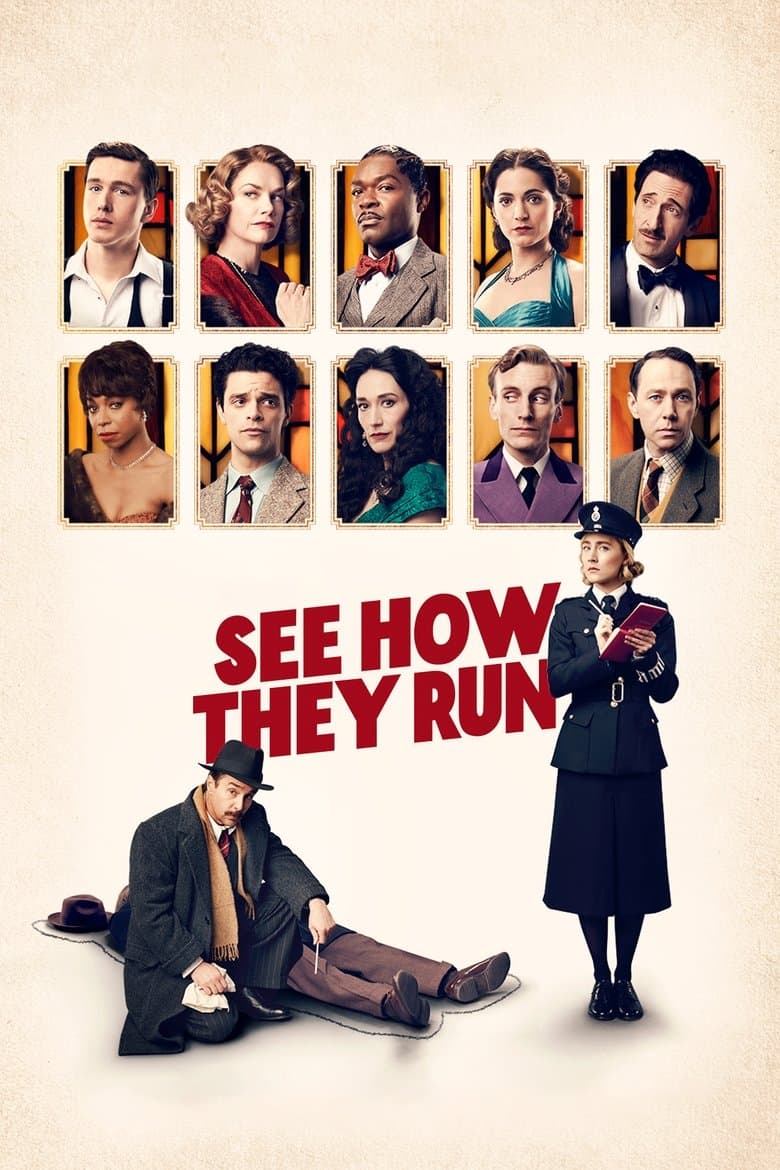
In 1950s London, a hit play is about to become a movie when a rude Hollywood director is murdered backstage. Tired Inspector Stoppard and eager new Constable Stalker must find the killer among actors, writers, and theater bosses. The case turns into a busy comic mystery full of suspects, jokes about murder-movie clichés, and a race to stop more bloodshed. The tone is light, silly, and self-aware rather than dark or serious.
Viewers will mainly notice a sharp female police partner, a black actor as a big-name writer, and a clear gay couple in the theater world (a man and his boyfriend living as “uncle and nephew”). Agatha Christie’s real husband is also played by a black actor late in the film. These choices stand out in a 1950s setting, but the main story is still “who killed the director,” not a speech about race, gender, or rights. The identity bits are easy to see yet sit beside the jokes and plot twists instead of taking over the whole movie.
Community feedback
Was our 34% Woke rating accurate?
Breakdown
These are the editorial factors and ratings behind our score for See How They Run.
Woke representation / casting
In a 1950s London story, major supporting roles include a black playwright (Oyelowo), a black actor as real-life Max Mallowan, and other non-white supporting players, plus a female constable as co-lead. That pattern looks like modern identity casting against the period world. Leads are still mostly not framed as a pure diversity showcase.
32%
Woke political dialogue
Talk stays on the case, showbiz ego, and murder-movie jokes. Almost no lines push modern activist politics, DEI language, or identity lectures.
0%
Identity-driven story themes
The spine is a comic whodunit about theater, film rights, and a personal revenge motive. A gay couple is clearly present (boyfriend as “nephew”) and the woman officer is bright and later promoted, so identity is visible but not the main theme. Queer content raises this above “background only.”
32%
Western institutional / cultural critique
Light digs at Hollywood flash and theater vanity. Not a modern attack on patriarchy, church, “whiteness,” or core Western institutions as systems of harm.
0%
Woke character or canon changes
Original script, not a book remake. Clear identity-driven change: Agatha Christie’s real husband Max Mallowan is race-swapped on screen. Other real names are used more loosely for fun, not as a full DEI rewrite of a fixed novel cast.
28%
Anti-woke backlash and complaints
Only thin, scattered online notes about diverse 1950s extras and race-swapping Christie’s husband. No major news storm or wide anti-woke campaign against the film.
12%
Creator track record context
Key names are mostly low on the cached activist scale (George and Chappell ~0; a few producers/casting in the teens–20s). Public framing of this title is comedy craft, not identity-first politics.
10%
Production
Movie · 2016
When a Hollywood star mysteriously disappears in the middle of filming, the studio sends their fixer to get him back.
Movie · 2017
In a locked down train station, a homicide detective conducts an interview with a tormented monkey who is suspected of murder.
Movie · 2022
When a ruptured water main creates an enormous sinkhole right in front of Bob's Burgers, it blocks the entrance indefinitely and ruins the Belchers’ plans for a successful summer.

Movie · 2018
When an international border dispute arises between the U.S. and Canada, the Super Troopers- Mac, Thorny, Foster, Rabbit and Farva, are called in to set up a new Highway Patrol…
Movie · 2023
After starting their own detective agency, Nick and Audrey Spitz land a career-making case when their billionaire pal is kidnapped from his wedding.
Movie · 2019
JJ, aka John Shaft Jr., may be a cyber security expert with a degree from MIT, but to uncover the truth behind his best friend’s untimely death, he needs an education only his dad…
Movie · 2024
The eclectic residents of a small, picturesque island town must navigate a sensational murder and the discovery of a million dollars, leading to a series of increasingly bad…
Movie · 2019
Agent Sai Srinivasa Athreya is a brilliant, underrated detective from Nellore who runs an agency called FBI which sees no business.
