Movie review
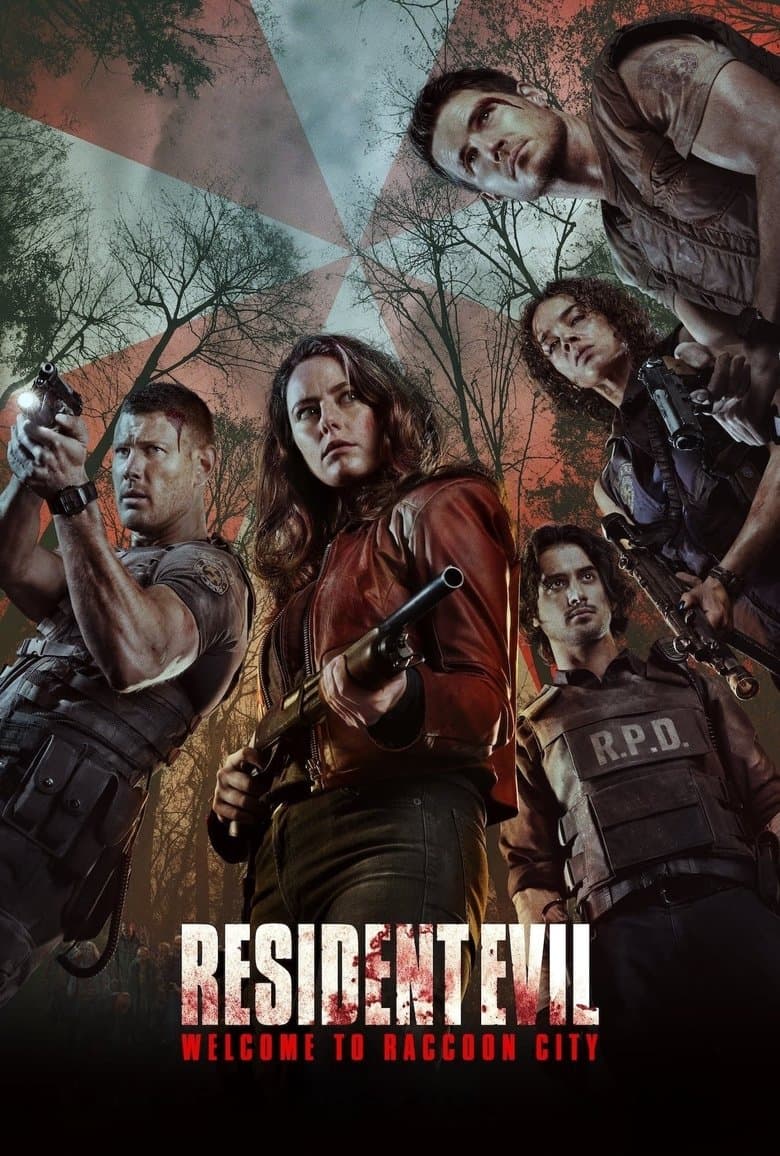
Resident Evil: Welcome to Raccoon City follows Claire Redfield as she returns to the dying town where she and her brother Chris grew up in an Umbrella-run orphanage. Claire warns Chris that Umbrella has poisoned the town and hidden dangerous virus tests below it. Chris, Jill Valentine, rookie Leon Kennedy, and other police officers face zombies and monsters at the police station and Spencer Mansion. The film uses a dark, bloody, and sometimes jokey horror tone as the group tries to escape before the town is destroyed.
The clearest audience-visible woke element is the casting of Avan Jogia as Leon and Hannah John-Kamen as Jill, two game characters usually shown as white. Claire is the main problem-solver, and Jill is a capable police fighter, while Leon is written as a nervous rookie who often supplies jokes. The casting and gender balance sit beside a story about family guilt, corporate wrongdoing, child abuse, survival, and trust between damaged friends. Those themes stay tied to Umbrella's experiments and the group's fight to escape.
Community feedback
Was our 27% Woke rating accurate?
Breakdown
These are the editorial factors and ratings behind our score for Resident Evil: Welcome to Raccoon City.
Woke representation / casting
Avan Jogia plays Leon Kennedy, and Hannah John-Kamen plays Jill Valentine. The games usually show both characters as white, so the film makes two clear identity changes in major roles. Johannes Roberts said the cast was more diverse than the original games and chose actors for their feel instead of an exact visual match. Claire is also the main capable survivor, but her skills serve the horror plot rather than a stated empowerment message.
38%
Woke political dialogue
Not present. No activist, identity-based, or social-justice dialogue appears; conversations focus on corporate secrets, survival tactics, and immediate threats as in the source games.
0%
Identity-driven story themes
Not present. Core story centers on corporate bioweapon disaster and zombie survival with no arcs tied to race, gender identity, representation, or modern social issues.
0%
Western institutional / cultural critique
Not present in this title.
0%
Woke character or canon changes
The film changes the way the games show Leon and Jill's race. Johannes Roberts said the cast was more diverse than the original games and that actors did not need to look exactly like their game versions. The film also gives Claire and Chris a shared orphanage past and makes Leon a mocked rookie, but those changes serve the merged plot. The identity changes are visible, but the story does not explain them through identity politics.
18%
Anti-woke backlash and complaints
Small online accounts called the film woke or DEI because Jogia's Leon and John-Kamen's Jill differ from the game versions. Other posts called the casting race-swapped or blackwashed. The X pass found no large accounts, boycott, review-bomb drive, or organized right-leaning campaign. Wider reviews focused on writing, pacing, effects, and the rushed adaptation of two games.
15%
Creator track record context
Johannes Roberts has a commercial horror career with little activist work. He made one clear identity-related choice here by saying the cast was more diverse than the games. He did not present that choice as a political campaign, and his interviews focus on horror and game fidelity. The listed crew also have low woke scores and no known identity-focused record.
8%
Production
Movie · 2023
In postwar Japan, Godzilla brings new devastation to an already scorched landscape. With no military intervention or government help in sight, the survivors must join together in…
Movie · 2024
In the near future, on a decimated Earth, Paul and his twin sons face terror at night when ferocious creatures awaken.
Movie · 2019
A man steps out of a park fountain in Ho Chi Minh City with no recollection of who he is or where he came from.
Movie · 2025
Special Forces commandos on a mission are abducted mid-operation by a mysterious spacecraft. Upon waking aboard, they find themselves prey to a relentless alien race in a fight…
Movie · 2018
A deep sea submersible pilot revisits his past fears in the Mariana Trench, and accidentally unleashes the seventy foot ancestor of the Great White Shark believed to be extinct.
Movie · 2025
During the Vietnam War, a recon unit ventures to an isolated jungle valley to uncover the fate of a missing platoon.
Movie · 2016
Brothers Mike and Jody join family friend Reggie to battle the Tall Man and his evil minions from another dimension, for the final time.
Movie · 2020
As a grisly virus rampages a city, a lone man stays locked inside his apartment, digitally cut off from seeking help and desperate to find a way out.
