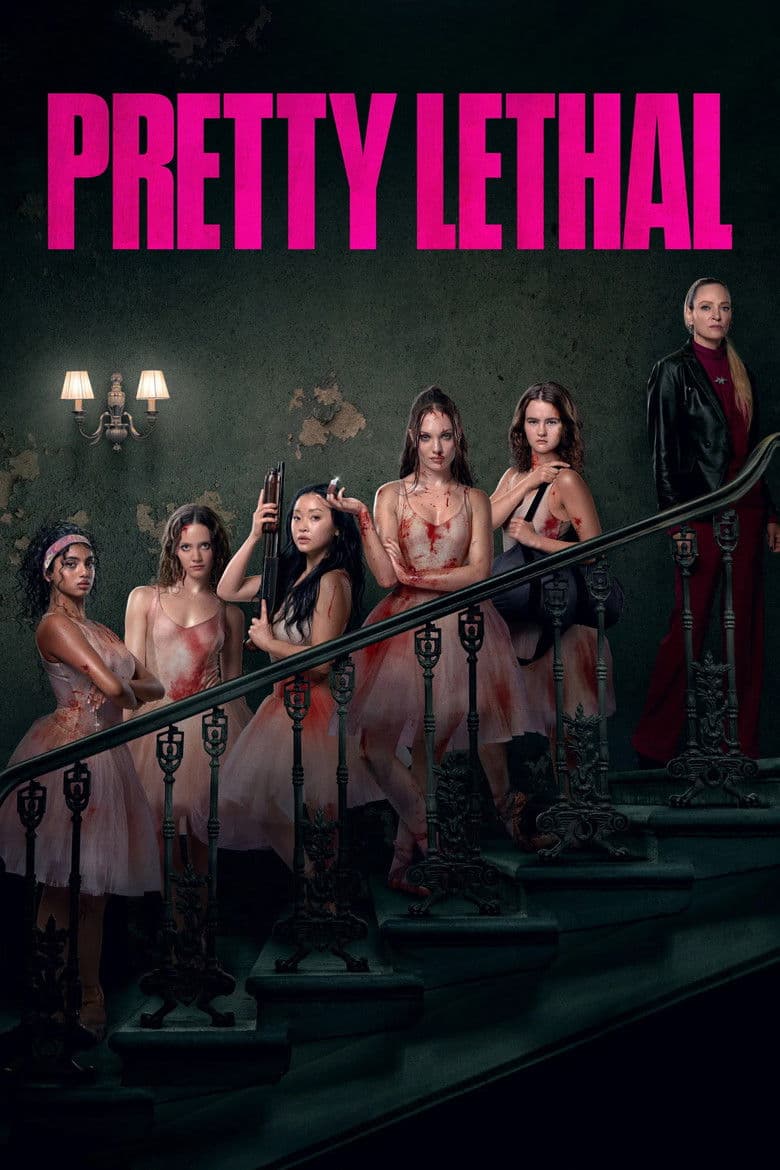
Bones is the most driven dancer in a Los Angeles ballet troupe, but she clashes with Princess, a rich rival who wants her solo. Grace, Zoe, and Chloe round out the group, while their teacher Thorna tries to get them to an international contest in Budapest. When their bus breaks down in the Hungarian countryside, the dancers take shelter at a remote inn run by Devora, a former ballet star who now works with criminals. After the girls witness a killing, they must escape the inn and fight armed men with pointe shoes, blades, and the skills built through years of painful training. The movie mixes bloody action, dark jokes, and campy horror.
Pretty Lethal makes female empowerment part of its main story. The girls are treated as strong athletes rather than fragile decorations, and they defeat larger men by turning ballet moves, pain tolerance, and teamwork into weapons. The movie also puts visible racial and disability representation in the main group, including Asian and South Asian women and Chloe, a Deaf dancer played by a Deaf actress. Chloe uses sign language and faces problems with her hearing aid, but her part is smaller than Bones's and the group's main escape story. The main message is that feminine women can be tough, lead, and save one another.
Community feedback
Was our 56% Woke rating accurate?
Breakdown
These are the editorial factors and ratings behind our score for Pretty Lethal.
Woke representation / casting
The five central dancers form a visibly diverse group of women. The cast includes Asian American and South Asian American performers in major roles, plus a Deaf dancer played by Deaf actor Millicent Simmonds. Simmonds said Chloe was changed from a hearing role to a Deaf role, and the film uses sign language and her hearing aid in the story. The female-led group and the deliberate disability choice make representation a clear production priority.
42%
Woke political dialogue
The girls directly reject the idea that ballerinas are delicate or fragile. The dialogue points to bleeding feet, pain, and years of training as proof that they are strong. The girls also say that no one is coming to save them and that powerful men will not help girls like them. The movie has no long speech about parties, elections, or social systems.
10%
Identity-driven story themes
Female empowerment drives the plot from start to finish. The dancers use ballet, pain tolerance, and teamwork to defeat larger armed men and rescue one another. The film rejects the single final-girl pattern by letting the group survive and win together. It also gives Chloe a Deaf identity, sign language scenes, and hearing-aid problems, though her role is separated for much of the middle. This is recurring and central, but it is told as a campy action fantasy rather than a broad political lesson.
58%
Western institutional / cultural critique
The movie shows Pasha as a sexually aggressive man who kills a woman after she resists him. The girls treat his male entitlement and his father's power as the main danger. The story also says that women are wrongly seen as fragile and lets the dancers overturn that idea. The target is a criminal family rather than Western society as a whole, and the film does not attack capitalism, Christianity, or ordinary family life.
30%
Woke character or canon changes
Not relevant. The film is an original story. It does not change an established character or canon.
0%
Anti-woke backlash and complaints
Public X search found one small post calling the film “edgy girlboss nonsense.” Another small Portuguese-language post called it too woke and objected to its Eastern European villains. Both posts had almost no reach and no likes. No large right-leaning outlet, boycott effort, or review-bombing campaign was found.
10%
Creator track record context
Director Vicky Jewson has a recurring focus on female-led action and public criticism of sexist limits in film. Her interviews about this movie describe breaking the fragile ballerina stereotype and showing women's toughness. Screenwriter Kate Freund said she built the story around women fighting back without a male rescuer and refused a request to change the team to boys. The listed producers have mostly commercial action records and little known activist history. This gives the creative context a clear but mixed identity-driven signal.
44%
Production
Movie · 2024
When a Delta Force special ops mission goes terribly wrong, Air Force drone pilot Reaper has 48 hours to remedy what has devolved into a wild rescue operation.
Movie · 2025
Former assassin Hutch Mansell takes his family on a nostalgic vacation to a small-town theme park, only to be pulled back into violence when they clash with a corrupt operator, a…
Movie · 2025
Taking place during the events of John Wick: Chapter 3 – Parabellum, Eve Macarro begins her training in the assassin traditions of the Ruska Roma.

Movie · 2023
After a heroic job of successfully landing his storm-damaged aircraft in a war zone, a fearless pilot finds himself between the agendas of multiple militias planning to take the…
Movie · 2024
When his family is murdered, a deaf-mute named Boy escapes to the jungle and is trained by a mysterious shaman to repress his childish imagination and become an instrument of…
Movie · 2025
A broker of lucrative payoffs between corrupt corporations and the individuals who threaten them breaks his own rules when a new client seeks his protection to stay alive.
Movie · 2024
As storm season intensifies, the paths of former storm chaser Kate Carter and reckless social-media superstar Tyler Owens collide when terrifying phenomena never seen before are…
Movie · 2023
Robert McCall finds himself at home in Southern Italy but he discovers his friends are under the control of local crime bosses.
