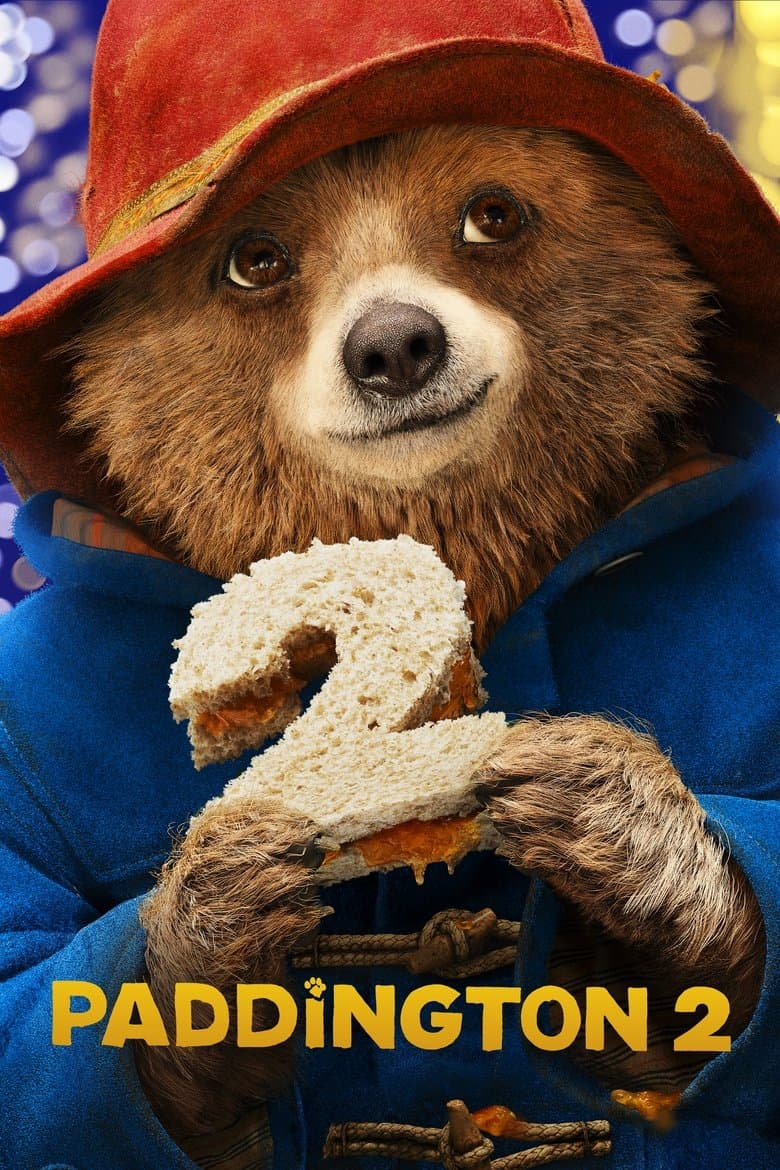
Paddington lives with the Brown family in London and takes odd jobs to buy a pop-up book for Aunt Lucy’s 100th birthday. After the book is stolen, he is framed for the crime and sent to prison. He depends on kindness, the Browns, and unlikely allies to clear his name. Washed-up actor Phoenix Buchanan hunts the treasure clues inside the book. The story follows a wrong-man adventure in which kindness softens a prison and brings a community together.
The film shows a mixed modern London without casting the lead as an identity showcase. Talk on screen is about manners and looking for the good in people, not activist slogans. Paddington is already settled but is still treated as other by some, and neighbors band together to help him. Critics often read a welcome-the-outsider message, including soft immigration and anti-Brexit readings. The movie itself presents that idea as ordinary decency rather than modern identity politics. Greed and vanity belong to one personal villain, not a broad attack on Western life.
Community feedback
Was our 35% Woke rating accurate?
Breakdown
These are the editorial factors and ratings behind our score for Paddington 2.
Woke representation / casting
The main cast is a familiar British family comedy group. Supporting roles reflect everyday modern London, including South Asian and black characters and a mixed prison group. This matches ordinary city life rather than putting identity in the hero slot. No iconic character is race-swapped or gender-swapped.
15%
Woke political dialogue
Most talk is about manners, politeness, and looking for the good in people. There are no activist slogans or clear DEI speeches. Any soft political feel comes from situations like a distrustful neighbour and a wrongful conviction. The words themselves stay gentle and universal.
10%
Identity-driven story themes
The core story is a wrong-man adventure about kindness changing a prison and a community. Paddington remains an outsider who is still treated as different by some people. Neighbours come together to help him. The film presents that welcome as basic decency, even though many critics linked it to immigration and Brexit debates.
38%
Western institutional / cultural critique
A small-minded neighbour is often read as closed to outsiders, and the justice system wrongly jails Paddington. Prison softens through marmalade and good manners. There is no long attack on Christianity, patriarchy, or whiteness. The villain is a vain and greedy person, not a case against capitalism as a system.
22%
Woke character or canon changes
Not relevant. The sequel plot is largely original and stays in Bond’s spirit, and Phoenix Buchanan is a new character rather than an identity rewrite of a prior canon figure.
0%
Anti-woke backlash and complaints
There was no major campaign calling the film a woke product. A few culture-war voices framed the franchise as soft immigration or liberal messaging. Some isolated posts treated BBC Christmas airings as pro-migrant propaganda. Overall love from critics and audiences was the main story, not backlash.
12%
Creator track record context
Paul King stresses Capra-style kindness rather than identity activism. Simon Farnaby has mild liberal politics, and Michael Bond rooted the bear in refugee sympathy and hospitality. David Heyman has spoken about set diversity, while casting directors nudge the average only a little. The overall lean is mild classical-liberal kindness, not a hard DEI brand.
25%
Production

Movie · 2024
Paddington travels to Peru to visit his beloved Aunt Lucy, who now resides at the Home for Retired Bears. With the Brown Family in tow, a thrilling adventure ensues when a mystery…

Movie · 2018
Dug, along with his sidekick Hognob, unite a cavemen tribe to save their hidden valley from being spoiled and, all together as a team, to face the menace of a mysterious and…
Movie · 2024
Gromit’s concern that Wallace is becoming too dependent on his inventions proves justified, when Wallace invents a “smart” gnome that seems to develop a mind of its own.
Movie · 2024
Inside of his book, adventurous Harold can make anything come to life simply by drawing it. After he grows up and draws himself off the book's pages and into the physical world…

Movie · 2017
Ferdinand, a little bull, prefers sitting quietly under a cork tree just smelling the flowers versus jumping around, snorting, and butting heads with other bulls.
Movie · 2026
Living on a rundown shipwreck, Mr. Fish one day discovers a hyperactive young sea dragon Pip – who had mistaken his home for a junkyard – pilfering his belongings.

Movie · 2016
When a radio falls from the sky into the hands of a wide-eyed Tibetan Mastiff, he leaves home to fulfill his dream of becoming a musician, setting into motion a series of…
Movie · 2024
Teenager Riley's mind headquarters is undergoing a sudden demolition to make room for something entirely unexpected: new Emotions!
